As the world marks the fifth anniversary of the Paris Agreement and commits to redouble efforts to tackle climate change, India should take the opportunity to set the ambition bar. To remind the world that it will take more than ambition to deal with the biggest challenge confronting humanity, it will require solidarity and collaboration.
On December 12, Prime Minister Narendra Modi should take the opportunity to set an ambitious target for India—a commitment to achieving climate neutrality around 2060.
A commitment that is ambitious for any country as it will require a complete transformation of the economy but more so for a low-middle income country with a huge population with millions of households that just now been electrified. Not to mention other developmental deficits that India needs to overcome. India should set this high bar of ambition not because other G-20 countries, particularly BASIC partners, have announced carbon or climate neutrality targets. India should do so because sustained economic growth essential to improving the living standards of all its people while limiting their vulnerability to climate change requires that adopting low-carbon and low-waste options. A climate neutrality or net zero target demonstrates the political commitment to this transformation.
The economic impact of the pandemic notwithstanding the government is working towards building a $5 trillion economy by 2024. Making good on this target will require substantial investments tapping into domestic and international financial flows. A net zero target will give investors a sense of India’s development trajectory. It will signal investors that India recognises the risk that climate change poses and is taking measures to mitigate this risk.
There is a view that India’s ambitious renewable energy programme and other measures and that it is the only G20 country with a NDC that is compliant to the Paris temperature goal of below 2C is strong signal for investors. Proponents of this view cite the record flows of foreign direct investment in 2020. This “advantage” may well be temporary as more developing and developed countries set net zero targets and pathways. India is likely to find itself in competition for investments necessary for the transformation that a net zero emissions economy requires.
Prime Minister Modi has consistently identified climate change as the biggest challenge facing humanity. India is particularly vulnerable with the incidence and intensity of heat waves set to rise, changes in monsoon and precipitation patterns, and the increase in cyclones on both coasts of the country. A net zero target is clear signal that recognition of the challenge will be reflected in policy and action.
India’s pollution problem is another reason for setting a new zero target. The promise of ensuring minimal emission will require transforming the key sectors of the economy—energy, transport, agriculture, industry, buildings. A transformation that will produce less waste, use resources more efficiently and effectively, and promote sustainable production and consumption. This transition will help tackle the persistent air and water pollution problems.
A net zero target, which will effectively require reducing greenhouse gas emissions substantially (or in India’s case avoiding emissions) and balancing out unavoidable emissions with sinks such as forests or use of technological solutions for carbon capture and use. This will require a transformation that will create new economic opportunities, improve lives through improved ecosystems that sustain life on earth, raise productivity.
With major economies setting net zero targets, it is clear which direction the world is moving in. If India wishes to compete effectively and grow it will need to transition to a low carbon economy. And it must begin by building its policies and regulations to make the transition. A climate neutrality target is a first and bold step in this direction. It is therefore in India’s self interest that it takes this ambitious step.
The transformation required will not be easy. That India’s initial nationally determined contribution is in compliance of the Paris Agreement’s temperature goal and that it is set to meet its 2030 targets provides a good base for this transition.
The energy sector is critical in this transformation. The bulk of India’s emissions, according to GoI’s biennial report to the UN, is from energy: 73.2%. Of this, 57% is from electricity, with the remaining from manufacturing and construction, transport, and commercial, institutional, and residential use. Experts say that India’s path to net zero runs through the electricity sector. As a milestone, India should consider peaking its emissions by 2035.
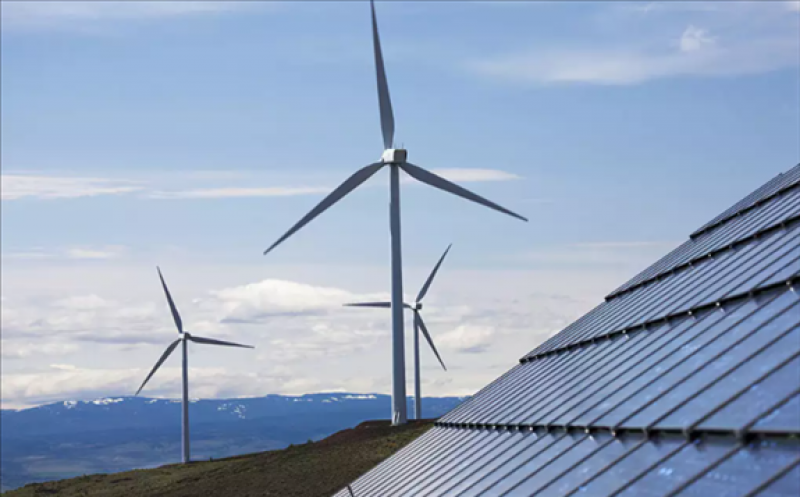
Enhancing renewable energy capacity target to 450 GW by 2030 (which corresponds to a 40 to 43 per cent share of electricity generated and 60 to 65 per cent of electricity generating capacity), decarbonising the railway network by 2030, transforming fossil fuel companies such as Coal India into energy companies (the coal major has pledged to set up 3000MW of solar projects and become a net zero company by 2023-24) are among the actions and policy decisions that will underpin the transition.
As will the decision to shutdown inefficient coal power plants—10GW of coal powered thermal plants (accounting for 5 per cent of coal power capacity) have already been identified for closure. The focus on efforts by industry—24 major companies have committed to emission reduction and enhanced use of renewable energy. Other efforts such as restoration of 24 million hectares of degraded land and the increased adoption of zero-budget farming will underpin the transition.
While these measures are important, they are by no means sufficient for the complete transformation that a net zero target requires. The government will need to take steps to create the institutional and regulatory structures that will make this transition possible and sustainable.
The transformation will not be easy. And India will need to depend on the spirit of solidarity and collaboration that underpins to the Paris Agreement to make the transition to climate neutrality a reality.
This is India’s “standing at the edge of the cliff” moment. There is no doubt that the world is moving towards a low carbon economy. India can choose to keep standing at the edge of cliff only to be pushed over by the force of circumstance or to jump now, taking the right kind of precautions and safety measures to ensure a smoother descent off the cliff. The choice to make is clear.
A commitment by Prime Minister Modi to achieve climate neutrality by 2060 will give a clear signal from the highest levels that will unlock financial investments, promote innovations and provide direction to make this transformation and transition a reality.