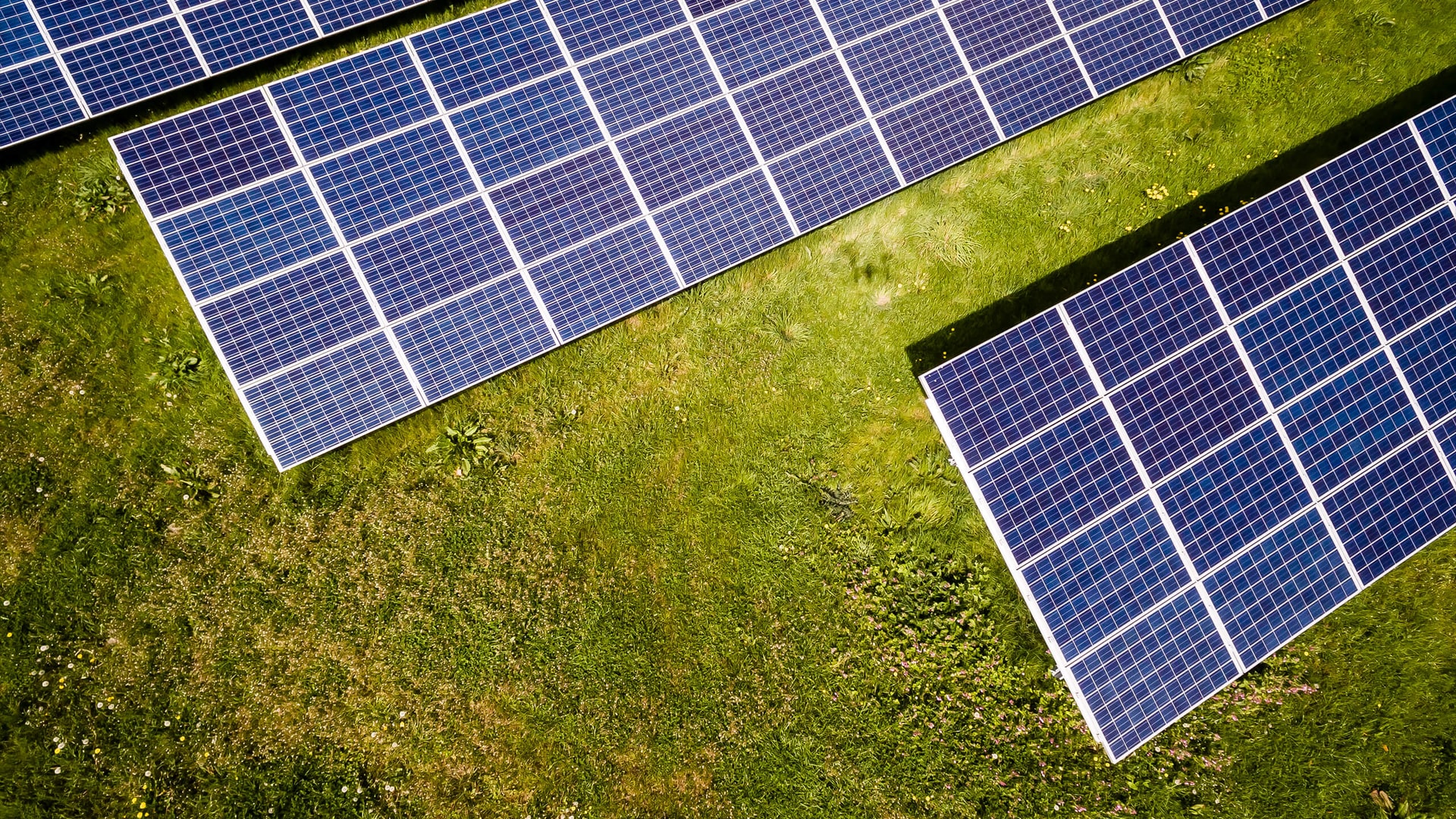
CSP uses a field of mirrors (heliostats) to concentrate sunlight onto a target (receiver) to irradiate a heat transfer medium. That heated medium is then used to generate electricity or drive other thermochemical reactions. Researchers at Sandia are investigating using particles (specifically, a ceramic bauxite particle) inside the receiver within a gravity-driven, tower system. The receiver concept being developed to facilitate this system is called a falling particle receiver (FPR). In an FPR, particles are dropped within a cavity as a curtain past a beam of concentrated sunlight that heats them. The heated particles can be stored for future use when the sun is not shining or be used immediately in conjunction with a highly efficient supercritical-CO2 Brayton cycle to generate electricity. The particles are then lifted to the top of the tower to be dropped in the FPR and heated again. The biggest advantage of particles is that they enable the FPR to reach very high temperatures (>800°C) where traditional CSP heat transfer mediums do not. This allows use of the efficient supercritical CO2 cycle, making the electricity much cheaper.
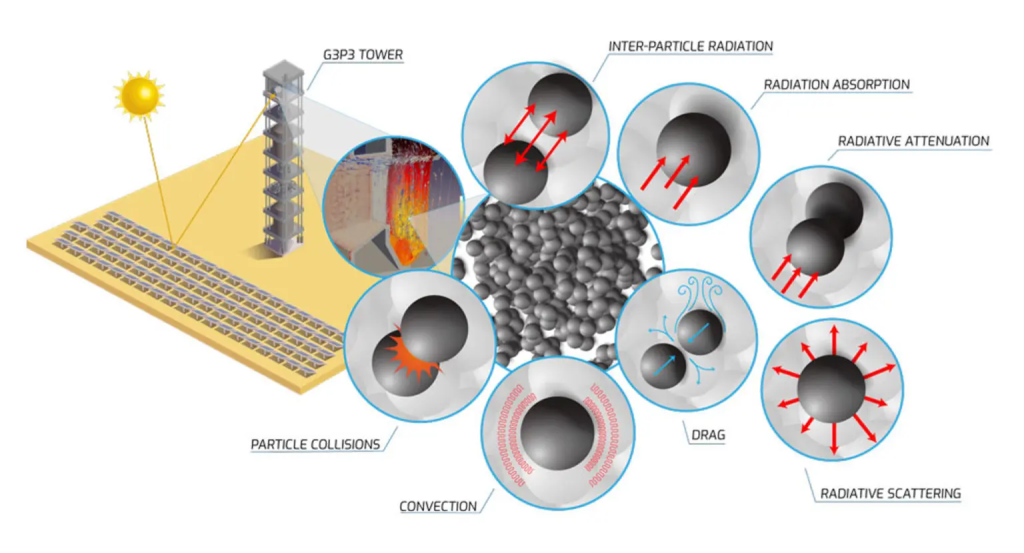
Figure 1: The G3P3 falling particle receiver’s simulated thermal response under nominal conditions
Making this concept economical requires high efficiency particle receiver designs. Modeling and simulation can help drive this development (minimizing the number of complex experiments needed), but it can be very computationally expensive to model all the necessary physics to predict a particle receiver’s efficiency. Sandia is unique in the amount of HPC support available for these types of problems. Thousands of CPU hours were used to design and understand receiver operation under parameters such as weather variability and receiver response to transients. This information was compiled into a compelling case for yearly receiver performance and key data points for evaluating feasibility. “The simulations help us maximize the amount of sunlight the particles absorb where small changes in the geometry, operating conditions, or environment can affect that absorption,” says researcher Brantley Mills. “The less energy the particles absorb, the lower the efficiency and the more expensive it is to generate electricity. These models are helping us identify and minimize all the thermal losses that may contribute to lower efficiency.”
Falling particle receivers have been simulated before, but this is the first time they have been simulated at this level of geometric and physical fidelity that provides more confidence in the design’s expected performance (i.e., efficiency). Typically, various levels of physics have been excluded (e.g., particle fines, wind, particle bouncing) to bring down the computational cost of these simulations, but Sandia’s HPC resources have allowed researchers to account for these additional details. HPC systems allowed coupling high-fidelity computational fluid dynamics models with discrete particle tracking, highly directional radiation transport from the heliostats, and energy transport through the insulative receiver walls. The solutions to these physics allowed precise tracking of how energy was flowing through the system, which has been invaluable for minimizing losses for high efficiencies.
The researchers are using a wide array of physical models that have exercised the code coupling capabilities within Sandia’s Sierra simulation software at scale. Specifically, they are using the Sierra modules: Aria (to model energy transport through the walls), Fuego (to model the air continuum inside and outside the receiver and the Lagrangian particles), and Nalu (to model the radiation transport in a discrete ordinates framework). They have also worked with developers to incorporate needed features into the code suite. For example, the ability to model non-grey radiation transport with walls, reduced order models for the treatment of the particle troughs, and the ability to describe complex radiation beams like those used from heliostat fields. These models are executed using meshes with millions of elements to provide sufficient geometric fidelity.
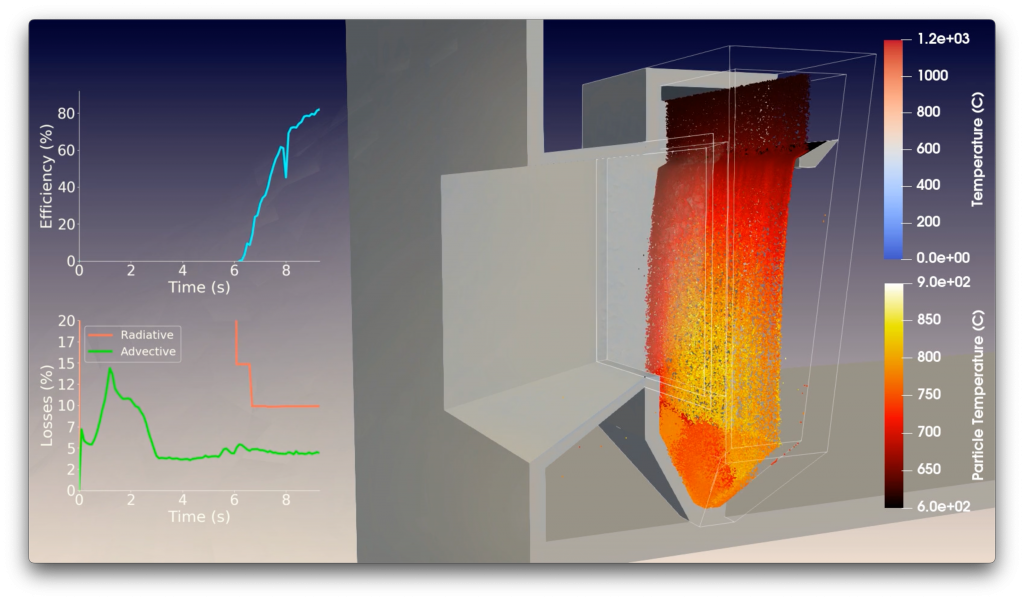
Figure 2: Critical particle physics that must be modeled to accurately predict a falling particle receiver’s efficiency.
In addition to the complex coupling, many of the physics have different timescales associated with them (radiation — effectively instantaneous; fluids and particles — seconds; solids — minutes). “We have had to come up with creative solutions to extract the necessary observations from the simulations. For example, we execute the simulation for a period of time without radiation to minimize numerical instabilities as the flow field forms. We have also used non-physical thermal masses in the wall materials at the onset of the simulation to decrease the time it takes for the temperature field to arrive at a steady-state condition,” says Mills.
Sandia’s HPC models have also helped the researchers better understand the flow of small particle fines within the receiver cavity. The particles are normally ~350 microns, but very small particle fines are generated in operation (as small as 1 micron) and Sandia has used the models to predict the flow of those particles in the receiver cavity. Models have also been able to design and explore different geometric features designed to capture these particle fines, minimizing the hazards they pose to the environment and personnel.
The modeling and simulation also help inform a receiver design that will be constructed and integrated into the Generation 3 Particle Pilot Plant (G3P3) tower (which is planned to be completed in 2024). The completed 1 MWth system constructed at the National Solar Thermal Test Facility at Sandia will be a fully integrated particle pilot plant that can help resolve questions on the integration and scaling of this technology. If successful, this technology will be scaled up to plant sizes as large as 100 MWe with the ability to store energy for times when sunlight is not readily available. HPC models have been used to evaluate the final G3P3 receiver design at very high geometric fidelity.
HPC models have also offered the opportunity to test out new concepts, for which patents are pending, such as a set of intermediate troughs that “catch and release” the particles. These troughs slow the particles down as they fall through the cavity, increasing the residence time of the particles within the concentrated sunlight while not exposing any surfaces directly to the beam. This allows for more sunlight absorption and higher particle temperatures and has been shown in tests to increase the curtain’s uniformity. Further, the troughs help protect the back wall of the cavity, which can be damaged in spots if directly exposed to the beam. This technology will be an essential component of future 100 MWe systems to control the particle curtain in falling particle receivers with cavities as tall as 20 m.
HPC models have played a critical role in designing FPRs for next-generation CSP systems using particles. The researchers intend to extend this modeling capability to investigate larger receiver systems and other receiver designs that could be built in the future. The models will also be leveraged to help predict FPR performance variability throughout a typical day at the G3P3 tower.