“They thought Martin Luther King was a dreamer,” Booker said. “They thought all the great activists were dreamers. We are dreamers, yes. But that’s what this country is about.”
The massive overhaul that Booker was pushing for is not about poverty or sweeping financial change or racial justice, at least not directly. Booker’s focus is on the country’s food system and on farm policy, especially the massive, nearly half-trillion dollar legislation—esoteric to most Americans—known as the Farm Bill.
Every five years or so, the bill is re-upped after an increasingly lengthy and contentious battle that usually centers on the country’s nutrition support programs, which consume three quarters of the legislation’s funding. But this time around, as negotiations get under way and committee meetings take place on Capitol Hill, conversations are ramping up about American agriculture’s role in contributing to—and addressing—climate change.
On Wednesday, the Senate Agriculture committee is holding a hearing on the U.S. Department of Agriculture’s (USDA) conservation programs, which advocacy groups say represent agriculture’s best hope for tackling climate change. In advance of the hearing, nearly 650 farm, environmental and policy groups called for Congressional leaders to focus on conservation funding.
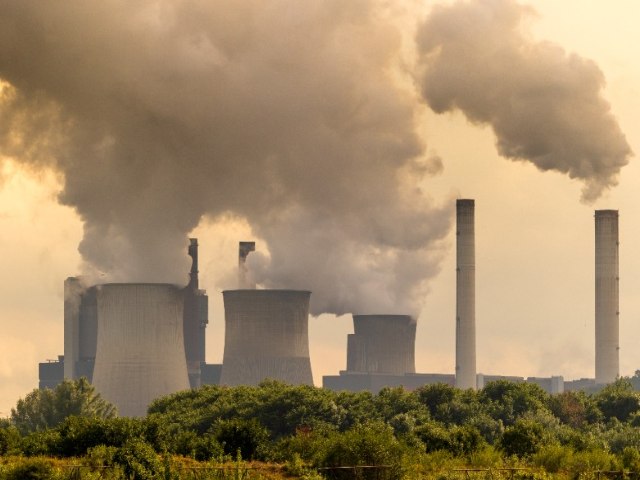
Farming contributes about 11 percent of U.S. greenhouse gas emissions, more if fertilizer production is included. But a new analysis, published on Tuesday by the Environmental Working Group based on data from the Boston Consulting Group, projects that U.S. agriculture’s share of emissions could rise to about 30 percent of the total by 2050—more than any other sector of the economy—if farms don’t reign in emissions from fertilizer and livestock. Emissions from agriculture have been on the rise for decades, even as emissions from other sectors fall.
Booker, a member of the Senate Agriculture Committee, some fellow Democrats and progressive farm groups say this Farm Bill, more than previous ones, can and should play a role in staving off the climate crisis. Part of the solution, they argue, is helping smaller farmers produce healthier food in more climate-conscious ways and steering support away from commodities like corn and soybeans, and from giant industrial livestock facilities that are responsible for the greatest portion of greenhouse gases from animal waste. Booker has introduced legislation that would place a moratorium on these massive factory farms.
Many critics of current farm policy view the increasing consolidation and power of big agribusiness as a historical inflection point, on par with the farm crises of the late 1970s and 1980s when interest rates and debt drove thousands of American farmers off their land. Back then, “tractorcades” took to D.C., demanding the attention of lawmakers.
Next Monday, hundreds of farmers and farm groups from across the country are planning something similar, though with a slightly more bucolic vibe. They plan to march on the mall in Washington—along with some sheep that will demonstrate rotational grazing on the grass there—to call attention to the climate crisis.
“There are historical parallels,” said Mike Lavender, police director with the National Sustainable Agriculture Coalition (NSAC), which is spearheading the march. “They descended on D.C. because of consolidation and high prices back in the ‘80s.”
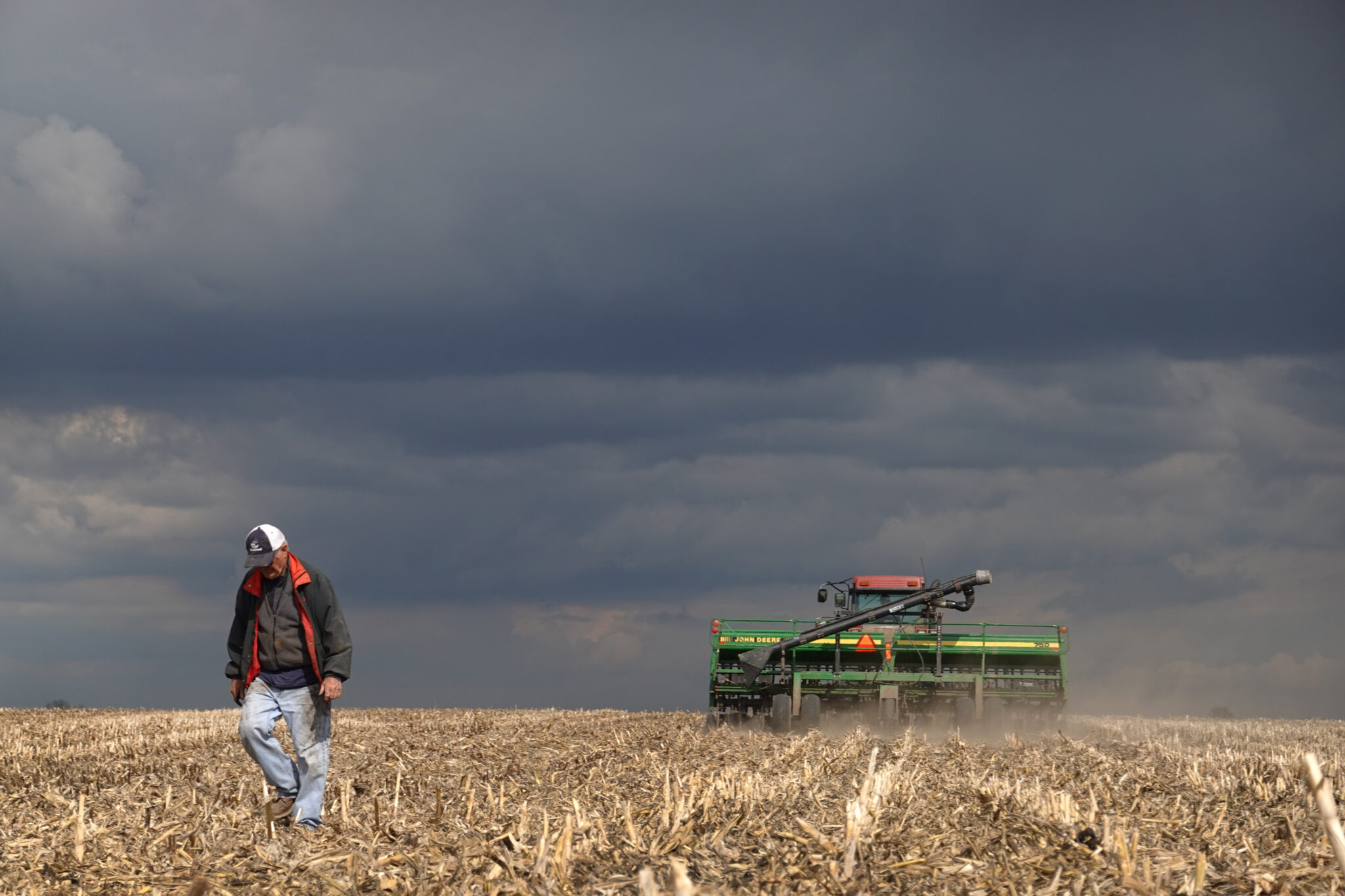
In the five years since the last Farm Bill was signed by then President Donald Trump, a lot has changed. The country’s farmers have been battered by a series of major storms, floods and droughts, and have watched as growing seasons have become longer, hotter and wetter.
After all the extreme weather, more farmers have come to accept that climate change is, indeed, real, despite long-standing convictions to the contrary. The American Farm Bureau Federation, the country’s most powerful agribusiness lobbying group, had formally rejected the science on climate change in its policy positions.
But even the Farm Bureau has pivoted, most notably in its embrace of voluntary carbon trading markets, in which farmers are being paid to sequester carbon in their soils.
“This is very different from the 2018 Farm Bill. Since then, Congress has, by and large, admitted that climate change is real and it’s affecting farmers,” Lavender said. “We’re in a vastly different political moment.”
Some left-leaning and environmentally focused farm advocacy groups, including NSAC and its members, say their biggest priority for the legislation is to boost funding for the USDA’s existing conservation programs. The two most popular are the Environmental Quality Incentives Program and the Conservation Stewardship Program, both of which are oversubscribed year after year. Advocates say these represent the best opportunity for farmers to control greenhouse gas emissions.
These programs got a significant infusion from the $369 billion Inflation Reduction Act, the far-reaching legislation that aims to cut greenhouse gas emissions by 40 percent within seven years by financing clean energy projects through federal programs. The bill provides $20 billion to the USDA to support agricultural practices that reduce emissions and sequester carbon in soils. Earlier this month, the agency announced it was making $850 million available to farmers this year.
“Our top priority, the top priority for most environmental groups, is not just protecting the $20 billion for climate smart practices in the Inflation Reduction Act, but also making sure the money isn’t squandered,” said Scott Faber, who leads governmental affairs at the Environmental Working Group (EWG).
As the $20 billion is parceled out over the next several years, environmental groups want to ensure that the practices the USDA deems “climate smart” have verifiable carbon benefits. Though the legislation has climate-focused “guardrails” dictating that any funded practices have measurable benefits, some environmental groups are concerned that some of the funds could be used to expand emissions-intensive forms of agriculture, especially large livestock facilities.
“There are two big challenges,” Faber said. “One is that other forces will try to divert funding to expand subsidies. The other is that money will be squandered on practices that USDA will define as ‘climate smart’ when USDA is wasting a lot of conservation money on practices that do nothing and can even make climate emissions worse.”
Last fall, EWG conducted an analysis of the agency’s conservation programs and found that very little funding goes toward programs that address climate change. The analysis also found that USDA spent $170 million from 2017 to 2020 on “waste storage facilities” for livestock operations, which are significant sources of methane, an especially potent greenhouse gas.
Already, for example, the USDA funds the development of methane digesters on livestock farms, which are designed to capture methane from animal waste. The new funding would expand the biogas program through additional tax credits. Critics say the development of more biogas merely incentivizes livestock facilities to expand and produce more emissions-generating waste.
“If we’re going to be spending money on livestock programs, we should not be funding high-emitting CAFOs,” said Michael Happ, who covers climate and rural community programs at the Institute for Agriculture and Trade Policy, a left-leaning policy group based in Minneapolis. Happ was using the acronym for large livestock facilities, or CAFOs—Concentrated Animal Feeding Operations.
“We’ve raised concern around methane digesters that are really expensive, industrial practices that incentivize CAFOs to keep operating or expanding,” he said.
The “Food Not Feed Summit” in Washington, where Booker spoke, was organized by Farm Action, a relatively new advocacy group that’s pushing against increasing consolidation in the agriculture industry.
Taxpayer-funded subsidies for crop insurance, they argue, are one of the biggest drivers of that concentration. From a climate perspective, they say, these larger, consolidated players farm in more emissions-intensive ways, but also make it increasingly difficult for smaller-scale growers to thrive—or exist at all.
As the name of the conference implies, subsidies should be flowing more readily to growers of food, rather than to corn or soybeans, which largely end up as biofuels or animal feed.
“The farmers who can afford to participate in crop insurance are, overwhelmingly, producing feed, not food,” Faber said. “Fifty-six percent of the crop insurance subsidies are going to corn and soybeans, and seven percent of premium subsidies are flowing to fruit and vegetables.”
Republicans in the House and Senate agriculture committees have said that bolstering crop insurance is their leading priority in the farm bill. But they’ve made clear they won’t require farmers to adopt climate-friendly practices as a condition of receiving subsidies as some advocacy groups have encouraged.
The current farm bill expires at the end of September. Until then the agriculture committees will wrangle over the legislation, with some Republicans calling for broad cuts to a number of programs and vowing to ensure that the “farm bill doesn’t become the climate bill,” while Democrats push to make bolster farm programs that address the climate crisis.
The usually bipartisan bill faces a potentially bumpy passage in a divided Congress, with roughly 40 percent of House members new and unfamiliar with farm policy.
Next week, though, small farm groups, led by NSAC, will head to the Hill after their march on the mall to educate them.
“Farming has changed dramatically in the last 50 years and how we farm in the next 50 years will change even more dramatically as farmers adapt to extreme weather,” Faber said. “Booker is right. The moment is right.”