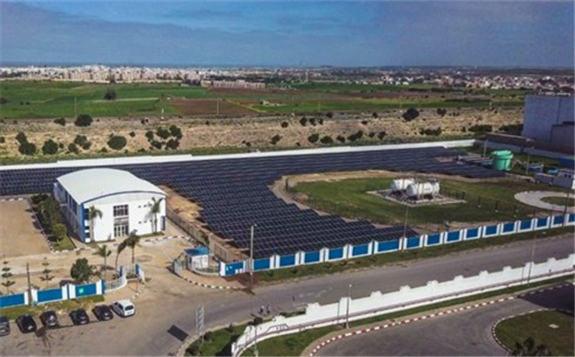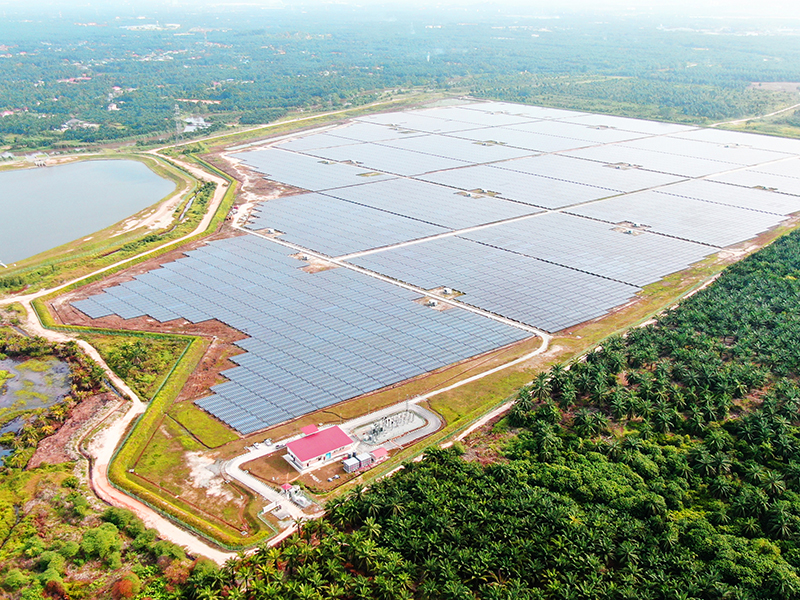
Ember’s fourth annual Global Electricity Review aims to provide the most transparent and up-to-date overview of changes in global electricity generation in 2022 and a realistic summary of how “on track” the electricity transition is for limiting global heating to 1.5 degrees.
The report analyses electricity data from 78 countries representing 93% of global electricity demand and includes estimated changes in the remaining generation. It also dives deeper into the top ten CO2 emitting countries and regions, accounting for over 80% of global CO2 emissions.
We make all of the data freely accessible to empower others to do their own analysis and help speed the switch to clean electricity. Use our Data Explorer to find out more.
Thank you to all of the contributors at Ember and to the peer reviewers on the Advisory Board.

Malgorzata Wiatros-Motyka
Senior Electricity Analyst
The global electricity sector is the first sector that needs to be decarbonised, in parallel with electricity demand rising, as electrification unlocks emissions cuts throughout the entire economy. The IEA Net Zero Emissions scenario points to a 2040 net zero power sector; ten years ahead of a net zero economy in 2050. Tracking the electricity transition, therefore, is critical to assess our climate progress.
The decarbonisation of the power sector is underway, as record growth in wind and solar drove the emissions intensity of the world’s electricity to its lowest ever level in 2022. It will be an impressive moment when power sector emissions begin to fall year-on-year, but the world is not there yet, and emissions need to be falling fast.
01 Electricity at its cleanest, as wind and solar generate 12% of global powerThe carbon intensity of global electricity generation fell to a record low of 436 gCO2/kWh in 2022, the cleanest-ever electricity. This was due to record growth in wind and solar, which reached a 12% share in the global electricity mix, up from 10% in 2021. Together, all clean electricity sources (renewables and nuclear) reached 39% of global electricity, a new record high. Solar generation rose by 24%, making it the fastest-growing electricity source for 18 years in a row; wind generation grew by 17%. The increase in global solar generation in 2022 could have met the annual electricity demand of South Africa, and the rise in wind generation could have powered almost all of the UK. Over sixty countries now generate more than 10% of their electricity from wind and solar. However, other sources of clean electricity dropped for the first time since 2011 due to a fall in nuclear output and fewer new nuclear and hydro plants coming online.
02 Limited coal increase, gas plateausPower sector emissions rose in 2022 (+1.3%), reaching an all-time high. Electricity is cleaner than ever, but we are using more of it. Coal generation increased by 1.1%, in line with average growth in the last decade. The ‘coal power phasedown’ agreed at COP26 in 2021 may not have begun in 2022, but also the energy crisis didn’t lead to a major increase in coal burn as many feared. Gas power generation fell marginally (-0.2%) in 2022–for the second time in three years–in the wake of high gas prices globally. Gas-to-coal switching was limited in 2022 because gas was already mostly more expensive than coal in 2021. Only 31 GW of new gas power plants were built in 2022, the lowest in 18 years. But 2022 saw the lowest number of coal plant closures in seven years, as countries look to maintain back-up capacity, even as the transition picks up speed.
03 2022 may be “peak” power emissionsWind and solar are slowing the rise in power sector emissions. If all the electricity from wind and solar instead came from fossil generation, power sector emissions would have been 20% higher in 2022. The growth alone in wind and solar generation (+557 TWh) met 80% of global electricity demand growth in 2022 (+694 TWh). Clean power growth is likely to exceed electricity demand growth in 2023; this would be the first year for this to happen outside of a recession. With average growth in electricity demand and clean power, we forecast that 2023 will see a small fall in fossil generation (-47 TWh, -0.3%), with bigger falls in subsequent years as wind and solar grow further. That would mean 2022 hit “peak” emissions. A new era of falling power sector emissions is close.
https://flo.uri.sh/visualisation/13211402/embed?auto=1
2022 will be remembered as a turning point in the world’s transition to clean power. Russia’s invasion of Ukraine made many governments rethink their plans amid spiking fossil fuel prices and security concerns about relying on fossil fuel imports. It also accelerated electrification: more heat pumps, more electric vehicles, more electrolysers. These will drive reductions in emissions for other sectors, and will put more pressure to build clean power more quickly.
A new era of falling power sector emissions is very close, thanks to the electricity superpowers of wind and solar. Wind and solar will need to maintain high growth rates this decade, even as they mature. More growth is needed from all other clean electricity sources, while more attention to efficiency is needed to avoid runaway growth in electricity demand. Urgent work is needed on ensuring wind and solar can be integrated into the grid: planning permissions, grid connections, grid flexibility and market design.
Falling fossil generation means not only that the coal power phasedown will happen, but also that–for the first time–a gas power phasedown is now within reach. However, just how quickly power sector emissions will fall is not yet set.
In this decisive decade for the climate, it is the beginning of the end of the fossil age. We are entering the clean power era. The stage is set for wind and solar to achieve a meteoric rise to the top. Clean electricity will reshape the global economy, from transport to industry and beyond. A new era of falling fossil emissions means the coal power phasedown will happen, and the end of gas power growth is now within sight. Change is coming fast. However, it all depends on the actions taken now by governments, businesses and citizens to put the world on a pathway to clean power by 2040.Ma?gorzata Wiatros-Motyka Senior Electricity Analyst, Ember
Foreword
A new era of clean power – no more excuses
Chile’s Minister of Energy, Diego Pardow, and Ember’s Non-Executive Chairs, Baroness Bryony Worthington and Harry Benham, reflect on the findings of the Global Electricity Review and the journey ahead as the world transitions to clean electricity.
Tracking progress on how our electricity is generated is critical, as it is not only a huge source of greenhouse gases, it is also needed as an enabler of a cleaner and more efficient energy system overall.Ember’s Non-Executive Chair, Baroness Bryony Worthington

Significant strides
Foreword from Ember’s Non-Executive Chairs
We are pleased to introduce the Global Electricity Review 2023 from Ember, now in its fourth year, in which we highlight again the continued surge in clean power generation worldwide.
This report showcases the significant strides made in the transition towards a sustainable and decarbonized energy system, and the promising outlook for achieving the critical milestone of peak emissions from the power sector – perhaps in this coming year. Wind and solar are growing at between 15-20% pa based on a 10 year average, so look set to exceed increases in annual electricity demand by the end of 2023.
The world has abundant supplies of wind and solar, and this report documents how, through technical innovation and policy execution, this abundance has been converted into on-the-ground energy supply. Often at a lower cost than fossil fuels and faster than other sources of clean electricity.
Other clean non-fossil fuel technologies are also playing their part – nuclear could be entering a renaissance in some countries but there have also been set backs, as unusual weather affected both hydro and nuclear plant.
Tracking progress on how our electricity is generated is critical, as it is not only a huge source of greenhouse gases, it is also needed as an enabler of a cleaner and more efficient energy system overall. As transport and heat sectors increasingly electrify, demand will increase, providing a stronger investment case for new clean capacity. But fossil fuels are still providing the backbone of the electricity system in many large economies and we need to understand and replicate the underlying success factors for rapid decarbonisation.
Ember is committed to using data analysis to tell the story of the clean transition and to providing insights that can increase the pace of change. We hope you find this report and the underlying public data sets useful and please provide us with feedback so we can continue to improve this publication.
We still have a long journey to travel, with many challenges ahead and with a clear objective: we must act quickly, always putting people at the centre. There are no more excuses.Chile’s Minister of Energy, Diego Pardow

No more excuses
Foreword from Chile’s Minister of Energy, Diego Pardow
Last September, when I had been Chile’s Minister of Energy for two weeks, I had to travel to the Los Lagos region in the south of the country. In one of the activities on my schedule, I had the opportunity to meet Rodrigo Castillo, owner of a medical supply company who–thanks to a government program–was able to buy an electric car for his deliveries.
In 2019, Rodrigo faced–like the vast majority of Chileans–a significant rise in the price of fossil fuels. Added to this was an increase in inflation, which caused an overall rise in the cost of living for people.
Today, thanks to electrifying his transport, Rodrigo has managed to reduce his expenses by a third, which has made his company more competitive in his region. He is a concrete example of how the transition–in this case through electromobility–can offer not only cleaner cities and better jobs but also concrete improvements for citizens. That is what a green economy is all about.
In recent years, Chile has made important progress with respect to its transition. The latest achievements have positioned Chile as the best emerging country to invest in renewable energies, added to the high penetration of clean energies in our system, with last year’s milestone standing out that, for the first time, solar and wind overtook coal in electricity generation.
In that respect, 2023 seems promising at a global level, especially thanks to the prediction of this report, which indicates that emissions from the electricity sector could begin to decrease as of this year. But we still have a long journey to travel, with many challenges ahead and with a clear objective: we must act quickly, always putting people at the centre. There are no more excuses.
Chapter 1 | Pathway for 1.5C
Achieving clean electricity worldwide by 2040
The global electricity sector is the biggest CO2 emitter and the first sector that needs to be decarbonised for the world to achieve net zero, as it helps unlock clean electrification of other sectors. To understand progress on climate goals, we must also closely track the electricity transition.
First sector to hit net zero
The electricity sector needs to move from being the highest emitting sector to being the first sector to reach net zero emissions globally by 2040 so the world has a chance to achieve economy-wide net zero by 2050.
Electricity generation is the single biggest contributor to global CO2 emissions, responsible for over a third of world’s total energy related emissions in 2021. As of 2021, about three-quarters of power sector emissions were from coal, and almost a quarter from gas. With proven solutions already available to tackle this challenge, decarbonising the power sector offers one of the most cost-effective routes to achieving rapid emissions reductions.
https://flo.uri.sh/visualisation/13038384/embed?auto=1
A Paris Agreement-compatible pathway for the global power sector was set out in detail by the International Energy Agency (IEA) in its ‘Net Zero Emissions’ (NZE) scenario published in May 2021 in the pioneering report Net Zero by 2050. It was then updated in the World Energy Outlook report in 2022, where NZE is now a central scenario. We reference this scenario throughout this report as a realistic pathway to put the global power sector on track for 1.5 degrees.
Although there are many possible ways the power sector could reduce emissions in line with a 1.5 degree trajectory, the IEA NZE scenario is well respected by industry stakeholders, provides detailed benchmarks and is also largely in line with the IPCC scenario for power sector decarbonisation.
Across all models, wind and solar are set to lead this shift, offering low cost and quick-to-deliver clean capacity. The IPCC showed that wind and solar can deliver over a third of the emissions cuts required this decade, and half of those emissions reductions would actually save money compared to the reference scenario. In many countries wind and solar are also economically attractive: lower cost than fossil fuels, and without the potential energy security risks of dependence on the global fossil fuel market.
Milestones for a 2040 global net zero power sector
The IEA NZE scenario shows a clear route to a net zero global power sector by 2040, and by 2035 for OECD countries. The pathway requires a massive expansion of clean power generation, requiring multiple technologies. In the IEA modelling, wind and solar are vital linchpins, providing 75% of the increase in clean power from now to 2050. Interconnections, networks, demand-side management and storage will all play a vital role alongside this deployment of clean power, and they will all need to expand to support the energy transition.
By 2030, wind and solar need to have increased to 41% of global electricity generation, up from 10% in 2021. Coal generation needs to fall by 54% and gas generation by 24%. At the same time, electricity demand will rise dramatically, by an average of 3.7% per year from 2021 to 2030, as electrification picks up pace.
While the shape of the path ahead is broadly clear, it is interesting to note the adjustments made by the IEA when updating the NZE scenario from 2021 to 2022. The scenario remains largely the same except for a much larger forecasted fall in gas power from 2021 to 2030 (previously 5%, now 24%), and a smaller fall in coal power (previously 71% fall, now a 54% fall). This change likely reflects the slower progress in 2022 on coal phaseout, but also a newfound possibility that gas power could begin its phasedown this decade. Regardless, either version reflects the need for rapid declines in all fossil fuel power.
By 2040, the power sector needs to be net zero: to achieve this unabated coal power must be phased out globally, and unabated gas will only provide only 0.3% of global electricity.
https://flo.uri.sh/visualisation/13064600/embed?auto=1
Expanding role of electricity on the path to net zero
Investment in clean electricity will ensure the most cost effective path to achieve net zero, not only in the power sector, but the entire energy system.
For developing countries, investment in clean sources will play a crucial role in meeting rising electricity demand, which is expanding as the world’s population grows and countries increase standards of living. Globally, one in ten people still do not have access to electricity, mostly across Sub-Saharan Africa and Asia. Leapfrogging fossil fuels and moving directly to clean power will provide multiple benefits to health, the economy and climate, while increasing access to affordable energy as recommended by the United Nations in Sustainable Development Goal 7 (SDG7).
But it’s not only developing countries where electricity demand will expand and clean investment needs to keep pace. Electricity underpins the decarbonisation of other sectors, as clean electricity replaces fossil fuel combustion in transport, heating, cooling and industry. In 2022, electricity accounted for 20% of world’s final energy consumption. By 2030, it is predicted to account for 27%.
2022 was the year in which electric cars, heat pumps and electrolysers (to produce green hydrogen) were pushed into the next level of growth. This trend is expected to continue, but to deliver on necessary emissions reductions it must be matched by investment in clean electricity to feed into the expanding electrified economy.
Chapter 2 | Electricity Transition in 2022
Electricity is at its cleanest as wind and solar hit 12%
2022 beat 2020 as the cleanest ever year, as emissions intensity reached a record low of 436 gCO2/kWh. Wind and solar reached a record 12% of global electricity generation, but they still weren’t built fast enough to meet all of the world’s increasing need for electricity. Consequently, coal and other fossils met the remaining gap, driving up emissions to a new record high.
Wind and solar help reduce emissions intensity of electricity
Record growth in wind and solar pushed electricity to its cleanest level ever: 436 gCO2/kWh.
Solar added a record 245 TWh of generation in 2022, while wind added a record 312 TWh. As a result, 12% of the world’s electricity came from solar and wind. That’s up from a tenth of global electricity generation in 2021, which in itself was up from just 5% when the Paris Agreement was signed in 2015. Combined, solar and wind overtook nuclear generation in 2021 and are catching up with hydro generation. Over sixty countries now generate more than 10% of their electricity from wind and solar.
https://flo.uri.sh/visualisation/12826038/embed?auto=1
The first fall in other clean electricity since Fukushima
In 2022, clean electricity sources–excluding solar and wind–saw their first year-on-year fall in generation since the Fukushima nuclear disaster in 2011. This was primarily because nuclear generation fell by 129 TWh (-5%) as France’s nuclear fleet suffered major outages and Germany and Belgium closed some reactors. In addition, growth in global hydropower was held back in regions that experienced extreme droughts, notably in the EU where generation fell by 66 TWh to its lowest level since at least 1990.
Demand increased
Global electricity demand grew by 2.5% (+694 TWh) in 2022, similar to the average growth of 2.6% in the previous decade (2010-2021). Much of last year’s increase was driven by demand increases in major economies, and three of them alone accounted for 93% of the global demand growth: China (54%), the US (21%), and India (18%). In contrast, electricity demand fell by 3% in the EU due to a combination of mild weather and efforts to reduce consumption in the face of affordability pressures and security of supply concerns (see chapter 6 for details).
Wind and solar met the majority of demand growth
In 2022 growth in wind and solar met 80% of the increase in electricity demand, while all renewables together met 92% of the rise. In China, wind and solar met 69% of the growth in electricity demand in 2022, while all clean sources met 77%. In India, wind and solar met 23% of the demand growth, while all clean sources provided 38%. In the US, wind and solar met 68% of the demand growth.
https://flo.uri.sh/visualisation/13064724/embed?auto=1
Coal increased to meet the shortfall
Coal and other fossil fuels (mainly oil) increased to meet the remainder of the rise in electricity demand, as well shortfalls from nuclear and gas generation. Coal rose by 108 TWh (+1.1%) year on year, reaching a record high generation of 10,186 TWh. Other fossil generation rose by 86 TWh (+11%).
Trends among countries and regions varied significantly: coal fell in the US (-70 TWh, -7.8%) in 2022 compared to the year before, but rose in China (+81 TWh, +1.5%), India (+92 TWh, +7.2%), Japan (+9.7 TWh, +3.1%), and in the EU (+27 TWh, +6.4%).
Coal power’s increase of 1.1% is in line with average growth in the last decade. One might have expected a larger rise in coal generation in 2022, given the price spikes in gas and security of supply concerns. But at a global level, there was actually as much switching from coal to gas, as there was switching from gas into coal. That is in part because gas prices were already higher than coal before 2022, so much of the switching into coal had already happened the year before. It is also in part because of the US, where three major factors–coal plant retirements, coal transport disruption and new gas power plant capacity–led to a substantial switch from coal to gas generation, as gas prices stayed much lower than in the rest of the world.
https://flo.uri.sh/visualisation/12765933/embed?auto=1
Gas plateaued
Global gas generation declined slightly by 0.2% (-12 TWh) in 2022 compared to the previous year. It might have been expected that high, volatile gas prices would cause a bigger fall in gas, however the energy crisis did not lead to large-scale gas-to-coal switching (as described above).
However, at a national level, some countries still saw increases in gas generation. For example, gas generation rose in the US (+7.3%), where it is replacing coal. But gas generation fell in most other countries, including Brazil (-46%) and Türkiye (-32%) due to good hydro generation, and in India (-22%) due to high gas prices.
Other fossil fuels–mainly oil– increased by 86 TWh, where there were some instances of gas-to-oil switching (although this datapoint is a little tentative, because of poor reporting by Middle Eastern countries which have the majority of oil generation).
Emissions reached a record high
Overall, fossil generation rose by 183 TWh (+1.1%) in 2022, setting a new record. As a result, power sector CO2 emissions rose by 160 million tonnes (+1.3%) reaching a record high of 12,431 mtCO2. Emissions intensity is heading in the right direction, but absolute emissions are not yet falling. This means that the power sector is not yet seeing the emissions cuts needed for net zero, as emissions should be falling by an average 7.6% annually this decade, as per the IEA Net Zero Emissions scenario.