The idea of an electricity interconnection running from Saudi Arabia to Greece was first expressed publicly in July 2022, during a state visit by Saudi Arabian Crown Prince Mohammed bin Salman. Bin Salman told Greek officials at the time that by linking the electricity grids of the two countries, “we can provide Greece and southwest Europe, through Greece, with much cheaper renewable energy.” He added that the two countries are working on hydrogen and that Greece can function as a hydrogen hub for Europe. “That’s a game changer for both of us,” he said.
A year-and-a-half and many meetings later, those ideas are taking shape. In February 2024, Saudi Arabia’s state-owned Saudi Electricity Company, which enjoys a near monopoly in the generation and transport of electricity in Saudi Arabia, formed a new company through its subsidiary, National Grid S.A., with Greece’s Independent Power Transmission Operator (IPTO). The company was formed to conduct commercial viability and other studies for the development of a Saudi-Greek electricity interconnection via a high-voltage direct current (HVDC) cable. The new company, Saudi Greek Interconnection, is based in Athens and has initial capital of €500,000 ($544,452). Its ownership is split equally between National Grid S.A. and IPTO. The two parties signed a shareholders’ agreement in September 2023.
Island hopping
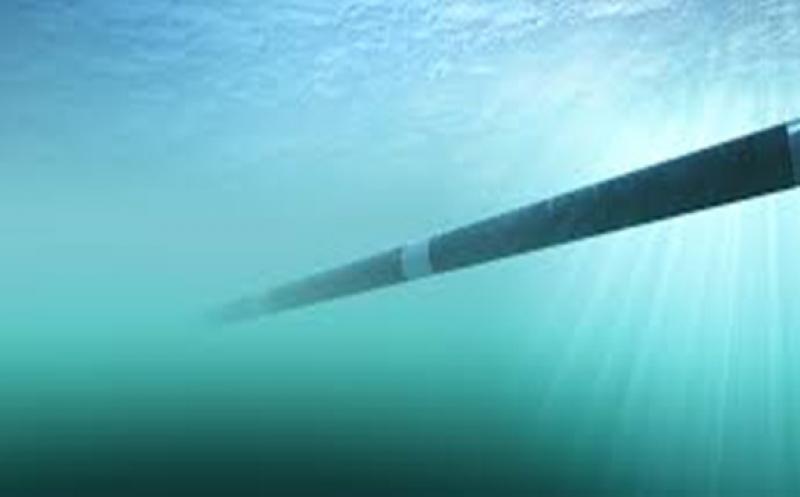
The proposed line connecting Greece to Cyprus and Israel is Greece’s most advanced international interconnection plan yet. Promoted by IPTO subsidiary Great Sea Interconnector, the link will be comprised of three distinct segments: connecting mainland Greece to Greece’s largest island, Crete; then Crete to Cyprus; and finally, Cyprus to Israel. The electricity interconnection currently under construction between Attica, in mainland Greece, and Crete involves two 335 km subsea 500 kV DC cables and is expected to commence full commercial operations by mid-2025.
Financing this part of the project was not a problem. In February 2024, the European Union’s Regional Development Fund announced €250 million for the line to Crete, which is also supported separately by other European Union and domestic Greek funds. A tender process to allocate 20% of the project to private investors has also been launched by IPTO, which currently fully owns the link to Crete. The new interconnector project follows the construction of a separate, 174 km subsea connection from Crete to the Peloponnese, in Greece, in 2021. That project linked mainland Greece and Crete through a line with 2×200 megavolt amperes (MVA) transport capacity.
The Greek government and IPTO are now seeking to secure financing for the interconnector from Crete to Israel. In 2022, the European Commission approved €657 million of funding for the construction of the interconnector while the Cypriot government has committed an additional €100 million. The segment linking Crete to Cyprus alone has an estimated cost of €1.58 billion.
In December 2023, IPTO signed a memorandum of understanding (MoU) with United Arab Emirates power and water company TAQA and Cyprus’ Ministry of Energy, Trade and Industry. The MoU was signed in a bid to bring TAQA and Cyprus into IPTO’s Great Sea Interconnector.
Separately, Greece’s Ministry of the Environment and Energy announced in February 2024 that US International Development Finance Corp. has also expressed interest in participating in the Great Sea Interconnector.
Meanwhile, in August 2023, the European Investment Bank (EIB) decided to reject a loan for the interconnector to expand to Cyprus, on the basis that energy storage should also be explored as an alternative proposition to Cyprus’ energy security.
Nevertheless, IPTO is willing to proceed with business as usual. In December 2023, the Greek transmission operator issued a Notice to Proceed to project contractor Nexans, which is headquartered in Paris, France. In practice, this means that IPTO notified Nexans to reserve the necessary manufacturing capacity for the production of cables linking Crete to Cyprus. The contract between IPTO and Nexans was signed in July 2023.
Egyptian connection
Linking Greece and Egypt’s grids was formally proposed for the first time in 2021 at a meeting between the two countries’ energy ministers in Athens. The Greek-Egyptian interconnection project, abbreviated to “GREGY” is now managed by Elica SA, a subsidiary of Greek infrastructure investor Copelouzos Group.
In 2023, IPTO and Elica signed an agreement with the goal of bringing IPTO into the GREGY project with a 33.3% share. According to the MoU, the two companies should also enter discussions with Egypt’s transmission system operator with the goal of having all three parties own one-third of the GREGY line.
The Great Sea and the GREGY Interconnectors have both been shortlisted by the European Commission to receive streamlined permits and regulatory processes. Egyptian president Abdel Fattah el-Sisi appears keen on the project. In a meeting with the chairman of the Copelouzos Group in January 2024, El-Sisi asked the two sides to speed up their cooperation efforts for the project to start construction as soon as possible.
Road to Germany
Greece is also exploring an interconnection link to Austria and southern Germany. The proposed Green Aegean Interconnector, a DC line connecting the countries, has been openly discussed by the Greek government since 2022. Greece has suggested that the interconnector could have an initial capacity of 3 GW, with an option to ramp up to 9 GW at a later stage. The rationale behind the interconnector is that Greece and the Middle Eastern countries linked to it have greater solar resources while Austria and Germany have greater wind power potential, benefiting all parties.
On Feb. 29, 2024, the European Network of Transmission System Operators for Electricity (ENTSO-E) published a draft list of interconnection and energy storage projects that could bring economic, environmental, or security of supply benefits to Europe. ENTSO-E has also enlisted the Green Aegean Interconnector, sketching a route that starts in Preveza, Greece, and travels undersea via the Adriatic to Slovenia and then on to Austria and Germany. Greece’s prime minister, Kyriakos Mitsotakis, has been promoting the project in meetings with other European leaders and the European Commission.
Geopolitics vs. business
Speaking at a policy event in Washington, DC, in February, Greek deputy energy minister Alexandra Sdoukou told the audience that “we aspire to become a regional energy hub for southeast Europe and the eastern Mediterranean. Our three main priorities are increasing the penetration of renewable energy systems and promoting decarbonization, supporting our region’s security of supply, and planning and developing infrastructure that connects three continents.”
Geopolitics is a main driver for the development of interconnections between Greece and the Middle East, Fanos Karantonis, chairman of Cyprus’ Electricity Market Association, told pv magazine. But these projects will also have implications for the electricity policies and markets of the countries they connect. Cyprus, for example, is an island with an isolated electricity network. It does not yet have a competitive electricity market structure in place. The operation of the interconnection to Greece and Israel makes it mandatory for Cyprus to open its electricity market to competition, in line with the European Union’s target model. The interconnector can therefore be a policy enabler, argued Karantonis.
The electricity mix in Cyprus is dominated by fossil fuels. Last year, fossil-fuel plants generated 83.5% of the country’s electricity needs. This means Cyprus’ wholesale market prices are high – definitely higher than in Greece, which in 2023 generated 57% of its electricity from renewables. A functional competitive market structure would force Cyprus to run a spot market, leading to negative prices similar to those experienced elsewhere in Europe on very sunny or windy days, argued Karantonis. When this happens, power suppliers would be able to buy cheap power on the Cypriot spot market. At other times, when Cyprus’ wholesale market prices are high, suppliers could opt for cheap electricity prices through the interconnector to Greece and Israel. Such a business proposition is expected to cause a significant problem for the island’s fossil fuel generators, due to their high operating costs compared to renewables.
One question is whether local investors would rush to develop solar and energy storage in response. Karantonis said this won’t necessarily be the case because Greece, Cyprus, and Israel are all in the same region and time zone, meaning that their supply and demand profiles largely coincide. Eventually, Cyprus will need to decide how much and what kind of standby power capacity it needs to operate and whether a capacity reserve market will actually be needed. The problem intensifies given the fact the Great Sea Interconnector’s capacity is set to be 1 GW, far surpassing electricity demand in Cyprus in winter.
All countries linked by the proposed interconnectors will face similar questions. Countries with larger power demand will have an easier time absorbing interconnection flows into their local markets. There could be geopolitical ramifications, too, as interconnections could provide vital energy security.
If the planned line to Austria and Germany goes ahead, the benefits for the interconnected nations will multiply. The question is which energy generators will supply the interconnector. IPTO has said that “the GREGY project will transport 100% green energy from Egypt to Greece, and through Greece to Europe, thus significantly reducing CO2 emissions.” Waleed Al-Saadi, acting chief executive officer of Saudi Arabia’s National Grid, has argued that the Saudi-Greek project will be the starting point for strengthening the interconnection between Saudi Arabia and Europe and strengthening Europe’s energy transition to renewables.
Such statements are positive but not always backed by development on the ground. Saudi Arabia, for example, is still a laggard in the development of renewable energy facilities, generating a mere 0.2% of its electricity demand in 2021 from photovoltaics. Egypt has been slightly more active in renewables, providing 4.5% of its electricity in 2022 from solar and wind. Perhaps notably, Saudi Arabia, Egypt, Israel, and Cyprus all have significant fossil fuel reserves. Greece, for now, appears to be the only country in the group delivering on energy transition goals.