It is increasingly clear that climate change is no longer a future problem -- the past five years have been the hottest on record, and climate-related natural disasters like out-of-control forest fires are now more frequent. Canada's own climate has warmed and "and will warm further in the future," according to Environment and Climate Change Canada's 2019 report, which noted that "annual average temperature over northern Canada increased by 2.3 per cent since 1948."
The United Nations has warned that Indigenous communities in Canada's north are among those most at risk from a changing climate, which threatens their safety and food security.
According to United Nations Secretary-General António Guterres, "The point of no return is no longer over the horizon. It is in sight and hurtling towards us."
COP25 was a particularly important conference as it marked almost four years since the signing of the Paris Agreement, meaning that by now it is possible to assess the extent to which countries are moving towards meeting their emissions reductions goals. The bad news: climate change commitments are lagging, amplifying the irreversible damage of emissions on the climate. Under current climate plans, temperatures are expected to rise 3.2 C by the end of the century, according to the UN Environment Programme.
In light of this mounting planetary crisis, it makes sense to draw on all sources of knowledge to help identify ways to either mitigate climate change or better adapt to its effects. One form of knowledge we all should be paying more attention to is traditional and Indigenous ecological knowledge.
For example, in relation to forest fires, recent research published by the Global Centre for Adaptation pointed out that "Indigenous peoples have long set low-intensity fires to manage eco-cultural resources and reduce the buildup of fuels -- flammable trees, grasses and brush -- that cause larger, hotter and more dangerous fires, like the ones that have burned across the west [of the United States] in recent years."
It noted that the Karuk Tribe in northwestern California and southern Oregon "have lived with fire for thousands of years" and have adapted to it, seeing fire as "inevitable and necessary in many ecosystems." Some of their "sophisticated fire practices include using frequent, low-intensity fires to restore grasslands for elk and maintain tanoak and black oak acorns. Fires also maintain grasslands that provide quality basketry materials, and provide smoke that shades the Klamath River, cooling water temperatures and benefiting fish during the hot late summer months."
This approach contrasts with the one followed by European settlers in North America, which has consisted primarily of suppressing fires as much as possible. Over time, this transformed several ecosystems from "food deserts to food pantries" and made forests more prone to high intensity fires that are difficult control and are almost certainly fueled by the effects of climate change.
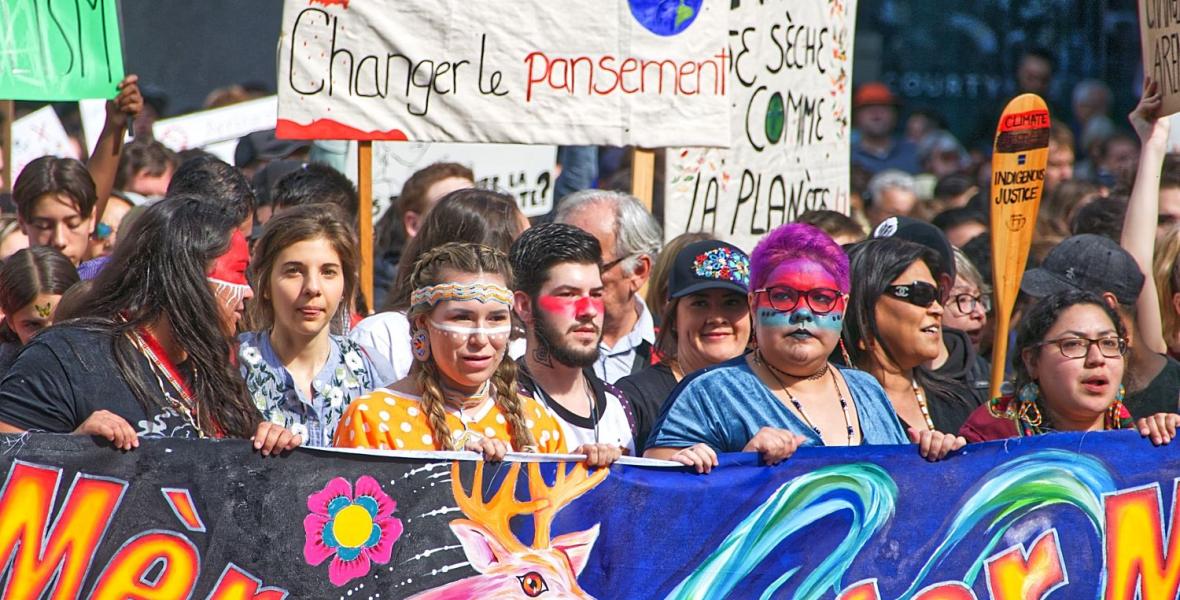
Indigenous Climate Action (ICA), an Indigenous-led organization in Canada, notes that Indigenous solutions to climate change are "rooted in connection to land and place and territory."
ICA executive director Eriel Deranger says that "ecosystem safeguards, such as Indigenous conservation areas and protected areas, are examples of Indigenous stewardship that could potentially mitigate the impacts of climate change, while building up an ecosystem's immunity through the process of capturing and storing atmospheric carbon dioxide -- a process that's also known as carbon sequestering."
These are just a few examples of the multiple ways in which traditional and Indigenous ecological knowledge can make a meaningful contribution toward addressing and adapting to climate change.
In recent years the fifth Assessment Report of the Intergovernmental Panel on Climate Change (IPCC) and the Paris Agreement have also recognized the importance of traditional and Indigenous knowledge in the context of building resilience to climate change.
In 2018-2019, Canada dedicated $27.6 million to support "climate change adaptation and increase the resilience of Indigenous and Northern communities."
But Indigenous groups argue that Indigenous communities are still excluded from decision-making processes. ICA, which sent a delegation to COP25 -- including youth from communities affected by climate change -- has urged Canada to stop the expansion of the Alberta tar sands and associated pipelines like the Trans Mountain expansion.
Let us hope that the delegates at COP25 seize the opportunity to highlight the importance of traditional and Indigenous ecological knowledge. Doing so would not only help communities across the world to adapt to the effects of climate change, it would also be a form of acknowledging and rectifying some of the ecological and colonial violence to which Indigenous people have been subjected for centuries.
Lorenzo Vargas is WACC Global's manager for communication for social change. Amanda Soares worked as an intern for WACC Global, an NGO that builds on communication rights in order to promote social justice.