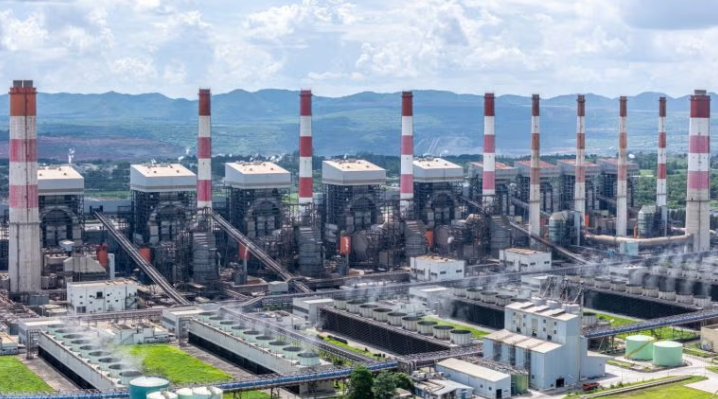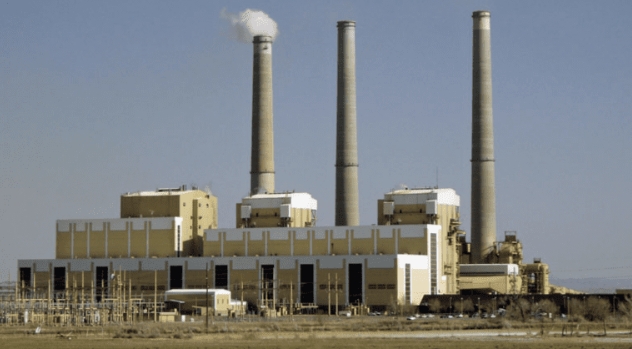
The 1,577-MW Hunter power plant in Utah is among those U.S. coal-fired stations that has had its scheduled retirement date pushed back.
Several U.S. utilities in recent months have said they plan to keep coal-fired units in their generation fleets operating past their scheduled retirement dates, in most cases citing increased demand for electricity in their service areas. Some also note that the Trump administration is likely to eschew enforcement of current pollution standards, and attempt to roll back greenhouse gas emissions regulations put in place by the Biden administration.
The New York Times in a Feb. 6 report said that about 780 individual U.S. coal-fired units have retired since 2000. Global Energy Monitor, a group that compiles data worldwide from energy operations, said more than half of the nation’s remaining coal-burning units are slated to be shut down in the coming years. The Times, though, said its analysis shows that since 2017, almost one-third of those units scheduled for closure have had their lifecycles extended, and others have had their scheduled closures canceled.
Most recently, Georgia Power in its latest integrated resource plan (IRP) said it would extend the operating life of several coal- and natural gas-fired units for several more years. The utility cited expected increases in demand for power, including from industrial manufacturing facilities. Interestingly, many of those facilities have received investments due to the Inflation Reduction Act, which the Trump administration has decried. The E2 group, which looks at projects related to the economy and environment, in a report last year said Georgia leads the U.S. in the number of clean energy projects (including manufacturing facilities related to clean energy) initiated since the 2022 passage of the IRA.
Global Energy Monitor in a January 2025 analysis of retired coal-fired power capacity by country reported that 4,744 MW of coal-fueled generation was shuttered in the U.S. last year. That’s the lowest figure since 2014 (4,613 MW), and comes after a five-year period (2019-2023) in which an average of nearly 12,400 MW was retired annually.
President Trump, speaking by video link to the World Economic Forum in Davos, Switzerland, last month, said, “Nothing can destroy coal. Not the weather, not a bomb … nothing. And we have more coal than anybody.”
The U.S. Energy Information Administration has said the U.S. leads the world in total proved recoverable coal reserves, ahead of Russia, Australia, China, and India. The U.S. ranks fourth in coal exports, behind Indonesia, Australia, and Russia, according to The Global Economy group.
“Utilities like Georgia Power and Duke Energy are pushing back the retirement dates of coal plants, backpedaling on earlier climate plans as growing demand for power continues to outpace the surprisingly slow rollout of cleaner options,” Manav Mittal, an energy analyst and controls manager, told POWER. Mittal said demand from data centers and artificial intelligence, “along with the electrification of transportation, heat, and manufacturing putting tremendous pressure on the power grid.”
Mittal added that “Supply chain challenges, permitting delays, and interconnection issues are forcing utilities to continue relying on existing coal plants rather than expanding renewables and energy storage to avoid blackouts. Older coal plants also provide some economic near-term savings because they are already paid off, avoiding the upfront capital costs associated with new gas or renewable energy projects.”
Support for Energy Infrastructure and Fossil Fuels
Newly-confirmed Energy Secretary Chris Wright on Feb. 5, in an order detailing the Dept. of Energy’s (DOE’s) focus under his leadership, said the agency will focus on bringing new generation resources online, not closing them down. “We must … permit and build energy infrastructure and remove barriers to progress, including federal policies that make it too easy to stop projects and far too difficult to complete projects,” Wright said. “Net-zero policies raise energy costs for American families and businesses, threaten the reliability of our energy system, and undermine our energy and national security. They have also achieved precious little in reducing global greenhouse gas emissions.”
Wednesday’s order said the DOE as part of its research and development programs will focus on “affordable, reliable, and secure energy technologies,” such as fossil fuels, advanced nuclear, geothermal and hydropower.
Evan Caron, a longtime energy and commodities expert, and co-founder and CIO at Montauk Climate, told POWER: “The resurgence of American coal plants reflects a pragmatic response to surging power demands from the new electron economy. When Georgia Power and Duke Energy announced extensions of their coal operations, they weren’t just buying time … they were acknowledging a fundamental shift in our energy landscape.
“The AI [artificial intelligence] revolution and manufacturing reshoring are creating unprecedented electricity demands. A single AI data center can require over 1 GW of power—equivalent to a large coal or nuclear plant. These facilities can’t risk intermittency or weather-dependent sources for their 24/7 operations.”
Caron, whose company is an investment firm “dedicated to building and funding technology companies at the forefront of climate, infrastructure, and the energy transition,” added, “The math is compelling: While coal faces environmental pressures, its ability to provide reliable, scalable baseload power at a known cost is proving essential for America’s industrial renaissance. Natural gas price volatility and transmission constraints for renewables make existing coal infrastructure increasingly valuable. The plants are paid for, the fuel is domestic, and the reliability is proven.
“Contrary to previous predictions, the AI boom may actually extend coal’s role in the energy mix. The sheer scale of power needed for computation and advanced manufacturing requires all available generation sources,” said Caron. “Utilities are recognizing that maintaining existing coal capacity is often more practical than building entirely new infrastructure.”
Caron noted that keeping coal-fired plants online “isn’t just about keeping the lights on—it’s about powering America’s technological and manufacturing competitiveness. As reshoring accelerates and AI deployments expand, the premium on reliable baseload power will likely further justify coal operations, especially in regions with strong industrial growth. The electron economy needs electrons, and coal plants deliver them consistently.”
Risks, Economics, and Logistics
Mittal said continuing to operate older coal-fired units does come with risk. He told POWER, “Stricter EPA regulations on either emissions or coal ash management could force costly upgrades. Meanwhile, renewables and storage costs are falling precipitously, threatening stranded assets as corporate and consumer preference shifts irreversibly toward clean energy. This all illustrates a more general tension: Electrification is critical for any hope of meeting carbon targets, but utilities will have to square those goals with the here-and-now needs of reliability—an already thorny problem with which AI demand can only further complicate.”
Aidan Charron, associate director of Global Earth Day at environmental group EARTHDAY.ORG, told POWER, “The decision to extend coal-fired plant operations often comes down to economic and logistical considerations, especially as utilities all over the country are grappling with rising energy prices and supply chain disruptions, just as the renewable energy industry is expanding.
“Coal seems a safe bet for some still but the reality of coal is that it is a finite resource, and while it has been a job creator and energy provider in the past, in 2025 it is an antiquated resource we have to wean ourselves off,” said Charron. “Energy systems need to be shifted towards renewable sources if they want to make the largest profit possible, create way more jobs, make America 100% energy independent forever, and don’t contribute to the climate crisis.”
Charron said, “Wind and sun are not going anywhere, they are the two most valuable energy resources we have and it’s what America should be backing, not coal … which has not been ‘new’ since the Industrial Revolution. Our kids need well-paying jobs and it’s the renewable energy industry which will provide it. Plus we need to start factoring in the ‘hidden’ costs of cleaning up after coal; it is a dirty source, and it makes people ill. The dust that comes from the mining and processing tends to be forgetten in all this. Then coal industry is not paying for the healthcare conequences—their workers are and the rest of us too—as well as their customers one way or another.”
More Delayed Retirements
Other power generators that have postponed the closure of coal-fired plants include PacifiCorp. That group’s latest IRP said the utility could be burning coal until at least 2045. The IRP, which was published on Dec. 31 of last year, noted the possibility of co-firing coal with other fuels, or retrofitting coal plants with carbon capture. It also noted that some plants likely would not retire for at least another 20 years. That comes after Rocky Mountain Power, the PacifiCorp division serving Idaho, Utah, and Wyoming, in April of last year said it expected to retire the Hunter and Huntington coal-fired plants in Utah in 2036 and 2042, respectively. Those retirements now could be pushed to later years.
Rocky Mountain Power also said it will extend the life of the utility’s four coal-fired power stations in Wyoming, home to the Powder River Basin, an area that is among the largest coal-producing regions in the U.S. Rick Kaysen, a Wyoming lobbyist for the utility, at that time said the move was made because the power market had changed since the utility’s previous IRP was published in 2023. The utility will now keep three units at the Dave Johnston plant operating, along with the Jim Bridger Power Plant, the Naughton Power Plant, and the Wyodak Power Plant. The plants, though no longer scheduled for retirement, could be converted to burn a different fuel in the coming years, most likely natural gas.
Duke Energy also backed away from its plan to close all its coal-fired units by 2035. The utility last fall said it would delay the retirement of its Gibson coal plant in Indiana by three years. The utility said two units at the station would be converted to burn both natural gas and coal, which would allow the plant to burn coal until 2038.
The owners of the Columbia Energy Center in Wisconsin late last year said they would delay that coal-fired power plant’s retirement to the end of 2029. The plant had been scheduled to close last year.
The Question of Economics
Energy Innovation, a policy analysis and research group, in a 2023 report said its analysis found that 99% of existing U.S. coal-fired power plants cost more to operate than if their generation was replaced by solar, wind, and energy storage. The group wrote, “Transitioning to clean energy resources would save enough to finance nearly 150 gigawatts of four-hour battery storage, and would generate $589 billion in new investment across the U.S.”
Even with coal-fired units remaining in operation longer than expected, research from Asset Impact, a suite of GRESB products supporting the financial sector and focused on climate, shows that among the top 10 groups burning coal in the U.S. (which includes the federal government), reliance on coal will continue to drop in those companies’ energy mix. The group notes that “All the top 10 largest ultimate owners are shrinking their absolute CO2 [carbon dioxide] emissions between 2024 to 2030. However, the level of decline, its speed and timing varies between companies depending on their strategy.
“For example, although Calpine Corp. and Dominion Energy only reduce their emissions slightly, the declines are smooth and linear, which avoids sudden shocks. All but two of the top 10 companies are forecast to see their capacity decline over the next few years. Companies with the steepest declines in generation [American Electric Power and Xcel Energy] align with earlier observed trends of rapid emissions reduction. Companies with stable or growing generation [for example, NextEra Energy] cut their coal energy and shift to renewables.”
Trump’s actions, meanwhile, could have an impact beyond just extending the life of coal-fired power plants. Officials in West Virginia are concerned about the president’s tariffs, particularly a trade war with China, which put an additional 15% tariff on imports of coal from the U.S. in response to Trump’s tariffs on goods from that country. West Virginia exports about 6 million tons of coal to China annually, or about half of all U.S. coal exports to that country.
Chris Hamilton, president of the West Virginia Coal Association, told local media the tariffs “could have a dramatic impact … they could evolve to the point where even furloughs of mining operations are considered.” Hamilton noted several other countries, including Indonesia, Australia, and South Africa, could replace the coal from West Virginia.