The original bearings, dating back to the early 1960s, are part of the Forth Road Bridge Critical Element Programme.
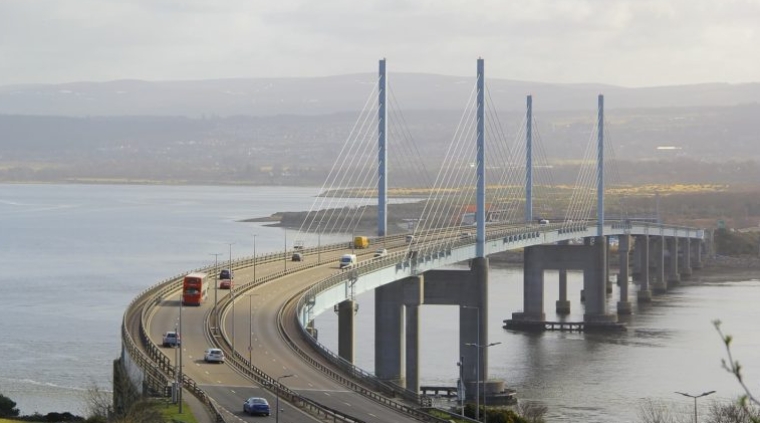
The first project involves Kessock Bridge, which spans the Beauly Firth at Inverness. Spencer Bridge Engineering will carry out steelwork modifications, strengthening, and repainting of the four towers. The work will also enhance access through the towers and introduce an integrated rescue system to improve safety for workers. The company will collaborate closely with BEAR Scotland and its designer, Jacobs, to complete this task.
For the Forth Road Bridge, which connects Edinburgh to Fife across the Firth of Forth, Spencer Bridge Engineering will replace the lateral thrust bearings. These bearings, which are critical for the bridge’s structural integrity, date back to the 1960s. As part of the Forth Road Bridge Critical Element Programme, the replacement will involve temporary steelwork. Enabling works are scheduled to begin in 2025, with bearing replacement taking place in 2026.
The third project involves the Tay Road Bridge, which links Dundee to Newport-on-Tay. Spencer Bridge Engineering will replace two underdeck gantries as part of a £5m ($6.67m) project. The new gantries, designed by Spencer’s in-house team, will feature a web traction drive system. The project will be carried out in partnership with the Tay Road Bridge Joint Board and its consultant, WSP.
Spencer Bridge Engineering, part of the Spencer Group, has over 30 years of experience working on Scottish infrastructure projects. The company is well-established as a key partner in the development of bridges, roads, rail, and marine structures across the region.
Glen Smithson, the company’s operations director, commented: “Having the ability to provide turnkey solutions, delivering both the design and installation works, enables us to have tight control of each element of the project and ensure we are delivering the highest quality works in the most efficient way.”
He added, “Our ethos of having strong collaboration with our clients ensures our projects are more closely tailored to each client’s individual needs and specifications. Our teams are adept at working in remote, exposed locations, with difficult logistics, which is another factor which makes us so well-equipped to work on so many Scottish infrastructure projects.”