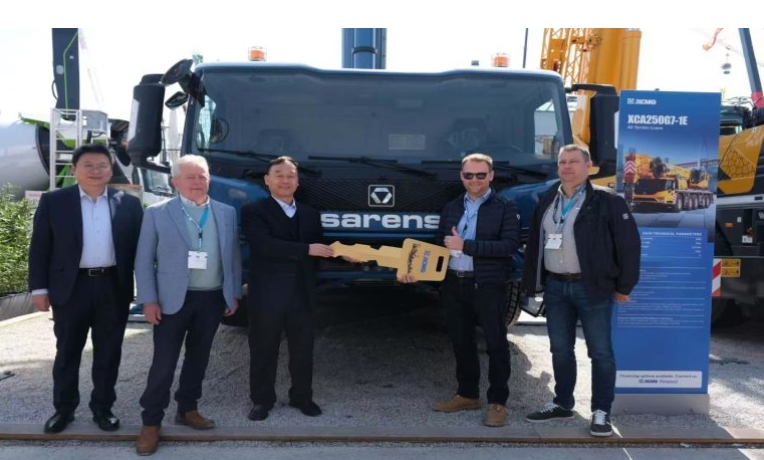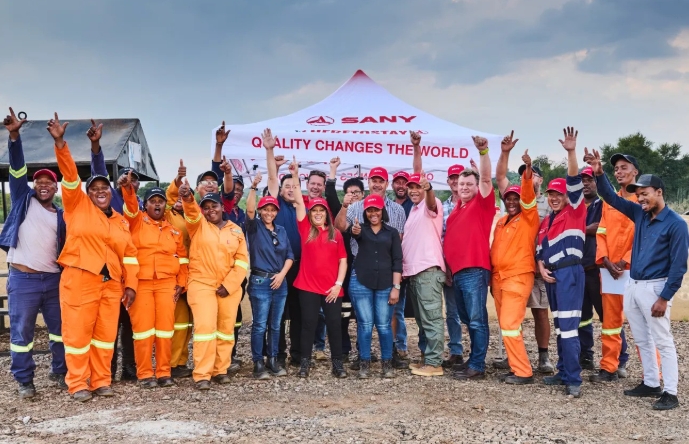
Sany’s image of a delivery of road-building machines to a client in South Africa
The funds will support the expansion of Sany’s sales network in Asia, South America, and Africa, where infrastructure demand is strong. Sany Group vice-president Jiang Qingbin stated: “After the IPO, we will continue to promote globalisation, but globalisation is not about building factories. It’s mainly about people – building localised marketing channels is probably the most important thing.” He outlined a goal to double overseas revenue from $7 billion to $14 billion by 2028, with foreign sales currently growing at 12% annually and accounting for 65% of total revenue.
Sany’s focus on international markets comes as domestic sales declined by over 3% in 2024 compared to 2023, reflecting reduced demand in China’s construction sector. Jiang noted that 70% of Sany’s foreign sales are in the Asia-Pacific and Europe, with a strategic emphasis on developing and emerging economies. He added: “Markets outside the US happen to be our focus, particularly the developing and emerging economies. We see higher demand from those regions, and there’s a relatively high acceptance of Chinese brands.”
The company’s supply chains are designed to minimize reliance on U.S. components, enabling flexibility in global markets. Sany, the world’s sixth-largest construction machinery manufacturer, trails Caterpillar, Komatsu, John Deere, XCMG, and Liebherr. It operates production facilities in the U.S., Europe, India, Brazil, and Germany and serves approximately 180 countries and regions as of the end of 2024.
Sany is among over 100 companies seeking a listing on the Hong Kong stock exchange this year. The IPO proceeds will enhance its ability to establish localized marketing and distribution channels, strengthening its presence in high-growth regions. This strategy aligns with Sany’s aim to capitalize on global infrastructure needs while maintaining competitiveness in the construction equipment industry.
The expansion plan underscores Sany’s commitment to meeting rising demand for reliable, high-quality machinery in developing markets. By prioritizing localized operations, the company seeks to build stronger connections with customers and adapt to regional preferences, positioning itself for sustained growth in the global market.