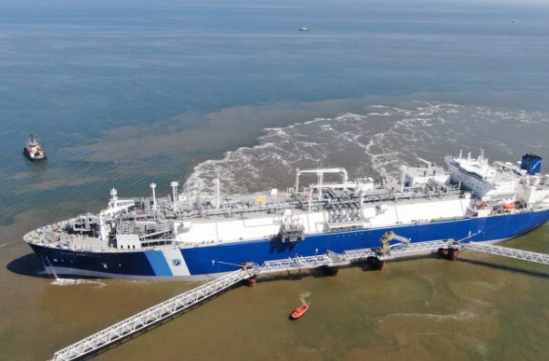
Final testing of ECOnnect Energy’s IQuay F-Class system at Wilhelmshaven II is underway, involving thorough validation with industry partners and regulatory bodies. This innovative system enables up to 8.5% of Germany’s natural gas imports to reach shore without fixed jetties or extensive construction. “What’s being tested here is more than just a technical solution. It’s a new model for energy infrastructure that delivers faster, safer, and more sustainable results. Installed offshore in the sensitive Jade Bay ecosystem, the IQuay F-Class demonstrates that innovation and environmental responsibility can go hand in hand,” said ECOnnect Energy.
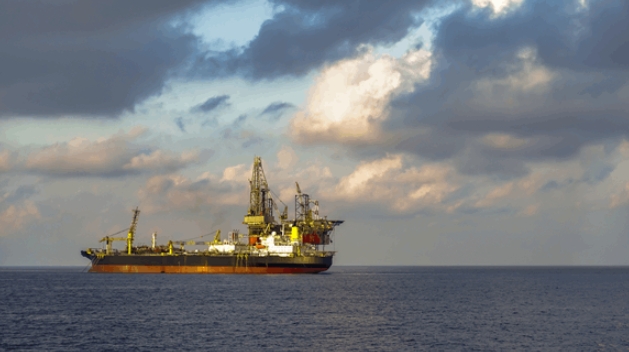
The FSRU Excelsior, a 277-meter-long floating storage and regasification unit owned by U.S.-based Excelerate Energy, has been moored off Wilhelmshaven’s coast, marking the start of commissioning. With a regasification capacity of up to 4.6 billion cubic meters of LNG annually and a storage capacity of 138,000 cubic meters, the FSRU Excelsior will supply up to 1.9 billion cubic meters of natural gas to Germany’s grid, supporting energy stability.
French contractor Geocean, in partnership with ECOnnect Energy, facilitated the installation of the IQuay system. This included laying pipelines, installing two pipeline end manifolds, and deploying thermoplastic composite pipes under challenging winter conditions. “Our modular Fast-Flex barge, specifically configured for this project, enabled fast and secure deployment in shallow waters. The transfer system is now fully operational. Regasified LNG will soon be injected into the German grid via the new WAL II pipeline,” stated Geocean.
Wilhelmshaven II is part of DET’s network of LNG terminals, which also includes Wilhelmshaven 1, Brunsbüttel, and Stade. The Brunsbüttel terminal is advancing with Phase 2 construction and commissioning, supported by Worley. The Wilhelmshaven II terminal, a key energy hub in Europe, underscores Germany’s commitment to diversifying its energy sources through efficient and environmentally conscious infrastructure.
As of May 2025, commissioning activities at Wilhelmshaven II are progressing, with the terminal poised to contribute significantly to Germany’s natural gas imports. This development strengthens the country’s energy framework, ensuring a stable supply for domestic consumption.