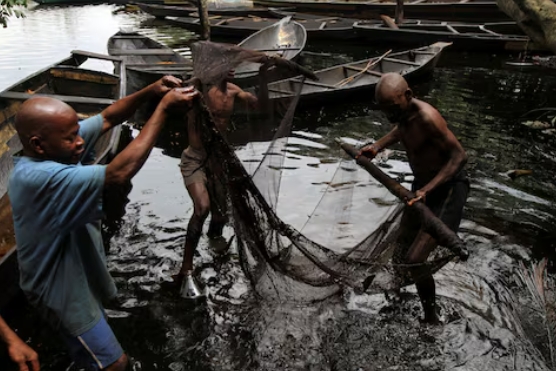
Fishermen sort out their fishing net at the bank of a polluted river in Bidere community in Ogoniland in Nigeria's delta region August 20, 2011.
Nnimmo Bassey, executive director of the Health of Mother Earth Foundation, expressed concern over the ongoing spill, stating: “We are in a disaster zone and further disasters can erupt from even an accidental spark of fire. The fact that this spill that happened a week ago is yet to be stopped sends a very strong point to why the government should focus on cleaning up Ogoniland and not seek to open new oil wells. The old wells should be shut down, and decommissioned.” Bassey highlighted the delayed response as a significant issue for the affected community.
Ogoniland, a key oil-producing region in Nigeria for decades, has faced persistent environmental challenges due to oil pollution. Local residents have frequently raised concerns about toxic waste and insufficient compensation, despite the region’s contributions to Nigeria’s oil industry, which supports both national revenues and major oil companies.
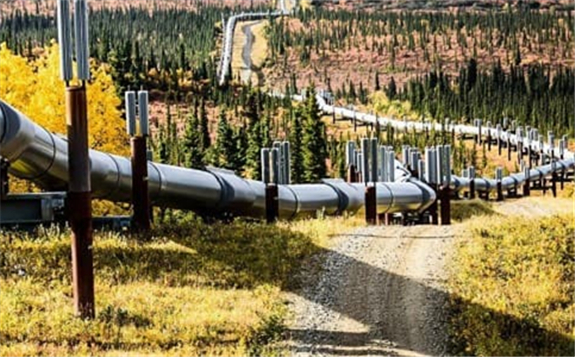
The Trans Niger Pipeline, capable of transporting approximately 450,000 barrels of crude oil per day, is managed by a former Shell subsidiary now owned by the Renaissance Group, a Nigerian oil consortium. The group, which includes Aradel Energy, First E & P, Waltersmith, ND Western, and international energy firm Petroline, acquired Shell’s onshore assets in March 2025. Renaissance Group confirmed the spill and has sent investigators to determine its cause.
The pipeline is one of two primary routes for exporting Bonny Light crude from Nigeria, Africa’s leading oil producer. It remains uncertain whether the pipeline has been closed following the incident, and Renaissance Group has not yet issued further statements. A prolonged disruption could impact Bonny Light exports, potentially leading to a force majeure declaration by operators.
Challenges such as pipeline damage and crude theft have driven major oil companies, including Shell, ExxonMobil, Total, and Eni, to divest from Nigeria’s onshore and shallow-water fields, shifting focus to deep-water operations. The recent spill underscores the ongoing environmental and operational difficulties in Ogoniland, emphasizing the need for effective spill response and environmental restoration efforts.