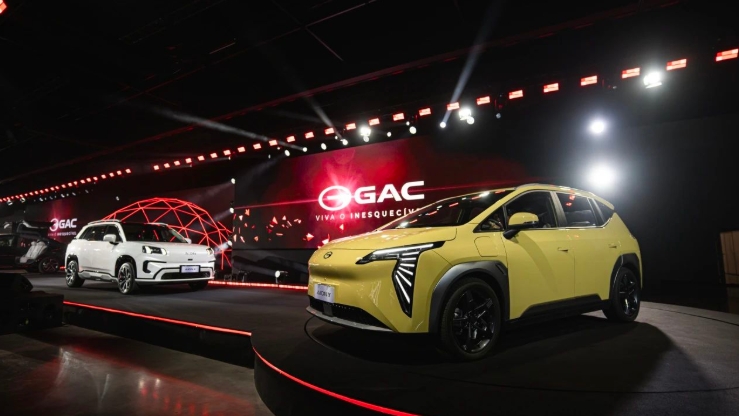
The event showcased the AION V, AION Y, HYPTEC HT, GS4 HYBRID, and AION ES, offering Brazilian consumers diverse options, including battery electric, plug-in hybrid, and sedan models. These vehicles align with Brazil’s growing focus on sustainable mobility, supported by the government’s 2024 “Mover” initiative, which promotes green technology and enhances the new energy vehicle supply chain.
GAC signed a strategic agreement with Brazil’s Instituto Nacional de Metrologia, Qualidade e Tecnologia (Inmetro) to contribute to the country’s automotive standards, fostering industry growth. The company’s plan rests on four pillars: building a full industrial chain, developing an energy ecosystem, cultivating talent, and integrating with local culture. By the end of 2024, GAC established a Brazilian subsidiary, followed by a parts distribution center in early 2025. Plans for a local R&D center aim to strengthen supply chain integration.
GAC is also advancing Brazil’s energy infrastructure by creating a nationwide energy replenishment network, targeting completion by 2030. The company joined the Brazilian Sustainable Mobility Alliance to support efficient urban transport. Partnerships with universities like Unicamp, UFSC, and UFSM focus on flexible fuel technology research and workforce development. GAC’s commitment to community engagement was highlighted during a May 12 meeting with Brazilian President Luiz Inácio Lula da Silva, where GAC pledged new energy vehicles for COP30, reinforcing its sustainability goals.
GAC’s Chairman stated: “Through our Brazil Action Plan, we aim to deliver innovative mobility solutions while contributing to local development.” The company operates 33 dealerships covering 95% of Brazil’s major urban areas and is implementing its GAC Sales Service Way standards, offering 24/7 customer support, roadside assistance, and tailored warranties. Collaborations with financial institutions like Santander Bank will provide accessible financing for consumers.
In 2025, GAC plans to expand its portfolio with electric, hybrid, and oil-fueled vehicles across various segments, while the parts distribution center will enhance local manufacturing efficiency. These efforts position GAC to meet diverse consumer needs and strengthen Brazil’s sustainable automotive ecosystem.