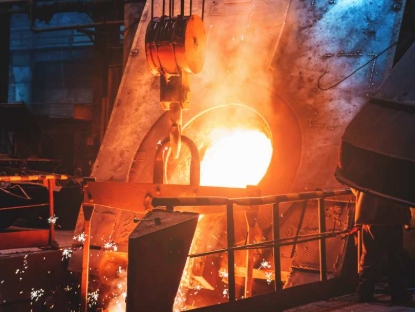
Blast Furnace
The funding will support the front-end engineering design (FEED) study, which will guide the final investment decision for the pilot plant, expected in 2026. If approved, the NeoSmelt facility is projected to start operations in 2028, producing 30,000 to 40,000 tonnes of molten iron annually from Pilbara iron ore. Initially, the plant will use natural gas to convert iron ore to DRI, with plans to transition to hydrogen to further reduce emissions.
ARENA CEO Darren Miller stated: “Globally, the steelmaking industry makes up around eight per cent of global greenhouse gas emissions, so the decarbonisation opportunity is huge. As the world’s largest producer of iron ore, Australia has an important role to play in reducing emissions across the steel value chain. We’re excited by the insights this project expects to provide. This is a positive step towards building a lower-emissions steel industry here in Australia.”
The project is a joint venture involving BlueScope, BHP, Rio Tinto, Woodside, and Mitsui Iron Ore Development. The DRI-ESF process, which replaces traditional blast furnaces, could reduce CO2 emission intensity by up to 80% compared to the industry average for conventional steelmaking. The process converts iron ore to DRI before processing it in an electric smelting furnace suitable for basic oxygen furnace steelmaking.
Federal Resources Minister Madeleine King commented: “The fuels, metals, fertiliser, chemicals and grain shipped from Kwinana have powered Western Australia and the region since the 1950s. Now Kwinana is playing a central role in the world’s energy transition and a big part in global efforts to decarbonise. If we can decarbonise steel making, we will create far fewer emissions when building the cities of the world.”
The ARENA funding complements a A$75 million (US$49 million) contribution from the Western Australian Government announced in 2024. The NeoSmelt project represents a significant step toward sustainable steel production, leveraging Australia’s iron ore resources to support global decarbonization efforts.