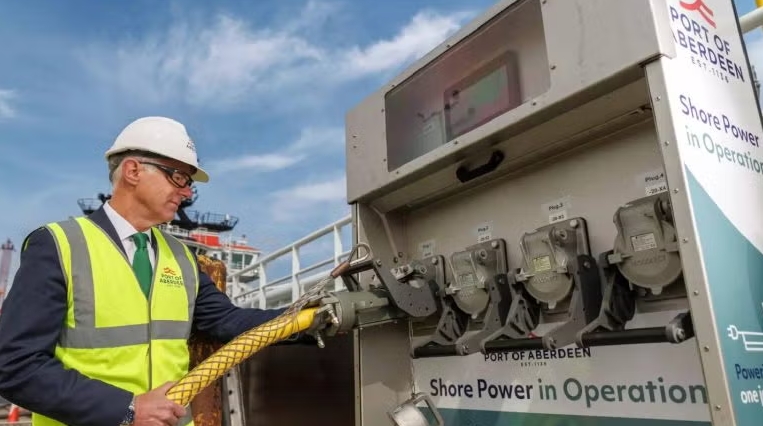
Scotland’s largest maritime decarbonisation project goes live.
PowerCon’s infrastructure could reduce 60,000 tonnes of CO2 equivalent over 20 years, matching emissions from 2,140 cars yearly. OSM Thome’s NS Iona was the first vessels connected, among five retrofitted for shore power. The £4 million effort, backed by the UK’s Zero Emissions Vessels and Infrastructure (ZEVI) program, unites public and private funding through Innovate UK and the Department for Transport.
Port of Aberdeen, targeting net zero by 2040, also upgraded two Regent Quay berths for Bibby Marine’s electric vessel project and is nearly complete with shore power for Serco NorthLink ferries, funded by Caledonian Maritime Assets Limited. Plans include expanding shore power across its 7,600m quayside.
Maritime Minister Mike Kane said: “This is a major achievement for Port of Aberdeen and I am proud to have supported it through the UK SHORE programme – it shows what can be achieved when we put our full energy behind decarbonisation.”
CEO Bob Sanguinetti stated: “Port of Aberdeen’s net zero journey has taken a significant step forward. Our Shore Power in Operation demonstrator is the single biggest maritime decarbonisation project in Scotland to date. It represents a £4 million investment in clean energy and will be a game-changer for Port of Aberdeen and our valued customers, who will benefit from an 80% reduction in their carbon emissions while at berth.”
PowerCon’s Peter Selway added: “PowerCon is extremely proud to be part of this landmark project. Pollution from vessels is a serious—yet often overlooked—environmental and public health issue. Port of Aberdeen is leading by example, showing real commitment to renewable, sustainable solutions, and we’re delighted to support them on that journey.”
Led by Port of Aberdeen with partners like OSM Offshore and the University of Manchester’s Tyndall Centre, the project highlights collaboration in advancing clean maritime solutions through ZEVI, supporting 10 UK projects since February 2023.