J-Power’s involvement focuses on gaining expertise in the manufacturing, assembly, installation, and operation of floating offshore wind systems. The company intends to apply this knowledge to support the development of similar projects in Japan and internationally, enhancing its capabilities in renewable energy innovation.
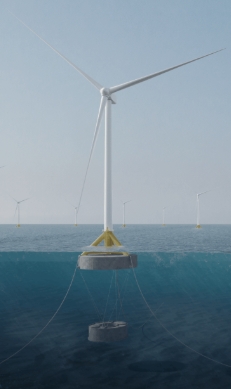
The WHEEL project utilizes a hybrid foundation design, combining the benefits of barge-type and spar-type foundations to optimize stability and efficiency. Foundation manufacturing is set to begin in June 2025, with installation planned for the first quarter of 2026. Operations are expected to commence in the second quarter of 2026, marking a significant step in testing advanced floating wind technology.
Esteyco, as the project leader, brings its expertise in engineering and renewable energy solutions to the initiative. The collaboration with J-Power underscores a shared commitment to advancing clean energy technologies, addressing the growing global demand for sustainable power sources. The WHEEL turbine’s strategic location off Gran Canaria leverages the region’s favorable wind conditions, making it an ideal site for this demonstration.
The project aligns with efforts to expand offshore wind energy, particularly in regions like Japan, where deep coastal waters make floating turbines a viable solution for renewable energy generation. By participating, J-Power strengthens its position in the global renewable energy market while contributing to the technological advancements needed for scalable floating wind projects.
This initiative reflects the increasing focus on offshore wind as a key component of the clean energy transition. The WHEEL project’s innovative design and international collaboration highlight the potential for floating offshore wind to meet rising electricity demands sustainably, supporting both local and global environmental goals.