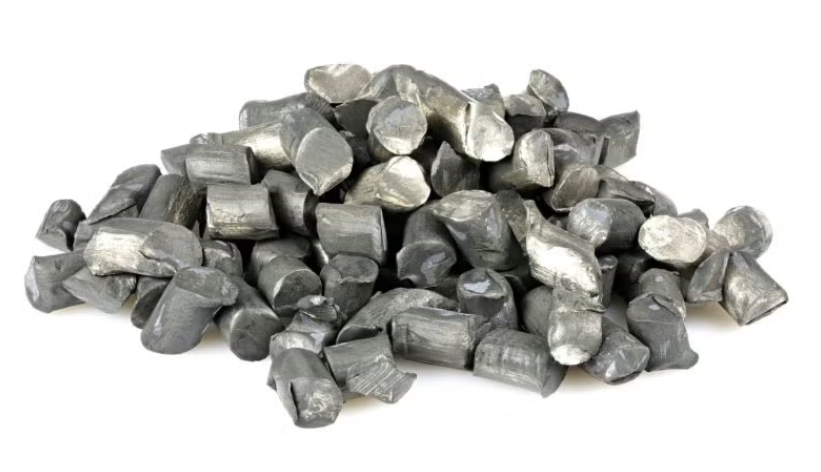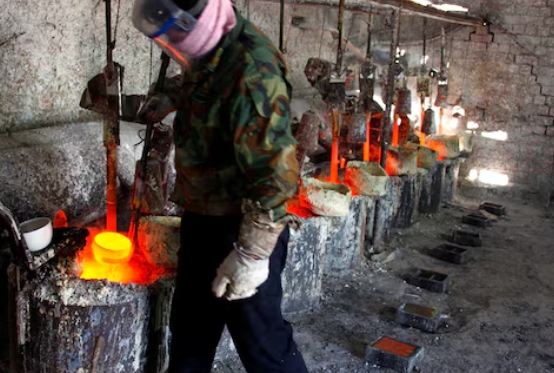
A worker at a smelting workshop prepares to pour the rare earth metal lanthanum into a mould near the town of Damao in China's Inner Mongolia Autonomous Region, October 31, 2010.
European suppliers have secured sufficient export licenses to avoid the major interruptions anticipated earlier this month. Nils Poel, head of market affairs at CLEPA, noted: "Overall the feeling is that we probably will still have production in July and that the impact will be manageable." He added that while some production lines may face issues, large-scale stoppages have been avoided for now. License issuance has increased to 60% from 25%, though delays continue for cases involving U.S. end users or products routed through countries like India.
On Friday, Ford CEO Jim Farley, speaking in Colorado, said: "The company has had to shut down factories over the past three weeks because of magnet shortages." Meanwhile, Volkswagen stated that its supply of rare earth components remains stable. Stellantis also confirmed it has resolved its immediate production concerns.
In April, China introduced export restrictions on seven rare earths and related magnets. Since then, magnet exports have dropped by approximately 75%, causing production halts in Asia, Europe, and the United States. However, recent progress has eased concerns. A U.S. automotive supplier executive, speaking anonymously due to the issue’s sensitivity, noted that two weeks ago the industry was in "full panic," but faster license approvals have reduced the risk of sudden stoppages. A European official, also anonymous, said China is approving the "bare minimum" of licenses to prevent production halts for European firms.
On Thursday, the White House announced an agreement with China to accelerate rare earth approvals, though details were not disclosed. Beijing confirmed the deal, finalized in London earlier this month, and stated it would process licenses in accordance with its regulations. U.S. Treasury Secretary Scott Bessent, in a Friday interview with Fox Business Network, said: "I am confident now... the magnets will flow." He described the agreement as a step toward de-escalation, ensuring expedited shipments to U.S. companies with prior regular deliveries.
Despite progress, challenges remain. U.S. magnet manufacturer Dexter Magnetic Technologies, serving defense and other sectors, has received only five of 180 requested licenses since April. CEO Kash Mishra said: "It's an extended delay," noting that the process involves 45 days to prepare supplier paperwork and another 45 days for license approval, primarily for non-defense sectors.
The export licensing system remains complex and opaque, creating ongoing uncertainty for automakers and suppliers. While the situation has improved, the industry continues to monitor supply chain stability closely.