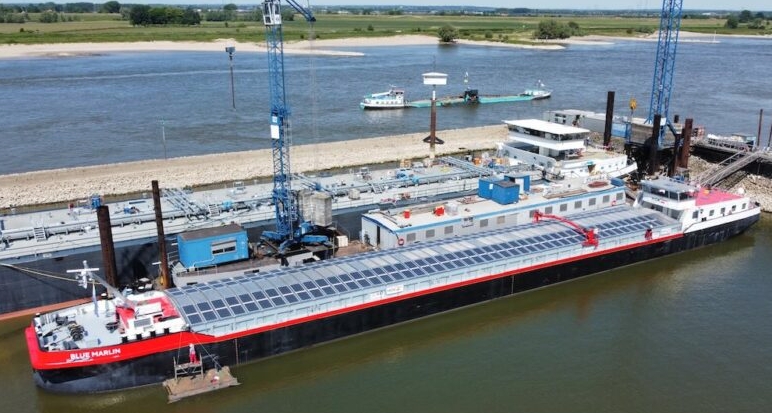
The Blue Marlin is equipped with 192 solar panels, generating up to 35 kW under optimal conditions. This power supports the vessel’s electric drive system and hotel load, making it the first inland cargo ship to achieve such hybrid functionality. The solar system works alongside four diesel generators, enabling peak shaving to reduce fuel use and emissions by minimizing the need for additional generators during high energy demand.
An automated energy management platform optimizes power distribution across the vessel’s systems, enhancing efficiency and reducing fuel consumption. The Blue Marlin can also operate on solar power alone for limited periods, particularly when lightly loaded and traveling downstream, further lowering its environmental impact.
HGK Shipping’s collaboration with Wattlab builds on prior innovations. In 2024, the two companies launched the MS Helios, a 135-meter dry cargo vessel fitted with 312 solar panels, earning a Guinness World Record for the largest solar array on an inland ship. Unlike the Blue Marlin, the Helios uses solar energy solely for low-voltage onboard systems.
Wattlab’s managing director, Anna van der Werff, stated: “The Blue Marlin represents a groundbreaking step in sustainable shipping. By integrating solar power into the propulsion system, we’re demonstrating how renewable energy can transform inland navigation while maintaining operational efficiency.”
The Blue Marlin’s hybrid technology supports the shipping industry’s efforts to adopt cleaner energy solutions. HGK Shipping and Wattlab aim to set a new standard for inland vessels, combining renewable energy with advanced systems to meet modern environmental and operational demands. This project highlights the potential for solar energy to reduce reliance on traditional fuels in maritime transport.