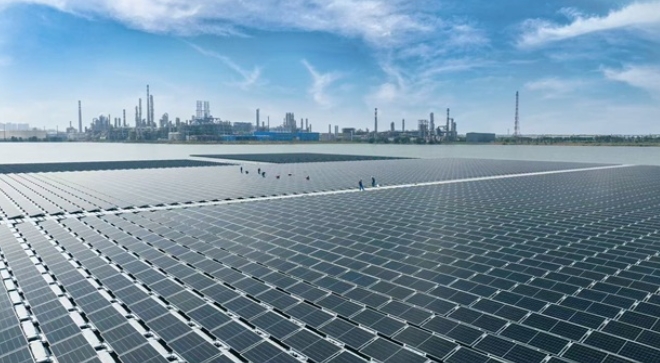
The project builds on an existing pile-based floating PV system and is expected to generate 16.7 million kWh of electricity annually, reducing CO2 emissions by 14,000 tons. Located in a sea-connected zone, the installation optimizes water surface use. Its innovative design positions solar panels closer to the water surface, reducing the gap to one-tenth of traditional pile-based systems, which enhances seawater cooling and boosts power generation efficiency by 5-8%.
To withstand marine conditions, the project incorporates specialized features. The floating structures and support frames are engineered to resist salt mist corrosion and marine growth, such as barnacles. The anchoring system is built to endure wind speeds up to level 13 and accommodate tidal variations of up to 3.5 meters. Sinopec notes that this setup lowers investment costs by about 10% compared to conventional offshore pile-based PV systems. The low-clearance design also facilitates easier inspection and maintenance, improving safety and reducing operational expenses.
Sinopec’s executive director, Zhang Wei, stated: “This project marks a significant milestone in our commitment to sustainable energy solutions. By leveraging advanced technology and innovative design, we are enhancing the efficiency of renewable energy production while addressing the challenges of marine environments.”
The floating PV project aligns with Sinopec’s broader energy strategy, which includes producing green hydrogen using solar-generated electricity. The company has previously developed China’s first carbon-neutral hydrogen refueling station and an industrial-scale seawater hydrogen production project. Sinopec plans to expand this installation with an additional 23 MW of floating PV capacity.
In related developments, GCL System Integration, a subsidiary of China’s GCL Group, recently collaborated with Norway’s Ocean Sun to develop the NT10/60GT module, a new floating PV module designed for offshore solar applications. This innovation reflects the growing focus on advancing floating solar technology to meet diverse energy needs.
The project underscores Sinopec’s leadership in renewable energy innovation, contributing to sustainable development and efficient use of marine resources in Shandong and Qingdao.