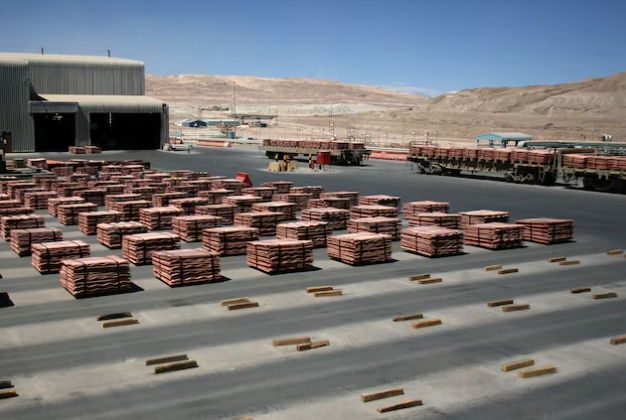
Sheets of copper cathode are pictured in Antofagasta, Chile March 31, 2008.
Following the announcement, U.S. Comex copper futures surged over 12% to a record high, reflecting market surprise at the tariff’s scale and timing. RBC Capital Markets analysts anticipate short-term price volatility for copper and related company shares if the tariff is enacted. Shares of Freeport-McMoRan, a major U.S. copper producer based in Phoenix, rose nearly 5% on Tuesday. The company, which produced 1.26 billion pounds of copper in 2024, did not comment immediately. Freeport has expressed support for increasing U.S. copper output but noted potential global economic drawbacks from the tariffs.
The U.S. imports about half its copper annually, primarily from Chile, Canada, and Mexico, which supplied most refined copper and copper products in 2024, per U.S. Census Bureau data. These countries, along with Peru, have free trade agreements with the U.S. and have argued their exports pose no threat to U.S. interests. Chile’s Codelco Chairman Maximo Pacheco told Reuters the company seeks clarity on which products would face tariffs and whether all nations would be affected. Canada’s Mining Association President Pierre Gratton expressed concerns about impacts on Quebec’s copper smelters, awaiting further details from the Section 232 investigation report.
In February 2025, the Trump administration launched a Section 232 investigation into copper imports, originally set to conclude by November. Lutnick confirmed the review was completed early, stating: “The idea is to bring copper home, bring copper production home, bring the ability to make copper, which is key to the industrial sector, back home to America.” Ole Hansen of Saxo Bank noted that U.S. copper inventories are sufficient for a year due to recent imports, predicting a price correction after the initial surge. The National Mining Association withheld comment, pending detailed information.