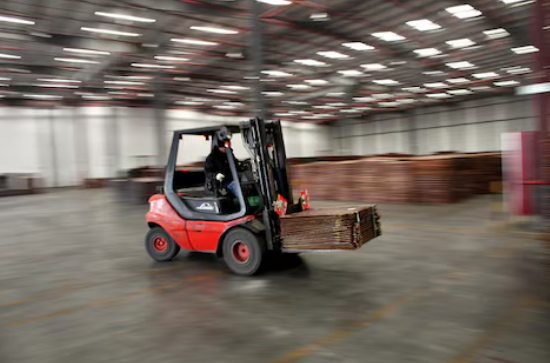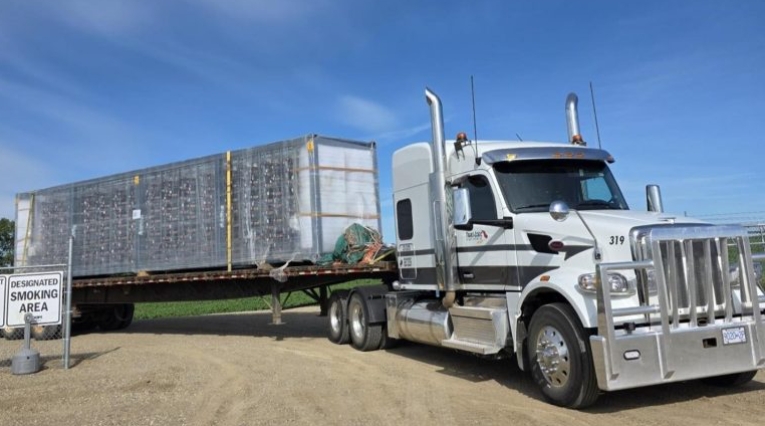
Skids arriving on site.
The system consists of five automated skids designed to operate as an integrated unit. In the coming weeks, on-site assembly and testing will verify the equipment’s condition after transport. This process includes leak testing and electrical inspections to ensure readiness for processing raw brine. The demonstration facility is set to begin operations in three phases, starting in the second half of 2025 and extending into 2026, with the first phase focused on producing lithium carbonate using surface-available brine.
E3 Lithium’s president and CEO, Chris Doornbos, commented: “The arrival of the equipment officially kicks off our demonstration programme and is a key milestone towards commercial lithium production. With only a few systems of this kind operating, we appreciate each of our vendors and engineering firms for their ongoing support. The E3 Lithium team is excited to get the equipment operating and we look forward to providing additional updates on the demonstration facility as we progress towards commissioning Phase 1.”
Each phase of the demonstration facility is designed to confirm the reliability of E3 Lithium’s process technology and its ability to produce high-quality lithium carbonate at scale. The project is a critical step toward establishing a sustainable supply chain for lithium, a vital component in battery manufacturing.
The Canadian government has supported the Clearwater project through the Critical Minerals Infrastructure Fund (CMIF), providing C$4.4 million (approximately US$3 million) in non-repayable funding. This financial support aids pre-construction activities, including the development of energy infrastructure, transportation facilities, and community engagement initiatives essential to the demonstration facility and its feasibility study.
The Clearwater project underscores E3 Lithium’s commitment to advancing innovative lithium extraction technologies. By leveraging automated systems and rigorous testing, the company aims to establish a reliable and efficient process for meeting global demand for battery-grade lithium. The upcoming phases of the demonstration facility will provide critical data to support the project’s path to commercial production, contributing to Canada’s role in the global energy transition.