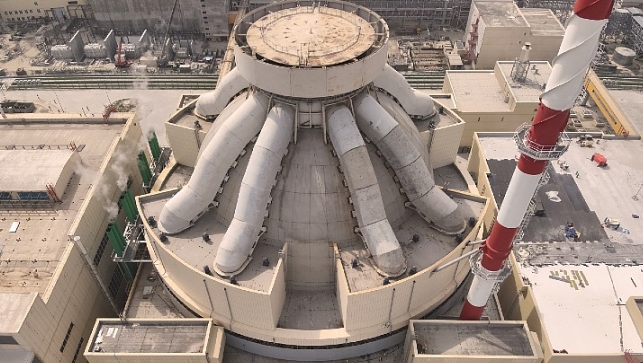
ASE stated: “During the tests, the reactor unit is heated up, and our specialists check step-by-step how key elements operate under these conditions: pumps, pipelines, heat exchange equipment. It is important to record how the equipment behaves under load - after all, it will be the one that will ensure reliable operation of the plant later.” The tests simulate operational conditions to ensure system readiness.
In the prior month, Rooppur unit 1’s containment building passed leak tests. By late June, step-up and auxiliary transformers were commissioned, converting the turbogenerator’s 24 kV to 400 kV for the grid, with a capacity of 1,599 MW, surpassing the unit’s 1,200 MW.
The Rooppur project began with a 2011 agreement between Rosatom and the Bangladesh Atomic Energy Commission for two reactors. A $12.65 billion contract was signed in 2015, and a site license was issued in June 2016 for preliminary work. Construction started on unit 1 in November 2017 and unit 2 in July 2018, with each designed for a 60-year lifespan, extendable by 20 years.
Nuclear fuel delivery in October 2023 established Rooppur as a nuclear facility. Turbine installation and primary circuit hydraulic tests were completed in March, enabling hot testing. Rosatom targets grid connection for unit 1 this year, enhancing Bangladesh’s energy capacity.