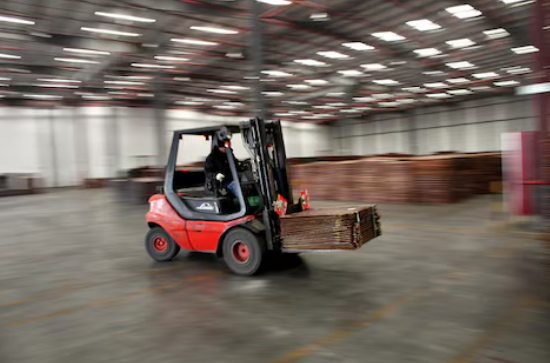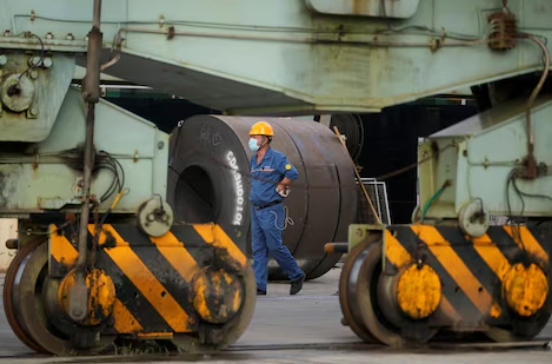
An employee walks past rolled steel at a port during a government-organised media tour to Baoshan Iron & Steel Co., Ltd. (Baosteel), a subsidiary of China Baowu Steel Group, in Shanghai, China September 16, 2022.
The global steel industry contributes approximately 8% of worldwide carbon dioxide emissions, with China producing more than half of the world’s steel. In 2024, China’s crude steel output reached 1.005 billion tons, with about 90% from blast furnace facilities. Increasing the share of electric arc furnace production to 15% could reduce CO2 emissions by over 160 million tons, comparable to the carbon footprint of the European Union’s steel sector.
China’s electric arc furnace usage lags behind global standards, with a current share of around 10%, compared to a global average of 30%, 71.8% in the United States, 58.8% in India, and 26.2% in Japan. From 2021 to mid-2025, blast furnace capacity utilization in China rose from 85.6% to 88.6%, while electric arc furnace utilization declined from 58.9% to 48.6%, the report noted.
Belinda Schaepe, an analyst at the Centre, stated: “A credible strategy to curb emission-intensive production and rein in excess capacity would not only tackle the sector’s structural issues but also ease global tensions.” This shift could address challenges like overcapacity, which has lowered steel prices and increased trade concerns due to rising exports.
Electric arc furnaces, which are less carbon-intensive, face challenges such as high electricity costs and inconsistent scrap metal supply, contributing to financial losses. However, transitioning to these facilities is seen as a key step toward sustainable steel production.
The report highlights that reducing reliance on blast furnaces could significantly lower emissions and support China’s environmental goals. The steel sector’s overcapacity has been a persistent issue, impacting global markets, but strategic adjustments could improve efficiency and sustainability while addressing international trade dynamics.