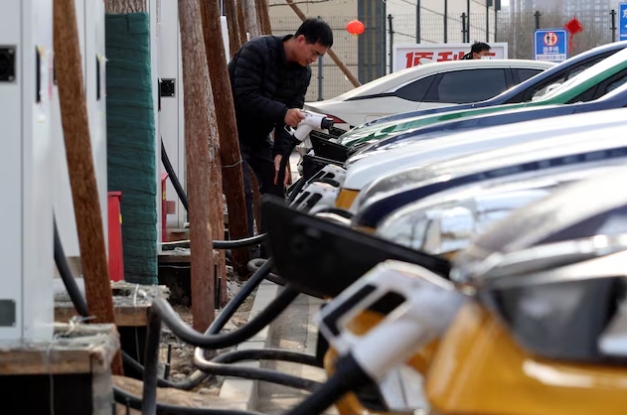
A man holds a charging plug to charge a car at an electric vehicle (EV) charging station in Beijing, China February 2, 2024.
The initiative supported consumers purchasing EVs and plug-in hybrids, aligning with efforts to promote environmentally friendly transportation. The decision to halt the program in these districts follows similar actions in other Chinese cities. For instance, Zhengzhou and Luoyang paused their trade-in subsidy programs earlier this year due to depleting funds allocated by the central government, as reported by Reuters in June 2025.
The state planner and finance ministry announced that additional consumer trade-in subsidies for 2025 will be distributed in July and October. These funds aim to continue supporting the adoption of energy-efficient vehicles nationwide, fostering sustainable consumption without affecting import or export dynamics.
Xi’an’s subsidy program has been part of a broader strategy to increase the use of electric and hybrid vehicles, contributing to environmental goals. While the report did not disclose future plans for the three districts, the central government’s commitment to further subsidies suggests ongoing support for green transportation initiatives.
A spokesperson from the finance ministry stated: “The trade-in subsidy program will continue to roll out in phases to ensure sustainable growth in the electric vehicle sector.” This reflects confidence in maintaining momentum for eco-friendly vehicle adoption across China.
The conclusion of the subsidy program in Xi’an’s three districts marks a shift in local policy, but the national framework for supporting electric vehicle purchases remains active. The upcoming subsidy rounds in July and October are expected to bolster consumer access to EVs and plug-in hybrids, encouraging sustainable transport options and supporting economic activity in the automotive sector.