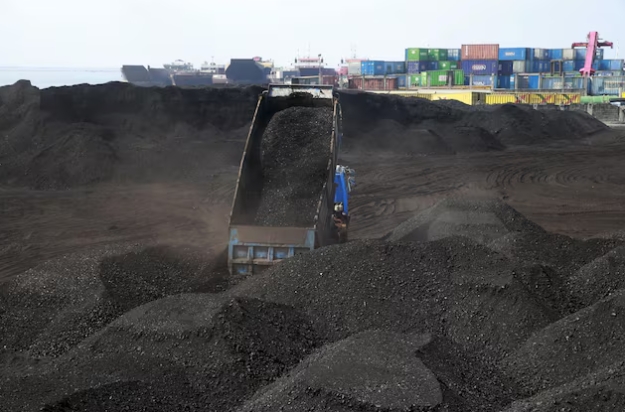
A truck unloads tonnes of coal inside a warehouse in Tondo city, metro Manila January 11, 2016.
Data from the Independent Electricity Market Operator of the Philippines (IEMOP) shows gas-fired generation rose 5.2% to 10.36 terawatt hours (TWh) in the first half of 2025, with a 25% year-on-year increase in June. This boosted the share of gas-fired power to 17.5% of the energy mix, up from 13.9% in 2023. Meanwhile, coal-fired output dropped 5.5% to 33.8 TWh, with its share falling to 57.2% from 61.9% in 2024. The decline in coal imports, the first since the COVID-19 pandemic, coincided with a 51% rise in LNG imports during the same period, according to Kpler data.
The Philippines, with a population of 114 million, has the most coal-dependent grid in Southeast Asia but benefits from a liberalized market, allowing power retailers to shift to LNG. James Ha, head of research for Asia-Pacific at Aurora Energy Research, noted: “LNG is expected to meet a rising share of the Philippines’ projected 5% annual growth in power demand over the next decade.” A 2020 moratorium on new coal-based projects has encouraged investment in alternatives like LNG and renewables, with gas-fired capacity increasing 40% in 2024 from end-2023 levels.
In March 2025, Philippine consortium LNGPH signed the country’s first long-term LNG deal with global trader Vitol, strengthening the fuel’s prospects. Kesher Sumeet, senior LNG analyst at Energy Aspects, stated: “We think that the rising power demand in the Philippines will outpace renewables’ growth and that combined with the coal phase-out policy would sustain Philippines’ call on LNG in coming years.” LNG import demand is projected to rise over 50% to 2.1 million metric tons in 2025, driven by new gas-fired capacity.
Hydropower also contributed to the energy mix, further reducing coal’s dominance. Falling Asian spot LNG prices, down 13% in 2025, have enhanced LNG’s competitiveness. Planned outages at coal plants in early 2025 further supported the shift to gas. While renewable energy generation is increasing, it has not met ambitious targets, reinforcing LNG’s role as a transition fuel to meet the Philippines’ energy needs.