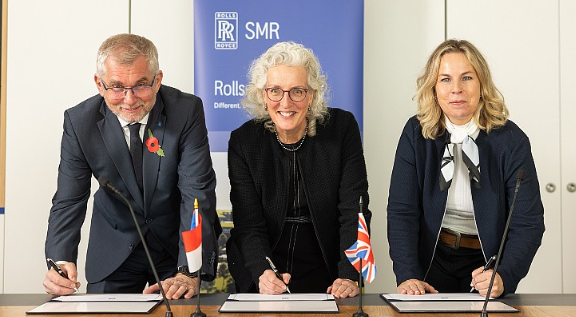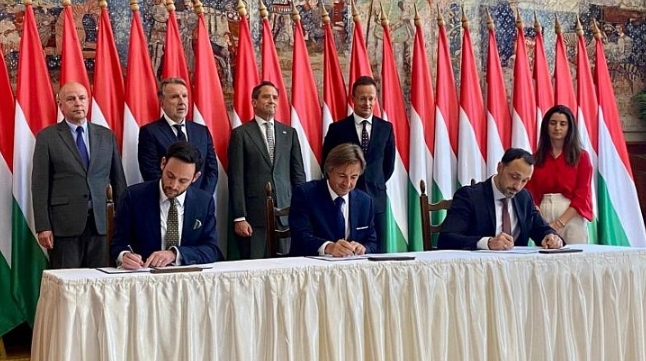
The signing ceremony occurred in the presence of Hungarian Foreign Affairs and Trade Minister Peter Szijjártó, U.S. Chargé d’Affaires Robert Palladino, and Polish Chargé d’Affaires Jacek ?ladewski. Szijjártó emphasized the role of SMRs in meeting rising electricity demands: “SMRs are the ideal solution for us.” He announced that Hungary has begun preliminary work to support SMR deployment, including “technology, infrastructure, financial, and legislative measures.”
Synthos Green Energy, a key developer of BWRX-300 SMRs in the region, is advancing the project as part of a broader effort to enhance energy security. Micha? So?owow of Synthos Green Energy stated: “I am here as an entrepreneur, but also as a Polish patriot. As a patriot, I know that our agreement is a step towards increasing the energy independence of the entire region, including Poland and Hungary.”
The U.S. Embassy in Hungary highlighted the agreement’s significance for the U.S. FIRST Program, which supports responsible SMR deployment. The embassy noted: “The signing marks a major milestone for the US Foundational Infrastructure for Responsible Use of Small Modular Reactor Technology (FIRST) Program, which co-funded a two-part licensing and regulatory study for SGE in Poland.” The SPRING project under this program aims to streamline BWRX-300 deployments in the region, improving efficiency and reducing costs through a fleet-based approach.
Palladino underscored the collaboration’s broader context: “The United States and Hungary are deepening our relationship across the board: in defence, in commerce, in space, and in energy. Hungary has made a clear and sovereign choice to invest in its energy future with trusted partners. And the United States is proud to be one of them.”
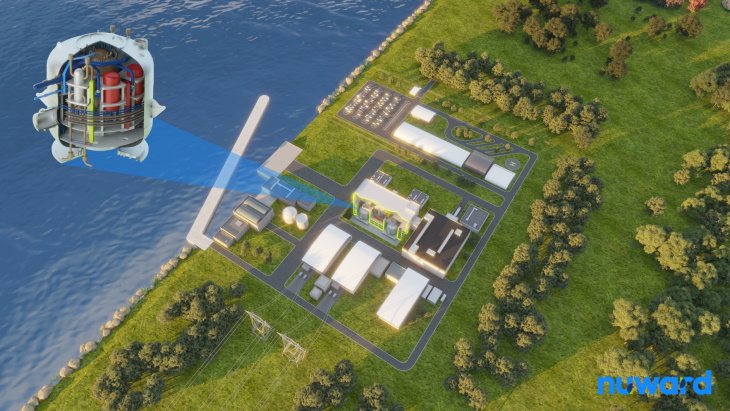
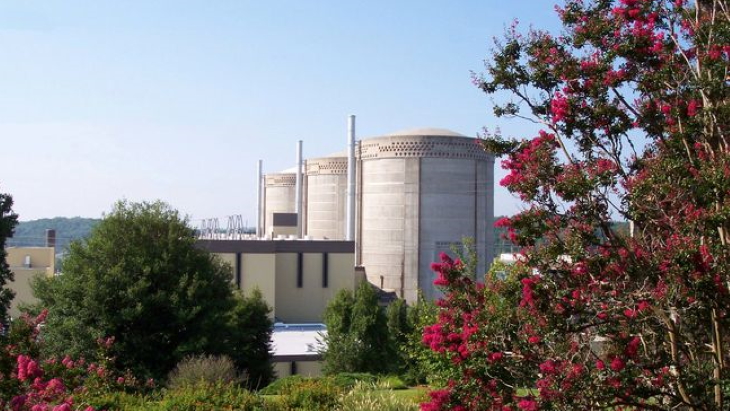
The BWRX-300, a 300 MWe water-cooled SMR with passive safety systems, builds on the design of GE Vernova Hitachi’s 1,500 MW ESBWR boiling water reactor. Hungary currently operates four VVER-440 reactors at the Paks plant, 100 kilometers south of Budapest, which generate about half of the country’s electricity. The Paks II project, involving two VVER-1200 reactors, is progressing, with construction expected to begin in late 2025 or 2026.
This agreement supports regional efforts to expand clean energy capacity while ensuring reliable electricity supply and fostering sustainable development.