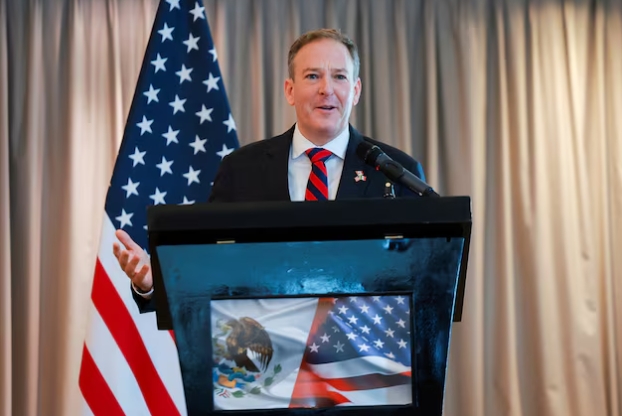
Environmental Protection Agency (EPA) Administrator Lee Zeldin speaks during the signing of the memorandum of understanding between U.S. and Mexico to achieve a permanent solution to the decades-old Tijuana River sewage crisis, in Mexico City, Mexico July 24, 2025.
The decision follows the passage of the One Big Beautiful Bill Act, signed into law by U.S. President Donald Trump in July 2025, which eliminated the program’s funding. The “Solar for All” initiative, launched in 2024 under former President Joe Biden, had allocated grants to 60 nonprofit organizations, tribes, and states to support nearly 1 million households across most U.S. states. The EPA previously noted that the program would reduce electricity costs and lower emissions through community solar projects.
Michelle Moore, CEO of Groundswell, a nonprofit that received a $156 million grant, highlighted the program’s impact, saying: “A tweet is not a termination.” In an interview, she emphasized that the grant was designed to lower electricity costs for over 17,000 households in eight Southern states by establishing solar projects for rural communities. Moore expressed optimism about potential efforts to preserve the initiative, noting: “Last time I checked affordability, and energy affordability specifically, was a priority for this administration.”
The cancellation was anticipated, as the current administration has scaled back federal support for solar and wind energy since January 2025, citing concerns over costs and reliability. The move marks a shift in U.S. energy policy, prioritizing other approaches to address energy needs.
The “Solar for All” program had aimed to enhance energy access and affordability while supporting environmental goals. Its termination reflects ongoing debates about the role of renewable energy in meeting the nation’s electricity demands, particularly for underserved communities.