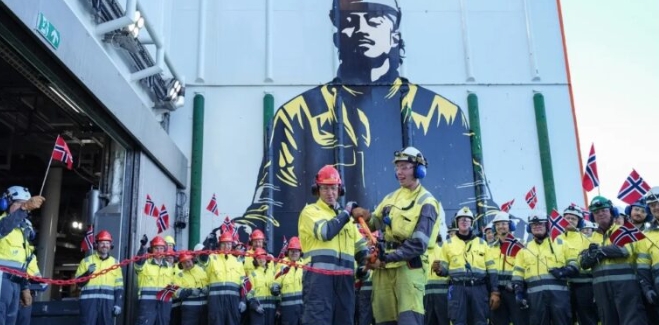
Energy Minister Terje Aasland and electrician Iver Henninen marks the official opening of Johan Castberg.
Located 240 kilometers from Hammerfest and about 100 kilometers north of Snøhvit, Johan Castberg brings together three oil discoveries: Skrugard, Havis, and Drivis, all situated within production licence 532. The field is expected to remain in operation for approximately 30 years, with estimated recoverable resources ranging from 450 to 600 million barrels of oil.
Equinor serves as the project operator with a 46.3% stake. Its partners Vår Energi and Petoro hold 30% and 23.7% shares, respectively.
Norway’s Minister of Energy, Terje Aasland, stated: “This is a milestone for the petroleum industry in the Barents Sea. With Castberg on stream, the Barents Sea now has both our second largest producing oil field, our second largest gas field and the largest discovery being considered for development.”
The field achieved first oil on March 31. Within three months, production reached a peak capacity of 220,000 barrels per day. According to Equinor, output from the field is progressing as anticipated.
Kjetil Hove, Equinor’s Executive Vice President for Exploration & Production Norway, emphasized the project's significance: “This is a red-letter day. The Barents Sea is becoming increasingly important for Norway’s role as a long-term energy exporter, and Johan Castberg will produce safely and efficiently for at least 30 years. We are well underway and have already made new discoveries in the area.”
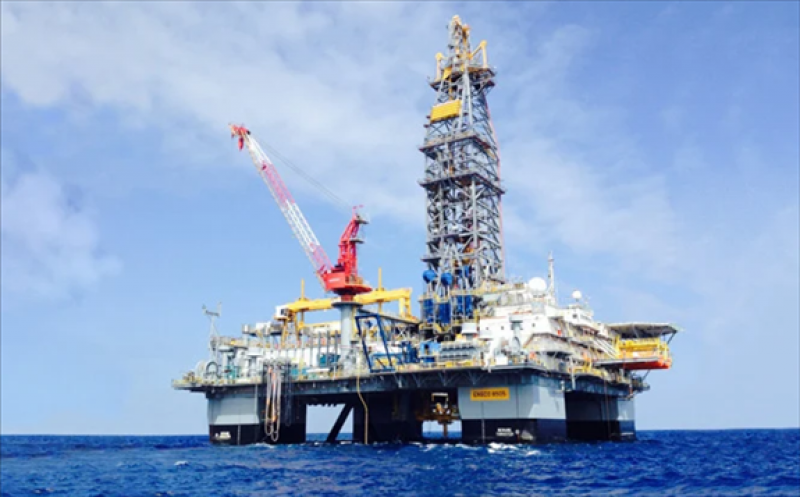
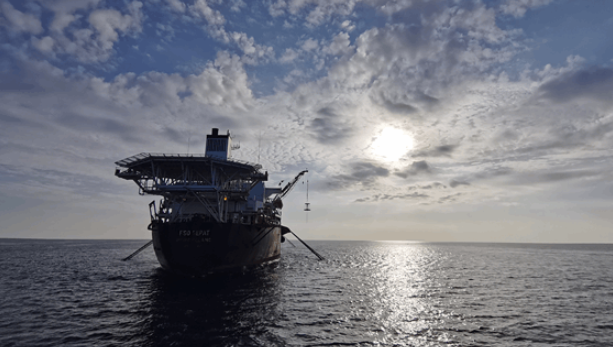
The development concept involves a floating production, storage, and offloading (FPSO) unit named Johan Castberg, which is connected to a subsea field setup consisting of 30 wells across 10 subsea templates and two satellite structures. As of June, 17 wells had been completed, and those in operation are producing according to plan.
The opening ceremony was attended by crew members of the FPSO unit, representatives from Equinor, Vår Energi, Petoro, Aker Solutions, the Norwegian Offshore Directorate, the Norwegian Ocean Industry Authority, government officials, and labor representatives.
The Johan Castberg project reflects ongoing efforts to enhance energy production in the Barents Sea and supports Norway’s strategy to maintain a stable role in the global energy supply.