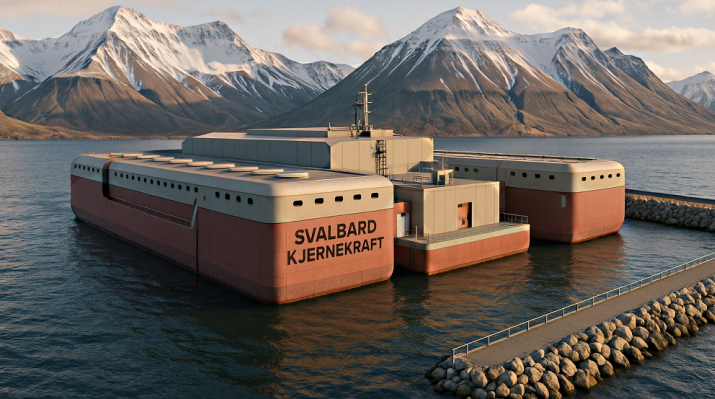
In June, Swedish SMR technology developer Blykalla and Norwegian nuclear project developer Norsk Kjernekraft formed Svalbard Kjernekraft AS to advance this initiative. Longyearbyen relied on coal power until 2023, after which temporary diesel systems were implemented, resulting in higher costs and reduced reliability. The proposed SEALER (Swedish Advanced Lead Reactor) lead-cooled SMR aims to connect to the existing electricity and heating grid, providing a sustainable alternative to fossil fuels.
The submitted report details the project, local conditions, and areas for further study, including environmental impact, biodiversity, safety, waste management, and benefits for local businesses and jobs. The final site for the plant will be determined through an environmental impact assessment. Blykalla stated: “With the planning initiative submitted, the next stage is for the Governor of Svalbard to set the scope of the environmental impact assessment.” This will trigger detailed studies and stakeholder consultations to facilitate licensing and construction.
Janne Wallenius, Blykalla’s co-founder and CTO, emphasized the technology’s suitability: “We are proud that this Swedish technology can deliver stable, emissions-free power to Svalbard.” He added: “Our lead-cooled reactors are ideal for this kind of remote application.” The project aims to showcase how advanced SMRs can ensure energy security in regions with limited infrastructure, with potential applications across the Nordics and globally.
Norsk Kjernekraft CEO Jonny Hesthammer highlighted the project’s importance: “This collaboration marks a new chapter in Norway’s history as a polar nation. Reliable and affordable energy is a prerequisite for Norway’s continued presence in Svalbard.” The initiative builds on a February memorandum of understanding between Blykalla and Norsk Kjernekraft to explore SMR deployment in Scandinavia, evaluating site suitability, regulatory pathways, and economic viability.
Blykalla, a spin-off from Stockholm’s KTH Royal Institute of Technology, has developed lead-cooled reactor systems since 1996. Its SEALER-One reactor, planned for criticality by 2029, will demonstrate the technology while supporting industrial processes like decarbonized biochar production. The Svalbard project highlights efforts to enhance energy reliability and sustainability in remote areas.