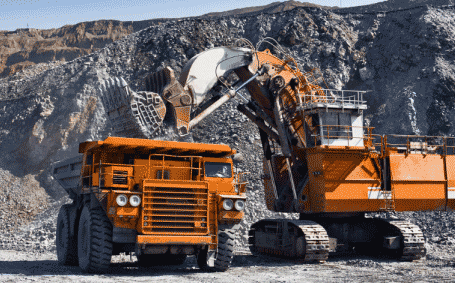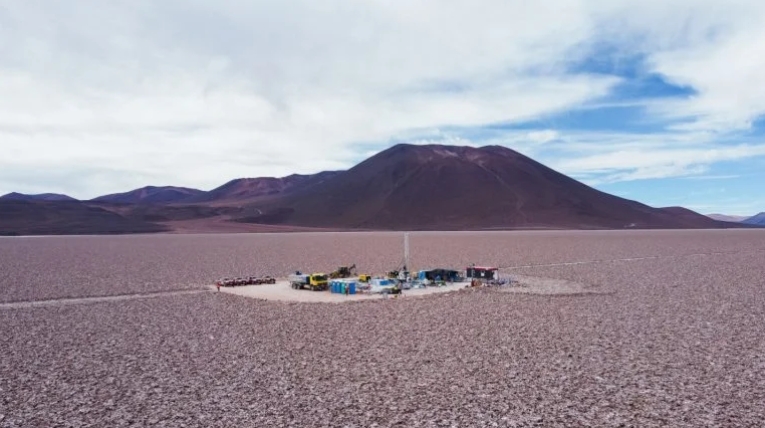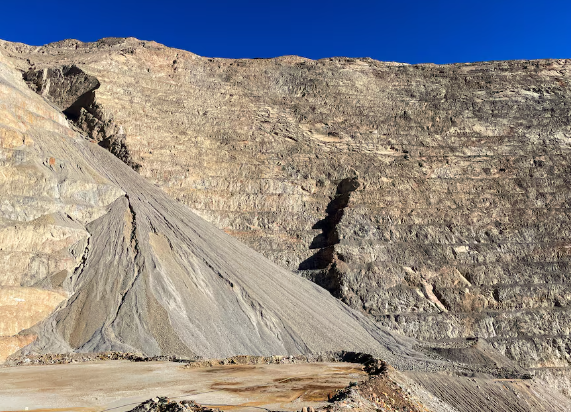
The Quebrada del Diablo Pit, the first open-pit productive sector of the Gualcamayo gold mine, in Jachal, Argentina August 6, 2025.
Originally, Minas Argentinas proposed a $1 billion investment for the RIGI but adjusted the plan to $665 million in June after discussions with government officials to align with program requirements, according to Ricardo Martinez, the executive director of Minas Argentinas, in an interview earlier this month. The company acquired the mine in 2023 when it faced closure and has since stabilized production, yielding 50,000 to 55,000 ounces of gold annually through secondary recovery, a method that reprocesses previously extracted ore.
The proposed project, named Carbonatos Profundos, involves constructing an underground mine beneath the existing one, a pressure oxidation plant, and a 50-megawatt solar park to power the operations. The new mine will focus on extracting gold from sulfide deposits, unlike the current oxide-based production. “It’s important that we have the RIGI for legal security,” Martinez said, emphasizing the need for stable mining regulations to support the project.
The RIGI program, designed to encourage investments exceeding $200 million, offers tax exemptions and access to international arbitration, with applications accepted until July 2026 and a potential one-year extension. The Carbonatos Profundos project aims to produce 120,000 ounces of gold annually starting in 2029, with an estimated 17-year operational life, generating approximately $400 million in yearly exports, according to company executives.
Argentina’s gold production has declined as older mines deplete high-grade ore, yet gold remains the country’s leading mining export, comprising 68% of the sector’s total output. The Gualcamayo mine holds 3 million ounces of economically viable gold reserves within 5 million ounces of certified resources, located in just 3% of its 40,000-hectare property, leaving significant potential for further exploration. Construction of the new mine and processing facilities is slated to begin in 2027, Martinez noted.
Rising global gold demand and prices fuel optimism for the project. “Today, the gold you produce is taken out of your hands,” Martinez said, highlighting strong market interest. The initiative is expected to bolster economic activity in the region, leveraging the mine’s substantial reserves and the RIGI’s incentives to ensure long-term viability.