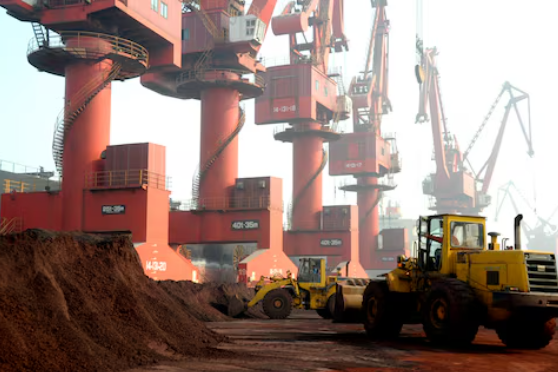
Workers transport soil containing rare earth elements for export at a port in Lianyungang, Jiangsu province, China October 31, 2010.
The July figure, which aligned with market forecasts, also marked a 5.7% rise compared to the 5,278 tons exported in July of the previous year. This uptick follows agreements between China, the United States, and Europe to boost shipments and relax export controls implemented in April. Those restrictions, introduced in response to U.S. tariffs, had caused significant delays in export licensing, disrupting global supply chains and leading some automakers outside China to pause production due to shortages.
"Germany continues to be our top destination for rare earth magnet exports," said a spokesperson for the General Administration of Customs. In July, Germany received 1,116 tons, a 46% increase from June. The United States also saw a significant rise, with shipments reaching 619 tons, up 75.5% from the previous month and 4.8% higher than in July 2024.
For the first seven months of 2025, China's total rare earth magnet exports amounted to 27,897 tons. This reflects a 15% decline compared to the same period last year, an improvement from the 18.9% drop recorded in the first half of the year. The steady recovery in export volumes highlights China's role as the world's leading supplier of these critical minerals, vital for industries such as electric vehicles and renewable energy.
The easing of export controls has helped stabilize supply chains, enabling manufacturers to resume operations. Industry analysts expect continued growth in export volumes as global demand for rare earth magnets remains strong.