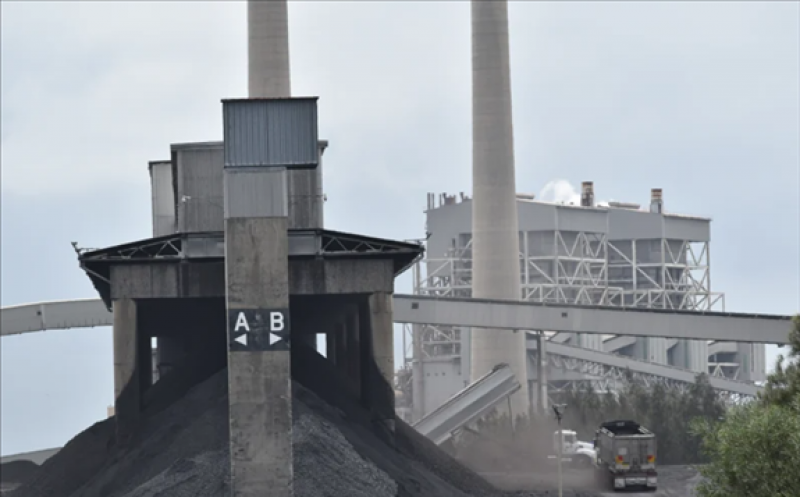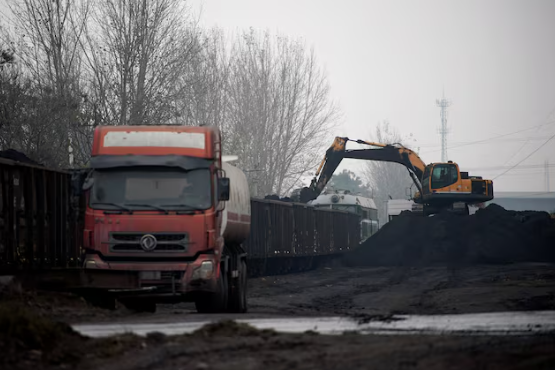
An excavator loads coal to a train in Pingdingshan, Henan province, China November 4, 2021.
The report stated: "The commissioning boom of 2025 reflects a delayed response to the permitting surge of 2022–2023." That surge was itself a reaction to power shortages and blackouts in 2021 and 2022, when higher coal prices and tighter emissions standards combined with supply disruptions during the early economic recovery period.
Industry group the China Electricity Council projects that as much as 80 GW of coal capacity could be commissioned in 2025. If realized, this would make the year the largest for coal power capacity growth in a decade. However, new project approvals in the first half of 2025 declined slightly compared with recent years, totaling 25 GW.
CREA highlighted what it described as a central contradiction in the current energy landscape: while coal’s share in overall power generation has fallen to record lows, the pace of new coal plant commissioning is set to reach decade highs. The report explained: "Broad capacity payments, inflexible dispatch practices, long-term contracting, and the absence of a national retirement pathway all serve to keep coal power in place, regardless of whether it's still needed."
China has stated its commitment to gradually reducing coal use between 2026 and 2030, with coal intended to provide backup support for renewable energy. CREA researchers, however, argued that in practice the phase-down is limited because of insufficient incentives to reduce coal-fired generation.
Despite this, rapid growth in renewable capacity has already delivered progress on emissions. CREA’s analysis last week showed that China’s carbon dioxide emissions declined by 1% in the first half of 2025, underscoring the role of clean energy expansion in reshaping the country’s energy mix.
The report indicates that China’s energy system is experiencing both structural change and transitional challenges. On the one hand, large-scale coal additions reflect delayed projects intended to ensure power security after earlier shortages. On the other, renewable energy growth is driving down coal’s share in the overall mix and contributing to emissions reductions.
The balance between expanding clean energy, ensuring stable supply, and managing existing coal infrastructure remains at the center of China’s power sector strategy. The developments in 2025 suggest that while coal continues to play a role in meeting demand, renewable energy growth is gradually reshaping the outlook for power generation and emissions in the years ahead.