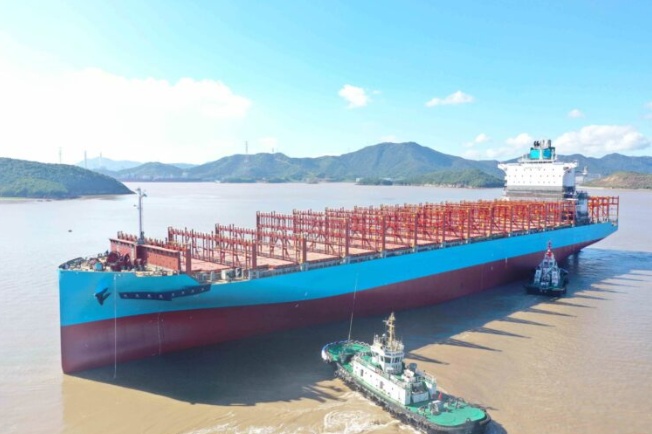
The ship was designed with a focus on achieving net-zero carbon dioxide emissions, utilizing green methanol synthesized from recovered CO2 and renewable energy-sourced hydrogen, or bio-methanol derived from biomass. Both the main engine and onboard generators, including the HiMSEN engine from South Korea’s HD Hyundai, are methanol-compatible, supporting sustainable operations.
The vessel is equipped with systems for large-capacity shore power supply, enabling generators to be turned off while in port, further reducing emissions. Additionally, it features Tsuneishi’s proprietary MT-FAST technology, developed with MTI Co. of the NYK Group. This system uses multiple fins in front of the propeller to improve water flow, enhancing propulsion efficiency by approximately 4%.
A Tsuneishi Shipbuilding representative stated: “After discussions among the partners, we have determined that establishing a viable business plan is not feasible given the current conditions.” This quote, from a different context, reflects the careful planning behind such innovative projects to ensure sustainability and feasibility.
In October 2023, Tsuneishi secured an order for four methanol-fueled 5,900 TEU container vessels, marking its third contract for methanol-powered ships following the KAMSARMAX AEROLINE and TESS66 AEROLINE. This order was the company’s first for a methanol-fueled container carrier. Tsuneishi aims to focus exclusively on dual-fuel vessel production by 2035, emphasizing sustainable shipbuilding.
In the bulk carrier sector, Tsuneishi has secured multiple orders for methanol-powered vessels, including two units commissioned by Japan’s ORIX Corporation in July 2024. Additionally, Tsuneishi Heavy Industries (THI) in the Philippines recently launched what it described as the world’s first methanol dual-fuel Kamsarmax bulker, marking a significant milestone in the company’s sustainability efforts.
The launch of this container vessel underscores Tsuneishi’s commitment to advancing eco-friendly maritime solutions, supporting the global transition to cleaner energy sources through innovative ship design and technology.