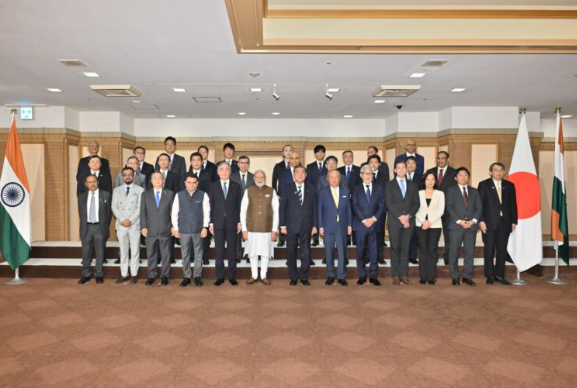
ACME stated that the cooperation supports its vision of contributing to a decarbonized world. It also strengthens the strategic partnership between India and Japan while reinforcing India’s commitment to climate-related objectives. The company highlighted the importance of green ammonia as a sustainable energy molecule with global potential.
ACME said: “By supplying green ammonia, a key molecule in the future of sustainable energy, India is poised to become a global hub for green energy production. We are immensely grateful for the unwavering support from both the Government of India and the Government of Japan in making this pioneering initiative a reality.”
The initiative builds on earlier developments. In early 2025, six Japanese companies signed an MoU to explore investment opportunities in green ammonia production in India, aiming to support Japan’s first imports of the fuel. The group includes IHI Corporation, Hokkaido Electric Power, Mitsubishi Gas Chemical Company, Mitsui O.S.K. Lines (MOL), Mizuho Bank, and Tokyo Century Corporation. Their collaboration focuses on evaluating the potential of a new green ammonia production facility to be developed in Odisha, eastern India.
According to the information disclosed, the Odisha facility is scheduled to be operational by 2030 and will have an annual production capacity of about 400,000 tons of green ammonia. The product is expected to be shipped to Japan, where it will be used by end-users in sectors such as power generation and chemicals.
The agreements reflect growing interest in green ammonia as part of energy transition strategies. For India, the development provides an opportunity to expand renewable energy applications and establish itself as a key supplier in the global green fuels market. For Japan, it offers a pathway to diversify energy sources and support the adoption of lower-carbon alternatives.
By combining ACME’s production capacity with Japanese demand for cleaner fuels, the collaboration aims to demonstrate the role of green ammonia in future energy systems. The planned exports from India to Japan also highlight the potential for long-term bilateral cooperation in advancing renewable energy technologies and international supply chains.
Through these efforts, ACME and its partners are working toward expanding commercial opportunities while supporting broader climate commitments. The project in Odisha, once completed, could serve as an important step in scaling up green ammonia production and creating reliable trade flows between India and Japan in sustainable energy.