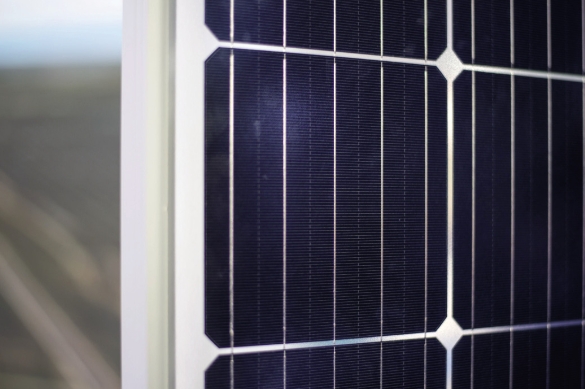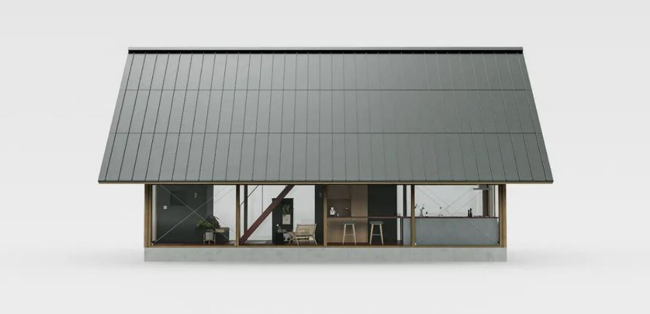
According to Monochrome, the new module offers both functionality and aesthetic value. “The new silver color blends seamlessly with building facades and achieves an aluminum texture that changes its appearance depending on the angle of light,” the manufacturer said. “It achieves the three-dimensional shadow effect desired by architects while blending in with the surrounding environment.”
The silver BIPV panel measures 1,915 mm × 384 mm × 30 mm and weighs 13 kg/m². It delivers a power output of 75 W and is equipped with a junction box featuring an IP-68 rating, ensuring high protection against dust and water. The panel is built on fluorine-coated galvalume steel sheets, which are described as weather-resistant, supporting durability in various environments.
For comparison, the black-colored Roof-1 panel provides a higher power output of 110 W, though it shares the same size and weight as the silver module. Both panels are supported by Monochrome’s warranties covering the metal structure and coating materials.
The company also offers a long-term performance guarantee for both products. The modules are covered by a 25-year power output warranty. In the first year, degradation is expected to be limited to 3%, while by the end of 25 years, the guaranteed power output is not less than 80% of the nominal value.
In terms of pricing, Monochrome has set the cost of the silver module at JPY 35,000 (approximately $236.4). The black version is priced at JPY 27,000, making it the more economical option, though with higher output capacity.
By adding the silver module, Monochrome is aiming to meet the needs of architects and designers who want more variety in exterior integration without compromising efficiency or durability. The new option is expected to provide greater design flexibility for projects seeking both visual harmony with building facades and renewable energy generation.
The Roof-1 series demonstrates Monochrome’s commitment to combining architectural design with sustainable technology. The company’s approach underlines the importance of integrating solar solutions directly into buildings, not only as a source of clean energy but also as a feature that enhances overall appearance.