The second phase of PM-KUSUM will commence after the current phase concludes in March 2026.
At the State Review Meeting on Renewable Energy, Renewable Energy Minister Pralhad Joshi underlined the importance of developing local capacity for wafers and ingots to complement the country’s existing solar module manufacturing base. He noted that the efforts of states have been instrumental in advancing renewable deployment, helping India surpass the halfway mark of its 2030 vision of 500GW non-fossil capacity. Current capacity stands at 251.5GW.
Joshi pointed to the success of the PM Surya Ghar Muft Bijli Yojana (PMSGY), which has benefitted around two million households. He also urged states and distribution companies to maintain quality standards, conclude agreements efficiently, and provide fair tariff credits to consumers. Stressing the need for faster implementation, he said: “Timely action is the backbone of this system. If we keep delaying procurement on the expectation that tariffs will fall further, we are missing the bigger picture.”
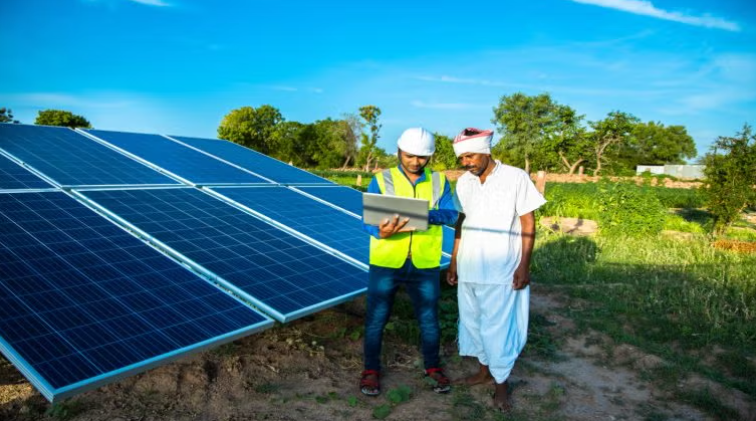
The minister further announced that the second phase of the PM KUSUM scheme, originally launched in 2019 to promote solar energy adoption in agriculture, will begin after March 2026 when the current phase concludes. He encouraged states to adopt single-window clearances and resolve developer concerns to accelerate deployment.
On manufacturing, Joshi highlighted the progress of the Production-Linked Incentive (PLI) Scheme for High Efficiency Solar PV Modules, which has an allocation of Rs240bn ($2.7bn). Under this program, India has built 100GW of module manufacturing capacity, attracted Rs500bn in investments, and created more than 12,600 direct jobs.
Ministry of New & Renewable Energy Secretary Santosh Kumar Sarangi reinforced the significance of green energy development in achieving India’s net zero target by 2070. Long-term objectives include 1,800GW of renewable capacity by 2047 and 5,000GW by 2070, positioning the country to scale clean energy on a global level.
The meeting also provided a platform for states to present progress and challenges in renewable energy projects. Industry associations and stakeholders contributed by discussing policy adjustments and the structure of PM-KUSUM 2.0, aiming to coordinate strategies and speed up India’s clean energy transition.
India’s approach, supported by schemes such as PM KUSUM, PMSGY, and the PLI program, reflects a focus on energy transition, job creation, and reducing emissions. The combination of domestic manufacturing expansion, policy support, and collaborative state efforts is designed to ensure the country advances toward its renewable capacity goals while building a sustainable energy economy.