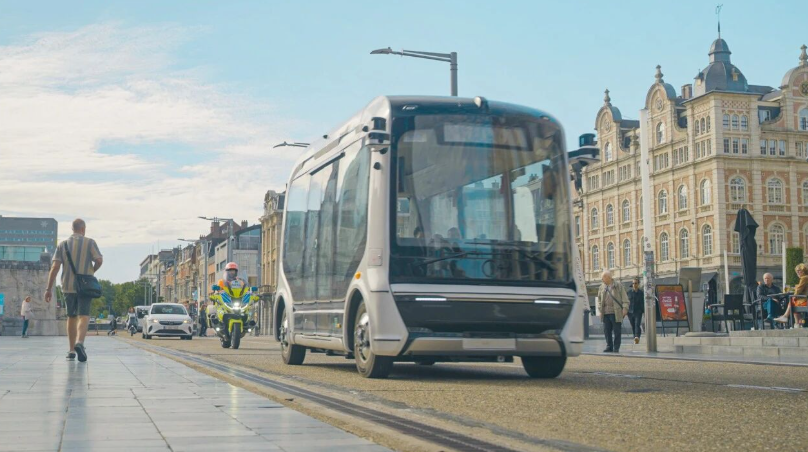
The pilot project is being conducted in cooperation with Flemish public transport operator De Lijn, the City of Leuven, and mobility consultancy Espaces-Mobilités. The Robobus will prepare its route between Leuven Station and Heverlee, passing through the city center and connecting key transport hubs. Public road testing is scheduled to begin in mid-September with a safety operator on board. Subject to national transport authority approval, De Lijn aims to begin trial operations between November 2025 and January 2026. If successful, it will mark Belgium’s first commercial application of autonomous vehicles in mixed traffic, with passengers able to book services via mobile apps, text messages, or subscriptions.
Following the pilot phase, WeRide’s Robobus may become part of Leuven’s permanent transport system, targeting the “last mile” challenge in city mobility. The long-term objective is to advance toward fully driverless services, increasing the efficiency and safety of urban transit.
WeRide CFO and Head of International Operations Li Xuan described the Belgium launch as a significant step in global expansion. He said: “Europe’s strong public investment and clear commercial pathways make it a pivotal market for autonomous vehicles.” He emphasized Belgium’s role as a hub for mobility innovation and underlined the importance of cooperation with De Lijn, Espaces-Mobilités, and Leuven’s city government to scale autonomous transport services across Europe, aiming eventually for fully driverless operations.
The initiative is supported by the European Institute of Innovation and Technology (EIT) Urban Mobility program, which focuses on advancing sustainable transport through collaboration between public and private sectors. Belgium has identified autonomous mobility as a national priority, linking it to smart city development, investment in intelligent transport, and regulatory progress to support deployment. Leuven, situated 30 kilometers east of Brussels and known as the country’s oldest university town, was chosen as the pilot site due to its strategic location and ongoing projects such as FlexCURB, which applies digital tools to optimize curb use and ensure safe integration of driverless shuttles into broader networks.
WeRide is also moving forward with other European projects. In August, its Robotaxi service started mapping routes in Switzerland’s Furttal region and in the towns of Wettingen and Killwangen under the Intelligent Automated Mobility pilot. Earlier in February, in partnership with Renault Group, French operator beti, and insurer Macif, the company launched Europe’s first fully driverless Robobus service on public roads in Drôme, France.
Through these developments, WeRide continues to expand its international footprint while contributing to advancements in autonomous mobility across European cities.