Supercapacitors differ from batteries as they store charge electrostatically instead of through chemical reactions. However, a long-standing limitation has been that only a small part of the carbon material’s surface area could be used for energy storage. According to Professor Mainak Majumder, director of the ARC Research Hub for Advanced Manufacturing with 2D Materials (AM2D) at Monash, the breakthrough came from altering the heat-treatment process to unlock greater surface accessibility. He explained: “This discovery could allow us to build fast-charging supercapacitors that store enough energy to replace batteries in many applications, and deliver it far more quickly.”
The innovation is based on a new material design called multiscale reduced graphene oxide (M-rGO), synthesized from natural graphite. By employing rapid thermal annealing, the researchers produced a highly curved graphene structure with optimized pathways for ion movement. This structure supports both high energy storage and rapid power output.
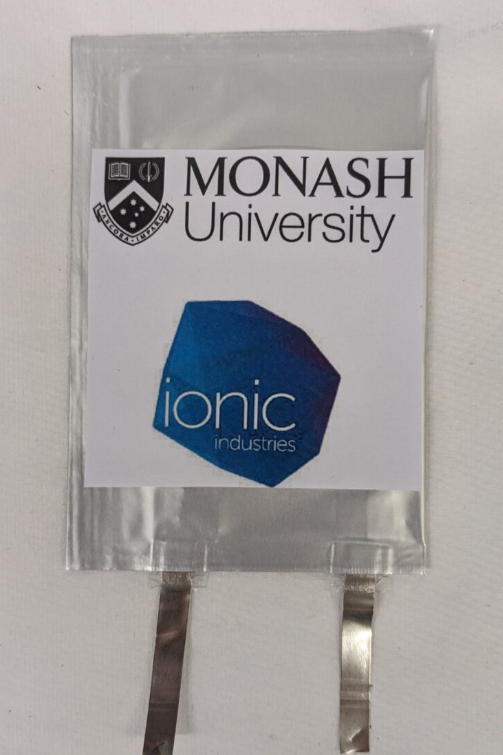
Petar Jovanovi?, research fellow at the AM2D Hub and co-author of the study, reported that when integrated into pouch cell devices, the supercapacitors achieved volumetric energy densities up to 99.5 Wh/L and power densities as high as 69.2 kW/L, along with stable long-term cycling. He noted: “These performance metrics are among the best ever reported for carbon-based supercapacitors, and crucially, the process is scalable and compatible with Australian raw materials.”
The team highlighted that this progress represents an important advance in the global effort to develop energy storage systems that combine speed and capacity. Potential applications include electrified transportation, grid stabilization, and next-generation consumer electronics.
Commercialization efforts are already in motion. Phillip Aitchison, chief technology officer of Monash spinout Ionic Industries and study co-author, said: “Ionic Industries was established to commercialise innovations such as these and we are now making commercial quantities of these graphene materials. We’re working with energy storage partners to bring this breakthrough to market-led applications, where both high energy and fast power delivery are essential.”
The research findings were published in Nature Communications under the paper titled Operando interlayer expansion of multiscale curved graphene for volumetrically-efficient supercapacitors. The results demonstrate how fundamental material innovations can open pathways to new energy solutions, combining efficiency with scalability for industrial deployment.