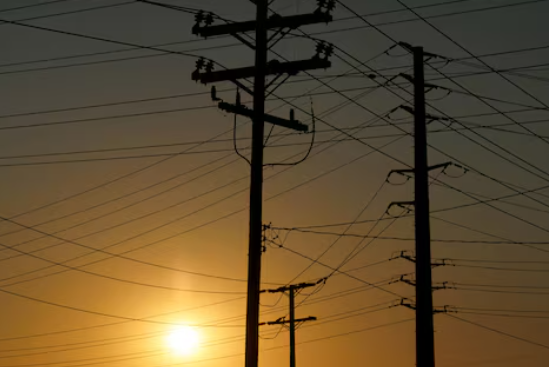
Electrical transmission poles and lines are shown in the early morning of a hot summer day in Commerce, California, U.S, August 7, 2025.
The DOE has begun seeking input from utilities, transmission operators, and other stakeholders on near-term investment opportunities, project readiness, expected growth in power demand, and existing constraints that federal support could address. These steps are part of a broader initiative called the Speed to Power program, designed to guide how the DOE applies funding and emergency powers to expand generation capacity and strengthen the grid.
U.S. President Donald Trump had declared an energy emergency in January, his first day back in office, pointing to increased demand for electricity. The administration argues that the pace of renewable energy adoption has affected power reliability and costs. Trump has said: “Rapid adoption of solar and wind power has made U.S. electricity unstable and expensive,” and he has moved to scale back subsidies for these sectors. However, in Texas, which has the largest share of renewables in its grid, reliability has recently improved.
The DOE has significant resources available, including billions of dollars in funding and financing through its Loan Programs Office. In July, the department cancelled a $4.9 billion loan guarantee for a transmission line that was planned to deliver wind and solar power from Kansas to urban areas in the Midwest and East.
Also on Thursday, the Federal Energy Regulatory Commission (FERC) introduced new measures intended to improve grid security. It approved and proposed rules aimed at reducing risks from supply chain vulnerabilities, cyber threats, and disruptions caused by extreme weather. These rules are intended to strengthen the resilience of the electricity system against blackouts.
Industry groups opposed to renewable energy expansion argue that coal plants expected to retire will remain necessary. Tom Pyle, president of the American Energy Alliance, said he anticipates that 38 coal plants scheduled for closure through 2028 will continue operating, either under government orders or through voluntary decisions by operators.
Data from the U.S. Energy Information Administration showed that coal use has recently increased. In the first quarter of 2025, coal-fired power plants consumed about 20% more coal than in the same period of 2024. The DOE stated that ensuring sufficient supply and reliable delivery of electricity will remain a central priority as energy demand rises after two decades of relatively stable consumption.
The administration’s approach highlights a shift toward expanding traditional energy sources while managing grid modernization. By combining directives for existing plants with new funding mechanisms, the DOE aims to address short-term needs for electricity reliability while seeking long-term infrastructure improvements.