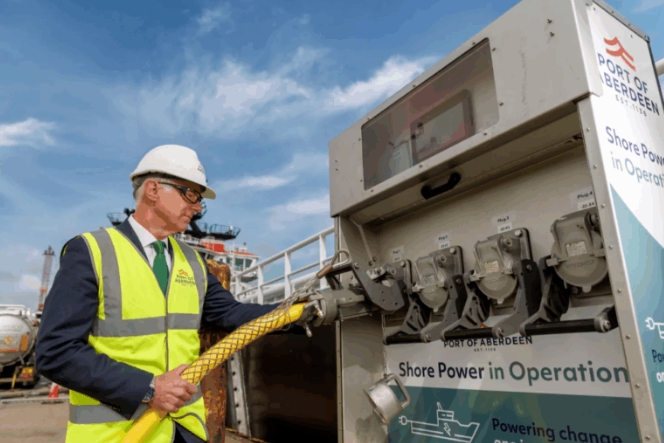
The Heysham initiative is part of a wider £100 million ($136 million) partnership between NatPower Marine and Peel Ports Group aimed at deploying e-ship charging infrastructure across the group’s terminals. This investment supports the transition of maritime transport toward cleaner energy solutions.
Martin Olverson, development director marine of NatPower Marine, said: “Heysham is where the UK’s first green shipping corridor becomes real. One plug will soon become four, serving every Heysham route to Ireland and giving operators the confidence to move quickly on vessel electrification. We are building the backbone of a clean shipping network so ferry and freight lines can invest in the next generation of zero-emission ships.” His statement highlighted the project’s role in accelerating shipping industry electrification.
NatPower Marine has presented estimates showing that to decarbonise the global shipping industry, 4 petawatt-hours (PWh) of clean energy are required annually. This figure is equivalent to the yearly electricity consumption of the United States, illustrating the scale of energy demand for worldwide shipping transformation.
Looking ahead, NatPower Marine plans to invest in a global charging network that will cover 120 port locations by 2030. As part of this effort, the company announced earlier this month a partnership with Hong Kong-based shipowner Wah Kwong Maritime Transport. The two parties have established a joint venture, Wah Kwong NatPower, focused on rolling out large-scale shore power and vessel charging infrastructure across Asia.
The joint venture will begin with projects in Qingdao and Hong Kong, marking the first steps of its expansion in the region. By combining NatPower Marine’s infrastructure development expertise with Wah Kwong’s operational experience, the initiative aims to support shipping companies in adopting zero-emission technologies.
Together, these projects show a coordinated effort to address emissions from the shipping industry through practical electrification measures. The Heysham development provides a model for future corridors, while the planned global charging network reflects ambitions to create a cleaner, more sustainable shipping infrastructure worldwide.