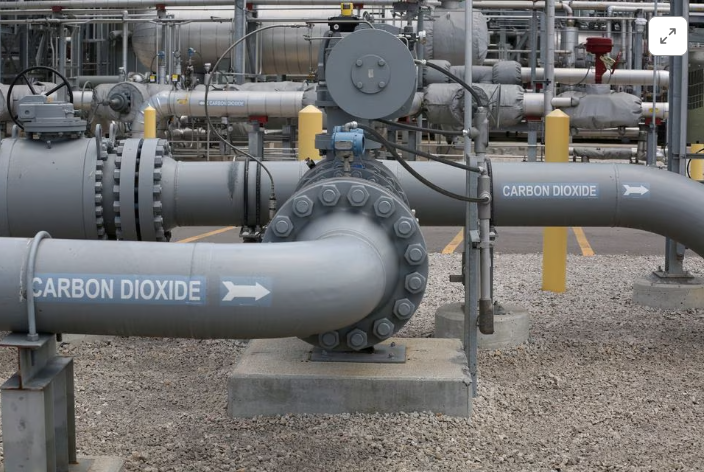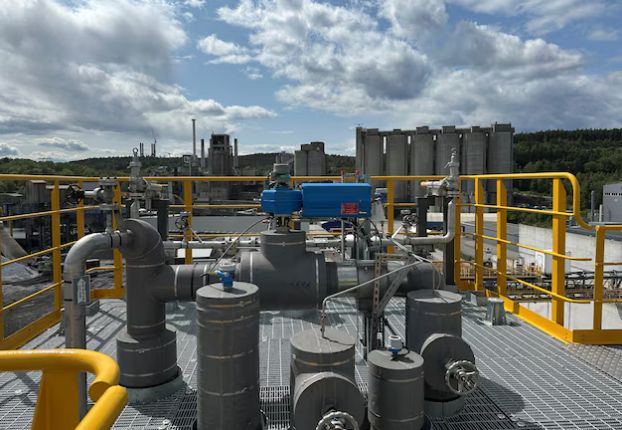
A view of the new carbon capture plant at Heidelberg Materials in Brevik, Norway, June 18, 2025.
The two projects involved are Heidelberg Materials’ Padeswood cement plant in North Wales and Encyclis’s Protos waste-to-energy facility in Ellesmere Port, located in the northwest of England. Together, the facilities will capture 1.2 million metric tons of CO2 annually. The captured emissions will be transported via pipelines to be stored at Eni’s Liverpool Bay project.
Heidelberg Materials' project will be a landmark achievement as it will become the world’s first carbon capture facility aimed at fully decarbonizing cement production. The construction of the facility is set to begin later this year, with the first net-zero cement expected to be produced by 2029. Simon Willis, CEO of Heidelberg Materials UK, expressed optimism about the project, stating, “Our constructive partnership with the UK Government has allowed us to reach this major milestone, which is fantastic news, not just for us, but for the industry as a whole.”
Although the UK government did not disclose specific financial details regarding the contracts, the funding for these projects is part of a broader £9.4 billion ($12.65 billion) commitment to support carbon capture technologies, as announced during the spending review period in June.
CCS technology involves capturing CO2 emissions from industrial plants and power stations, which are then stored underground to prevent their release into the atmosphere. While this technology has been available for years, its widespread implementation has faced challenges due to the high costs involved. However, these projects mark a significant step toward scaling up CCS efforts in the UK and advancing the country's climate goals.