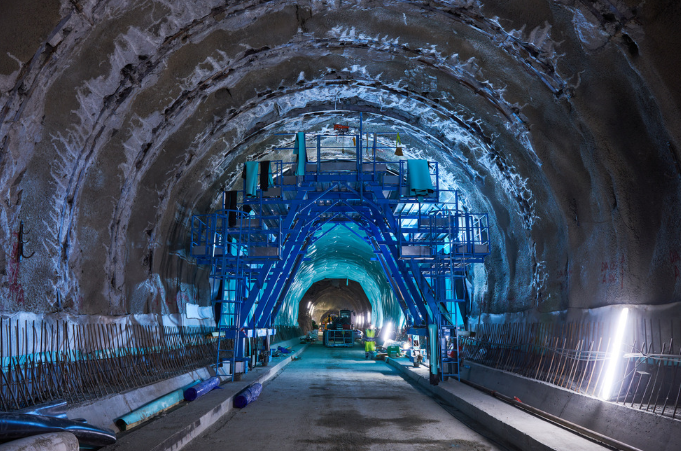
The tunnel, when completed, will connect Fortezza in Italy to Innsbruck in Austria, enabling passenger trains to travel at speeds up to 250 km/h. This high-speed link will cut travel time between the two cities from 80 minutes to just 25 minutes, significantly improving cross-border mobility and efficiency.
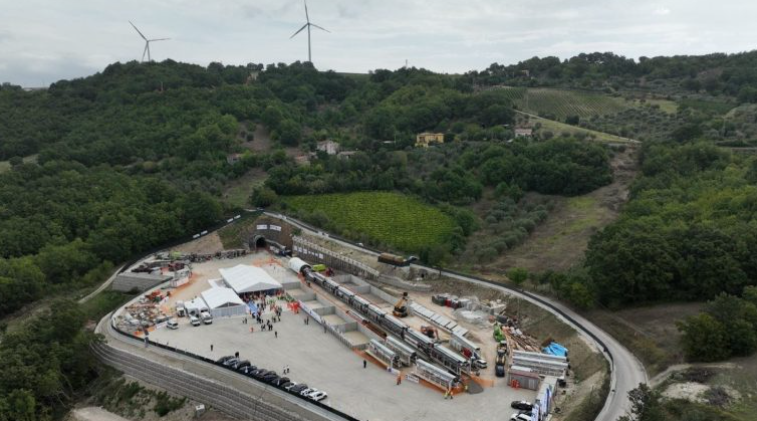
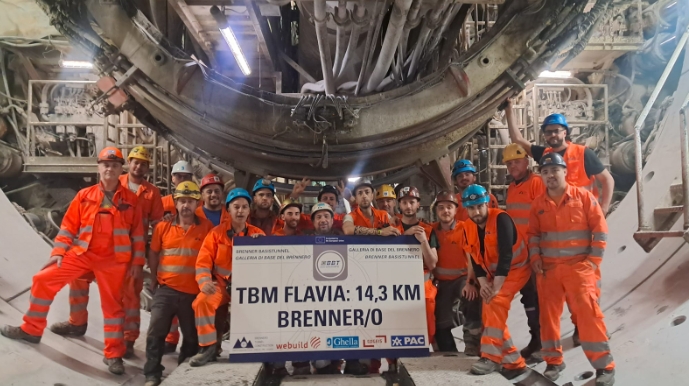
The Italian section of the tunnel is being built by Webuild, which is using the tunnel boring machine “Flavia”. The project forms part of the larger Brenner Base Tunnel, a 64 km railway tunnel that, once finished, will be the world’s longest. This tunnel will serve as a key segment of a rail corridor extending from Helsinki, Finland to La Valletta, Malta, integrating into the Scandinavian-Mediterranean Corridor of the Trans-European Transport Network (TEN-T).
Webuild’s CEO, Pietro Salini, highlighted the technical achievement: “We have excavated under the Alps, overcoming extreme geotechnical conditions thanks to the adoption of advanced technological solutions, all the while ensuring safety and sustainability at every stage. The tunnel that today joins Italy and Austria represents the skill of Italy’s infrastructure industry in building strategic projects for a greener future in mobility in Europe.”
The breakthrough demonstrates the ability to manage complex engineering challenges under demanding geological conditions, including hard rock formations and high Alpine pressures, while maintaining a focus on environmental sustainability. The project reflects a broader trend in Europe to enhance rail infrastructure for faster, more energy-efficient transport, reducing reliance on road freight and contributing to lower carbon emissions in cross-border travel.
Once operational, the Brenner Base Tunnel will not only shorten travel times but also support increased rail traffic for both passengers and freight. The improved link is expected to boost regional economic connectivity, facilitate tourism, and strengthen trade routes between Northern and Southern Europe.
The project is part of the TEN-T strategy, aiming to create an integrated and sustainable transport network across Europe. By improving links between major cities and ports, the tunnel supports the European Union’s goals of green mobility, reduced congestion, and enhanced transnational connectivity.
In addition to speed and efficiency, the tunnel is designed to meet high safety and operational standards, with advanced monitoring systems, ventilation, and emergency access points incorporated into the design. These measures ensure both passenger and operational safety, reflecting best practices in modern rail infrastructure.
The completion of this segment under the Brenner Pass represents a major engineering milestone and a tangible step toward a more connected, sustainable, and efficient European rail network, illustrating the growing importance of high-speed rail corridors in supporting regional integration and greener transport solutions.