According to LONGi, the project will contribute to decarbonization efforts by deploying hydrogen-based solutions across multiple sectors. These include road and rail transport, off-road machinery, off-grid power generation, and maritime applications. The company emphasized that its role extends beyond equipment supply, as it will provide comprehensive support covering project design, installation, and on-site execution to ensure stable operations.
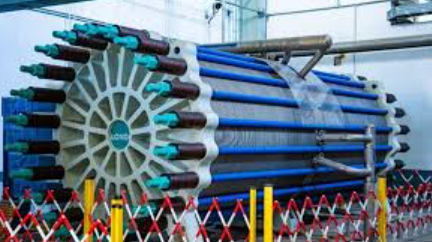
The equipment will comply with CE marking standards as well as international safety and regulatory requirements. LONGi highlighted the advantages of its integrated IGBT power supply system, which delivers high efficiency, low harmonic distortion, and fast response. These features are expected to reduce energy consumption and operating costs, while the combined supply of electrolyzer and BoP enhances overall reliability and economic performance throughout the system’s lifecycle.
Jun Ma, President of LONGi Hydrogen, stated: “The signing of the Namibia project marks another breakthrough in Africa, following our earlier 10MW project in North Africa, and brings the number of countries with signed projects to ten—an important milestone in the company’s international journey. Looking ahead, we will continue to leverage our technology, experience, and delivery capabilities to provide reliable products and solutions for customers worldwide, driving the hydrogen industry toward scale-up and commercialization.”
The project in Namibia reflects LONGi’s growing international footprint in the hydrogen sector. In 2024, the company partnered with ACWA Power on the first phase of a green hydrogen development in Uzbekistan. In the same year, LONGi secured a contract to supply several 1,000 Nm³/h Hi1 electrolyzers for an undisclosed project in Norway. These initiatives underline the company’s efforts to expand its presence across different regions and to support the global adoption of hydrogen technologies.
By supplying advanced electrolyzer systems, LONGi Hydrogen aims to contribute to the scaling of green hydrogen applications and further enable its integration into energy and transport systems. The Namibia project demonstrates how green hydrogen projects are becoming increasingly important for addressing energy transition objectives while also offering potential benefits for regional industries.