


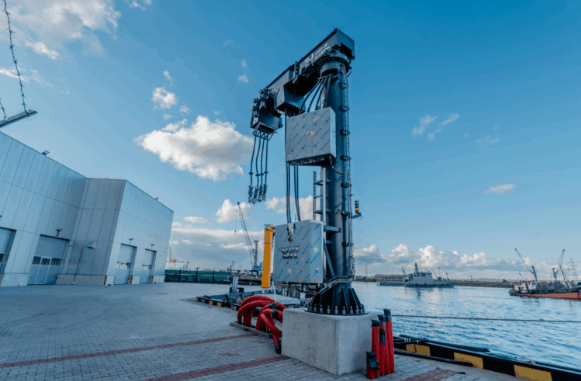
The facility was installed by electrification services provider Elektrifikacijos paslaugos under a contract signed in late 2024. The Port Authority confirmed that the project is being financed independently, with total costs reaching approximately €601,000, including VAT.
Algis Latakas, General Director of Klaip?da State Seaport Authority, commented: “Klaip?da Port is firmly set on a green course. We invest in sustainable, modern solutions to stay competitive. By the end of this year, the first clean-fuel vessel will arrive, and our new charging equipment at the Fleet Base will be ready to serve it. This is only the beginning – by 2030, ships at berth will have to switch off engines and use shore power, and we’re preparing to meet that demand.”
Plans for further expansion are underway. By 2026, four onshore power supply stations are scheduled to be built for roll-on/roll-off (RoRo) vessels. In the following years, additional facilities are expected for cruise ships and container vessels. According to the port’s representatives, the broader quay electrification effort will be completed by 2028.
Once the entire project is finished, the Port Authority has stated that electricity will be purchased from suppliers generating power from renewable sources, including wind and solar energy. This approach is aligned with the port’s long-term sustainability goals and its strategy to reduce emissions while modernizing operations.
In addition to electrification, Klaip?da is advancing another clean energy initiative. In August 2025, the port reported progress on constructing a hydrogen station that is projected to be the first in Lithuania and the Baltic States to produce and supply green hydrogen. The facility will serve vessels, port equipment, and private transportation, with completion targeted for February 2026.
The combined initiatives reflect the port’s strategy to integrate cleaner technologies and prepare for regulatory changes requiring ships to reduce emissions at berth. They also highlight ongoing investment in infrastructure that supports the transition toward renewable energy and alternative fuels.
The electrification of the quays and the development of green hydrogen infrastructure are expected to create lasting benefits for the port and its stakeholders, enhancing environmental performance while ensuring competitiveness in the Baltic region’s maritime industry.
