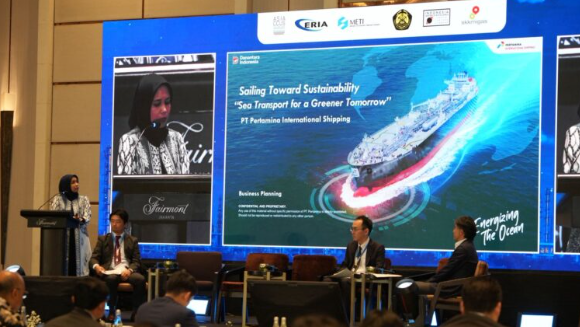
Muthia Rizky Neldi, Vice President of Business Development at PIS, stated: “PIS sees significant opportunities in the liquefied CO? (LCO?) value chain to serve as a strategic bridge connecting emitters with carbon storage facility providers. As the Integrated Marine Logistics subholding company, PIS is committed to providing maritime transport and managing LCO? reception terminals through to final (permanent) storage. With its fleet and infrastructure capabilities, PIS is well-positioned to become a key player in the LCO? transportation industry.”
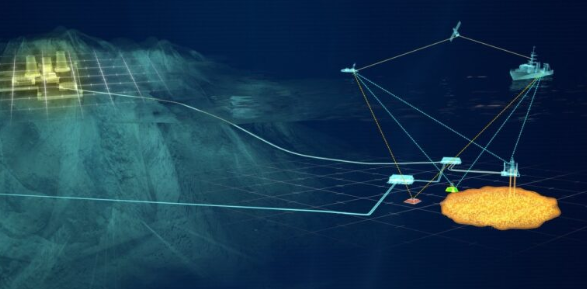
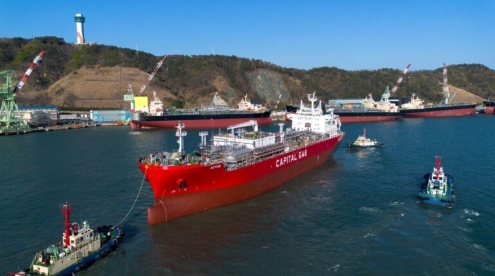
PIS currently operates more than 106 vessels, including gas, crude, and petrochemical carriers, as well as very large gas carriers (VLGCs). Of these, around 65 serve international routes across 63 trade lanes, supported by offices in Singapore, Dubai, and London. This capacity provides the basis for entering the liquefied CO? transportation sector. According to its roadmap, PIS plans to operate LCO? carriers to transport captured carbon emissions from sources such as refineries, power plants, and ammonia producers. The cargo will be delivered to onshore terminals before being sent through pipelines to offshore storage sites.
Indonesia’s geology offers extensive carbon storage capacity. The Sunda Asri Basin alone is estimated to hold up to 1.1 gigatons of CO?. PIS believes this, combined with Indonesia’s geographic position, could enable the country to serve as a CCS/CCUS hub for Southeast Asia.
The company is also advancing digital innovation through its PIS-SmartShip program. By mid-2025, half of the fleet was equipped with SmartShip 2.0, which improves operational efficiency and emission tracking. The system delivers monthly savings of 324 tons of fuel and 1,021 tons of CO? while providing real-time calculations for the Carbon Intensity Indicator (CII). Muthia added: “The adoption of this technology is a crucial step toward PIS’ readiness in supporting carbon transportation. We are not only preparing reliable vessels, but also building digital systems that ensure energy efficiency and emission reduction across the supply chain.”
Indonesia has set a Net Zero Emission target for 2060, and PIS’ strategy aligns with this national goal by expanding its role in the emerging CCS/CCUS value chain.
In June 2024, PIS and Japan’s NYK signed a memorandum of understanding to collaborate in liquefied CO? and LNG transportation, including the establishment of a joint ship management company. Building on agreements signed in 2022, both companies continue to explore opportunities through feasibility studies for cross-border LCO? transport involving Indonesia.