Eni completed a 30 percent farm-down of the producing Baleine field offshore Cote d'Ivoire to Vitol.
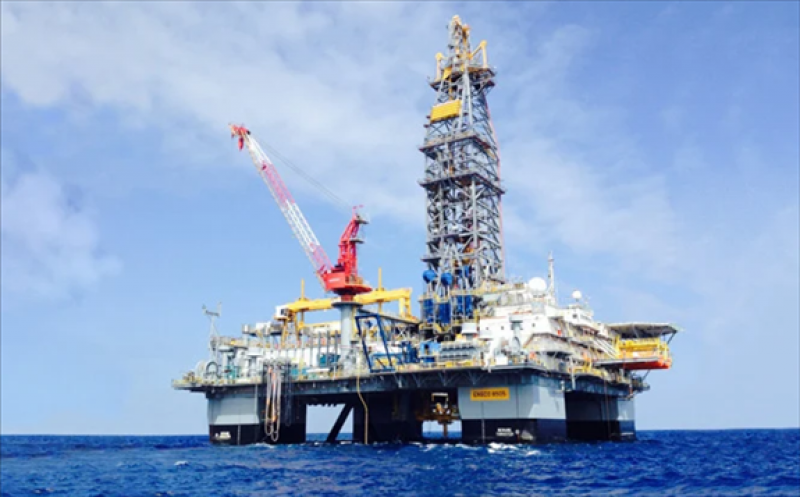
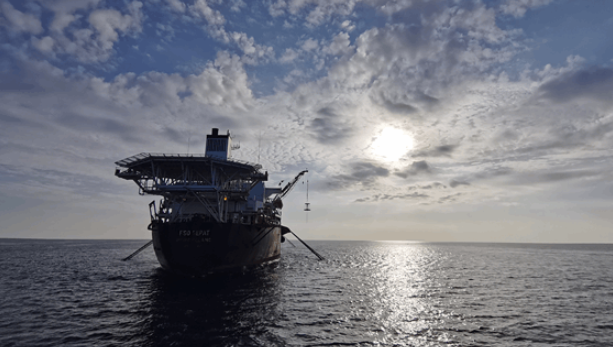
“The transaction aligns with Eni’s strategy of optimizing its upstream portfolio by accelerating the monetization of exploration discoveries through the divestment of equity stakes, a model known as the ‘dual exploration model’,” Eni stated. The Baleine field, operational since late 2024, currently produces 60,000 barrels of oil per day (bopd) and 70 million cubic feet of associated gas per day (MMcfd). Phase II utilizes the Petrojarl Kong Floating Production, Storage, and Offloading Unit alongside the Yamoussoukro Floating Storage and Offloading Unit for oil exports, with all processed gas supplying local energy needs via a pipeline established in Phase I.
Eni is studying Phase III to increase Baleine’s output to 150,000 bopd and 200 MMcfd. “Baleine is the first net-zero emission upstream project (Scope 1 and 2) in Africa, made possible through the adoption of advanced technologies, which minimize the operations’ carbon footprint, and innovative initiatives developed in close collaboration with the Ivorian ministries,” Eni noted. Discovered on September 1, 2021, Baleine holds an estimated 1.5 to 2 billion barrels of oil and 1.8 to 2.4 trillion cubic feet of associated gas.
In the Republic of the Congo, Eni and Vitol are advancing the Congo LNG project, which began operations in 2024 with a capacity of three million metric tons per annum (MMtpa). The project, part of a $1.65 billion deal announced in March 2025, includes a 25 percent stake for Vitol and 65 percent for Eni. The Nguya floating LNG unit, with a 2.4 MMtpa capacity, departed Shanghai in August 2025 for Congo-Brazzaville, aiming to start Phase II by year-end. The project supports gas exports, primarily to Europe, via the Marine XII oil and gas field.
In Ghana, Eni and Vitol, partners in the Offshore Cape Three Points (OCTP) and Block 4 projects, signed a memorandum of intent on September 16, 2025, to enhance oil and gas production. “The agreement will evaluate a comprehensive and integrated investment plan, aimed at contributing to national goals for reliable, affordable, and low-impact access to energy,” Eni stated. The plan includes increasing OCTP’s output and developing the Eban-Akoma field, estimated to hold 500 to 700 million barrels of oil equivalent, leveraging existing infrastructure for efficient market delivery.