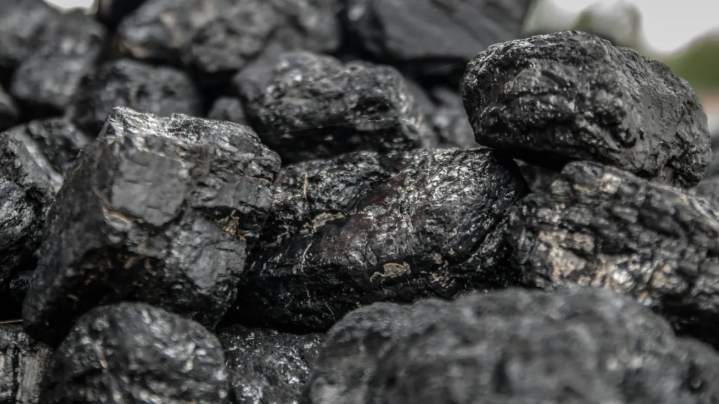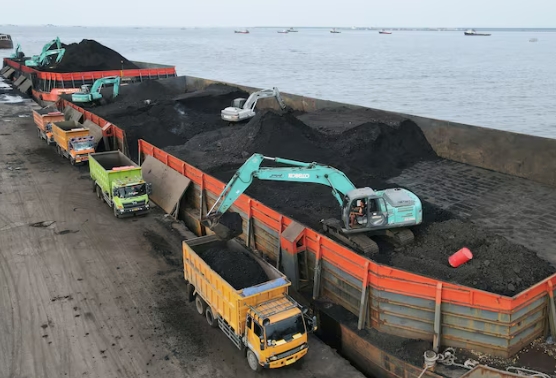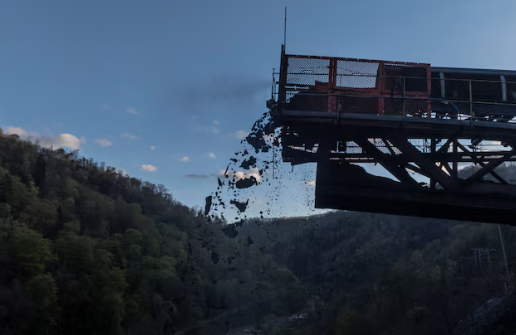
A drone view captures extracted coal as it is transported out of a beltline system during operations at the Black Eagle Mine in Packsville, West Virginia, U.S., April 12, 2025.
At a press conference in Washington, Interior Secretary Doug Burgum stated that 13.1 million acres of federal land in North Dakota, Montana, and Wyoming would be opened for coal leasing. This area is more than three times larger than the one included in President Donald Trump’s previous funding law. The Department of Energy added that it would provide $625 million to expand power generation fueled by coal.
Lee Zeldin, administrator of the Environmental Protection Agency, explained that coal plants would receive additional time to comply with coal ash disposal regulations. Coal ash contains substances such as mercury, cadmium, and arsenic, which must be managed carefully.
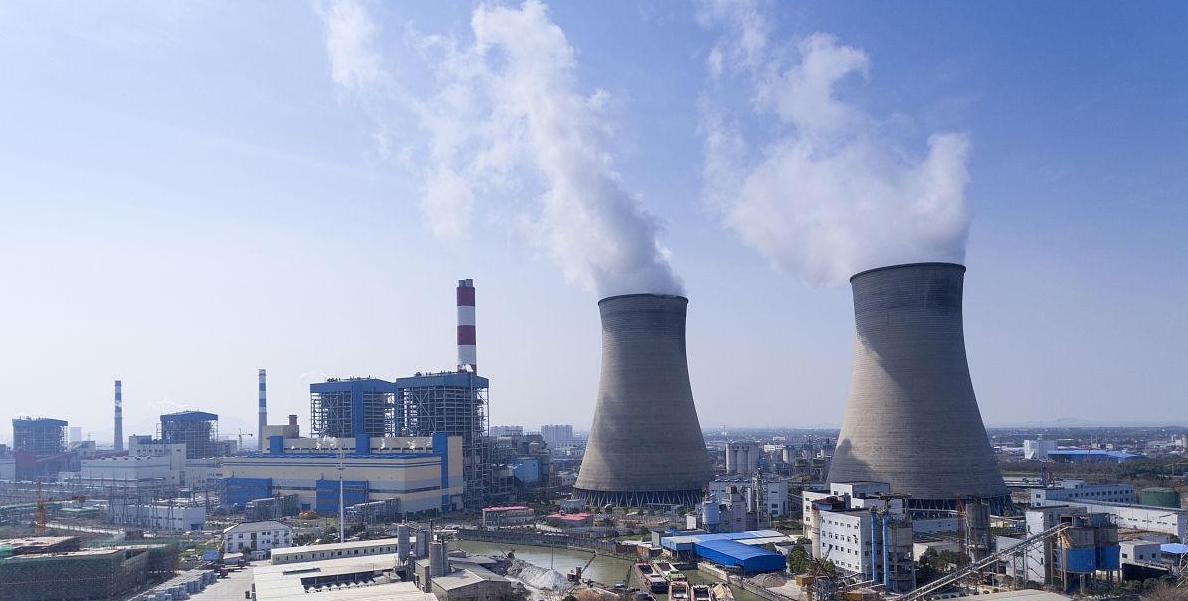
Coal plants accounted for about 15% of U.S. electricity in 2024, down from 50% in 2000, according to the Energy Information Administration. The decline has been driven by competition from natural gas and the rise of solar and wind energy. Meanwhile, the coal workforce has dropped to around 40,000 from 70,000 a decade ago.
During the press conference, Burgum stood alongside coal miners and emphasized that supporting coal would strengthen the U.S. economy and create jobs.
Energy Secretary Chris Wright told Reuters last week that he expects most coal-fired power plants to delay retirement to meet electricity demand, particularly with the expansion of artificial intelligence. Last month, he extended an emergency order to keep a Michigan coal plant in operation, even though its operator had planned to shut it permanently for economic reasons.
Tom Pyle, president of the American Energy Alliance, predicted that 38 coal plants scheduled for closure by 2028 would likely remain open, either by directive or voluntarily.
Industry analysts, however, expressed caution. Frank Holmes, CEO and chief investment officer of U.S. Global Investors, wrote: “Coal may see a temporary boost from regulatory relief, and some investors may profit in the short term. But in the long run, I think the writing is on the wall.”
The Sierra Club, an environmental organization, raised concerns, stating: “If this dangerous agenda continues to advance, years from now we will look around at failing health outcomes, skyrocketing bills, and a decaying environment.”
The administration’s actions highlight efforts to extend coal’s role in the U.S. energy mix, though long-term trends continue to show movement toward alternative energy sources.