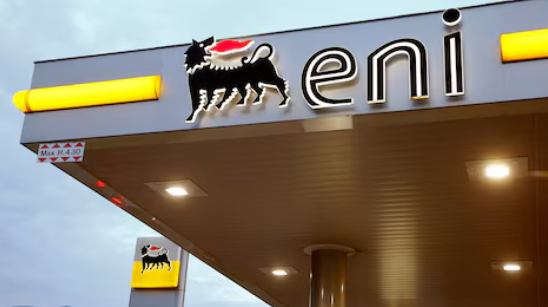
The logo of Italian Eni energy company is seen at a Agip gas station in Lugano, Switzerland, June 3, 2016.
Italy’s energy ministry has recently granted clearance for the company to move forward with the initiative, which will utilize the area currently occupied by Eni’s ethylene plant. The existing facility is scheduled for gradual decommissioning as part of the transformation plan.
The new development supports Eni’s goal of reshaping its chemical business by reducing dependence on traditional petrochemical activities, which have faced pressure in Europe due to high production costs and aging infrastructure. Eni, a state-controlled group, announced last year that it would invest 2 billion euros (approximately $2.3 billion) over five years to revive its chemical subsidiary Versalis. The investment aims to expand operations into biofuels, chemical recycling, and specialty products, improving the competitiveness and sustainability of its portfolio.
The planned biorefinery at Priolo will have an annual production capacity of 500,000 metric tons of fuel made from vegetable and animal waste. The output will include renewable diesel for transportation and sustainable aviation fuel (SAF-biojet) for the aviation sector. This project will be the second biorefinery in Sicily, following the successful operation of Eni’s Gela facility, which has been in service since 2019. Completion of the Priolo project is targeted by the end of 2028.
Alongside the biorefinery, Eni will build a chemical recycling plant that employs an advanced technology known as “Hoop.” This process allows mixed plastic waste to be converted into feedstock suitable for producing new plastic materials. The recycled materials will meet quality standards for various applications, including food-contact and pharmaceutical packaging.
The Priolo facility will be the first industrial-scale plant to adopt the Hoop technology, following the success of a demonstration unit launched in Mantua in June. Eni expects the project to play a key role in the circular economy by reducing waste and reusing materials within the production cycle.
Through the transformation of the Priolo site, Eni aims to strengthen its position in the renewable and sustainable materials markets while supporting Italy’s transition toward low-carbon energy. The project also aligns with European Union objectives to promote bioenergy and recycling technologies that lower greenhouse gas emissions and enhance resource efficiency.
The initiative reflects Eni’s long-term strategy to integrate cleaner technologies across its business operations, combining environmental goals with industrial innovation to create a more sustainable and diversified energy model.