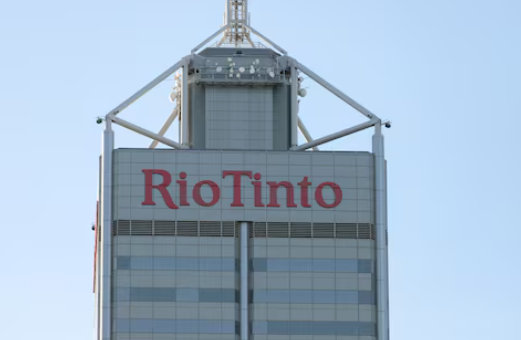
A view shows the Rio Tinto logo in Perth, Australia, April 19, 2025.
In the third quarter, Rio Tinto shipped 84.3 million tons of iron ore from its Western Australia operations, slightly below the Visible Alpha consensus estimate of 85.5 million tons. The company explained that four cyclones earlier in the year disrupted operations, leading it to forecast full-year 2025 shipments at the lower end of its guidance range of 323 million to 338 million metric tons. "A strong Q4 performance is required as the system remains tightly balanced and has limited ability to mitigate further losses," Rio stated.
Shares in Rio Tinto listed in Australia rose as much as 3.6% in early trading on Tuesday, marking their highest level since late September and following a broader rally among iron ore miners. Other major producers, including BHP and Fortescue, gained more than 2% each.
Rio noted that China entered the third quarter facing persistent deflationary pressures, weak manufacturing activity, subdued exports, and ongoing challenges in the property market. Despite these conditions, the company said Beijing remains focused on achieving its 5% annual economic growth target through targeted infrastructure and technology support rather than large-scale stimulus measures.
The miner also highlighted that China has been diversifying its iron ore import sources, increasing purchases from smaller suppliers, while total shipments from major producers have remained stable compared to last year.
The quarter marked the first under Rio Tinto’s new CEO, Simon Trott, formerly the head of the company’s iron ore division. In August, Trott announced a restructuring plan that simplifies the group into three main business units: global iron ore, aluminium and lithium, and copper.
Rio reaffirmed its commitment to safety following a fatality at its Simandou operations in Guinea, where first iron ore shipments are expected to begin before the end of the year. The company also continues to expand its copper portfolio to meet growing demand linked to the global shift toward cleaner energy.
At its Oyu Tolgoi operations in Mongolia, Rio achieved record copper output and remains on track to increase annual production by more than 50%. Additionally, the company reported its second consecutive record quarter of bauxite production and raised its full-year guidance to between 59 million and 61 million tons, supported by strong output from the Amrun mine in northern Australia.