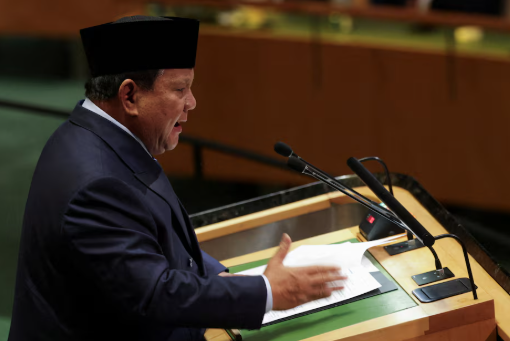
Indonesia's President Prabowo Subianto speaks during the 80th United Nations General Assembly, in New York City, New York, U.S., September 23, 2025.
In 2021, Indonesia introduced carbon market regulations that emphasized compliance-based systems over voluntary market activities. These measures halted all cross-border trading of carbon emission credits, including those from significant initiatives like the Katingan Mentaya conservation effort.
The pause enabled the nation to focus on achieving its domestic greenhouse gas reduction objectives instead of exporting those credits abroad. It also addressed issues related to low carbon pricing, ensuring that producing countries could derive appropriate value from the process.
Prior to the interruption, Indonesia ranked among the leading providers of carbon credits globally, primarily via the REDD+ program for forest restoration and conservation.
The recent presidential decree, dated last week and released on Wednesday, now permits the resumption of international exchanges for carbon offset units. These transactions must align with Indonesia's national guidelines or those established by the United Nations Framework Convention on Climate Change, as well as other recognized international verification bodies.
Additionally, the decree mandates the creation of a distributed registry system for carbon units. This platform will operate with full transparency and in real time, helping to avoid any overlap in accounting for emission reductions.
President Prabowo, approaching the one-year milestone of his tenure on October 20, aims to attract foreign investment through carbon offset sales from efforts such as protecting rainforests.
This year, Indonesia has formalized mutual recognition pacts with key global certifiers of emission-reduction projects, including Verra, Gold Standard, Global Carbon Council, Plan Vivo, and the Joint Crediting Mechanism. These agreements are designed to streamline cross-border carbon exchanges and encourage overseas funding to advance the country's environmental targets, according to officials.
Complementing these steps, Indonesia's domestic carbon exchange—inaugurated in September 2023—has started providing certificates to international purchasers this year. However, activity on the platform remains limited at present.
Overall, these developments support Indonesia's pledge to attain net-zero greenhouse gas emissions by 2060 or sooner, fostering sustainable progress in climate action while balancing national priorities with global collaboration.