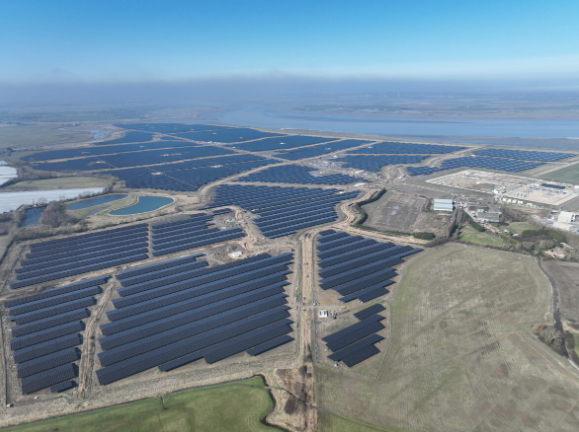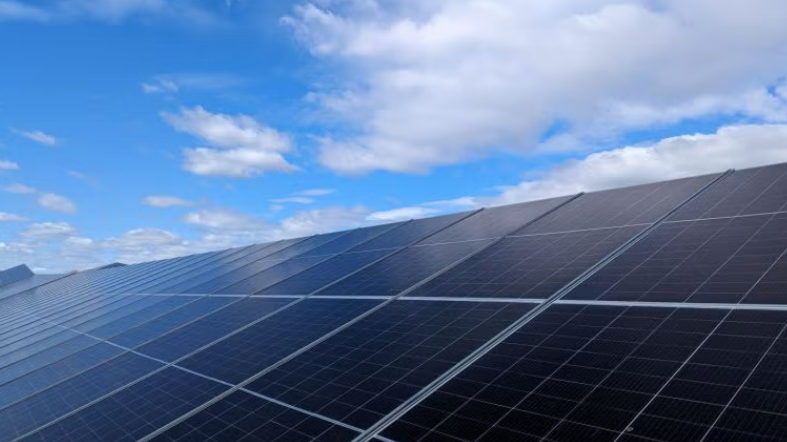
The County signed a power purchase agreement with TotalEnergies, which developed, owns, and operates the project. The agreement covers 25 years, with renewal options up to 33 years. TotalEnergies confirmed that the project uses SunPower solar panels, SMA inverters, and a TerraSmart racking system.
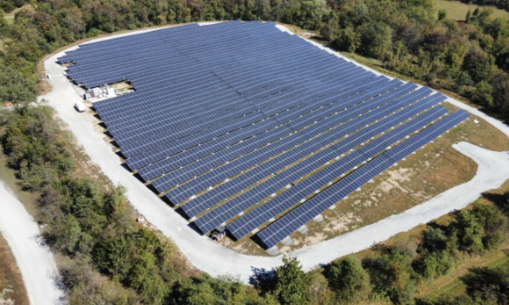
A specialized ballasted ground-mount system was employed, using large concrete blocks to support the metal racking. This approach avoided penetrating the landfill’s synthetic membrane, located just a few feet below the surface, which is critical for maintaining the integrity of the closed site. Power Factor served as the lead construction firm, with several subcontractors contributing to the build.
Eric Potts, Managing Director of TotalEnergies’ distributed generation business, said: “This installation is a powerful example of transforming underutilized assets into productive resources, further demonstrating how it is possible to achieve both significant cost savings and ambitious sustainability goals for the County.”
The Parkton Landfill project is projected to generate over 8.2 million kWh of electricity in its first year, equivalent to the energy consumed by 1,151 homes for a year or the reduction of 621,480 gallons of gasoline. The County anticipates further expansion of its renewable energy portfolio with the Hernwood Landfill solar project, expected to come online by 2028.
Once the Hernwood project is operational, Baltimore County expects about 55% of its electricity consumption to be supplied by renewable energy sources. This initiative reflects the County’s broader strategy to integrate sustainable energy solutions, enhance cost efficiency, and convert previously underutilized land into productive infrastructure.
The Parkton project also illustrates innovative solar deployment methods in challenging environments, such as closed landfills, where traditional racking systems could compromise protective membranes. By using ballasted mounting, the County and TotalEnergies ensured both safety and performance while maximizing solar output.
Overall, the project demonstrates a commitment to sustainability, renewable energy adoption, and long-term financial and environmental benefits. It highlights the potential for local governments to leverage renewable energy technologies to meet electricity needs, reduce emissions, and contribute to broader climate goals while efficiently utilizing existing land assets.
The success of Parkton sets a precedent for similar initiatives and underscores the role of public-private partnerships in advancing renewable energy infrastructure at the municipal level.